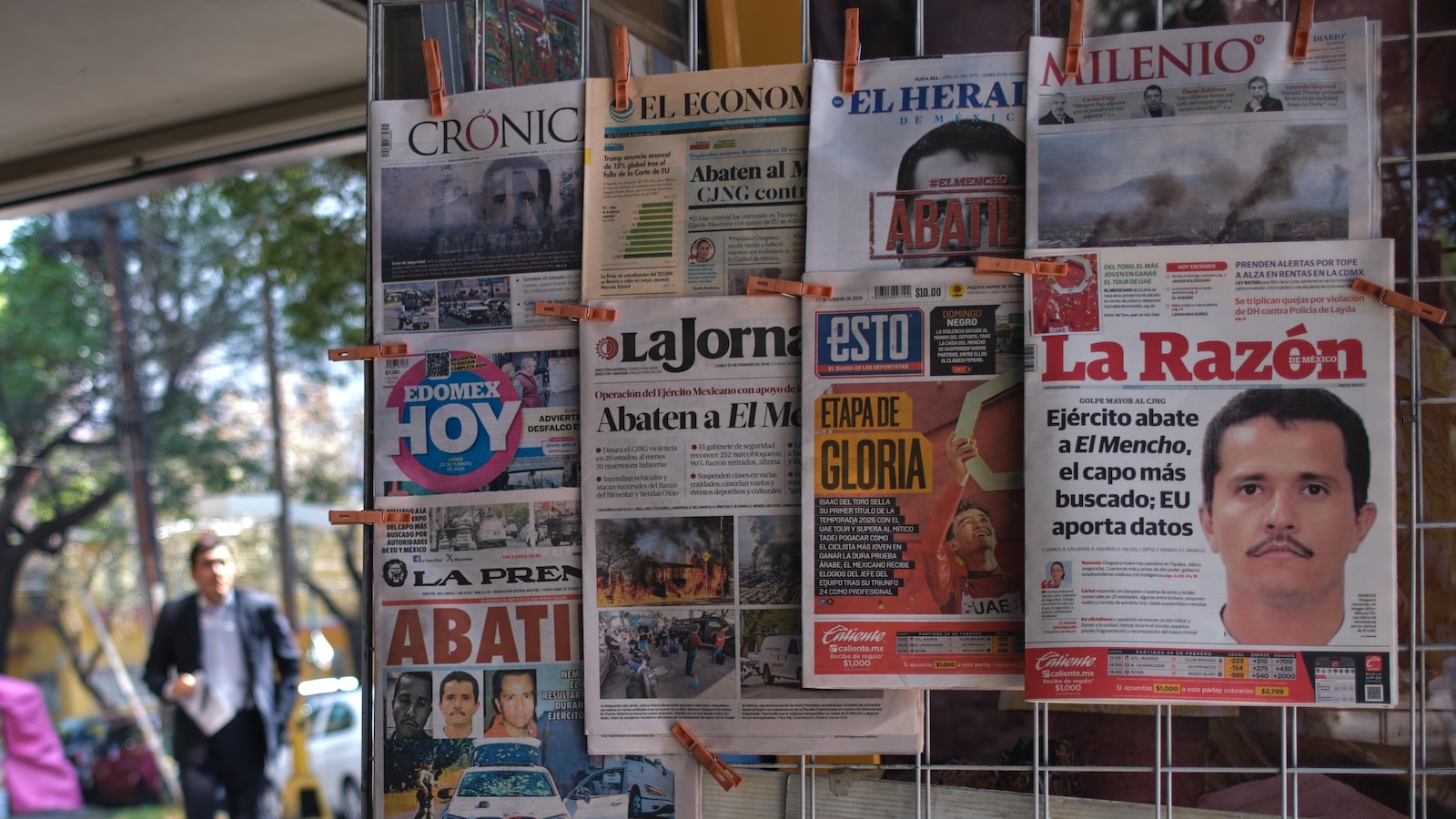
Mexico Captures High-Ranking Jalisco New Generation Cartel Leader in Major Blow to Organized Crime
In a significant victory for Mexico’s ongoing battle against organized crime, the country’s military has captured a top leader of the Jalisco New Generation Cartel (CJNG), one of the most powerful and violent criminal organizations in the world. The arrest, confirmed by Mexican authorities on April 28, 2026, marks another critical setback for the cartel, which has been a dominant force in Mexico’s drug trafficking landscape for over a decade.
The operation, carried out in the northwestern region of Mexico, underscores the government’s intensified efforts to dismantle the CJNG’s leadership structure. Even as officials have not yet released the full identity of the detained leader, the arrest is expected to disrupt the cartel’s operations, which span drug trafficking, extortion, kidnapping, and other illicit activities across Mexico, and beyond. The CJNG, known for its brutal tactics and rapid expansion, has been a primary target of Mexican security forces in recent years.
This latest capture comes amid a broader crackdown on the CJNG, which has been linked to a surge in violence, including high-profile assassinations, armed confrontations with security forces, and the trafficking of fentanyl and other synthetic drugs into the United States. The cartel’s influence has grown exponentially since its formation in 2010, making it one of the most formidable criminal enterprises in the Western Hemisphere.
The Arrest: What We Know So Far
According to a statement released by Mexico’s Secretary of National Defense (SEDENA), the operation took place in the early hours of April 28, 2026, in the state of Sinaloa—a region long considered a stronghold for drug cartels. While SEDENA did not disclose the exact location or the identity of the detained leader, sources close to the investigation suggest the individual played a key role in the cartel’s financial and operational strategies. The arrest was the result of a coordinated effort involving military intelligence, surveillance, and ground forces.
The Mexican government has classified the CJNG as a “priority target” due to its extensive criminal network, which includes alliances with smaller cartels and corrupt officials. The cartel’s leader, Nemesio “El Mencho” Oseguera Cervantes, remains at large despite a multi-million-dollar bounty offered by the U.S. Government. But, the capture of high-ranking lieutenants like the one detained on Tuesday has dealt repeated blows to the organization’s ability to operate with impunity.
In a press conference held later in the day, Mexican President Andrés Manuel López Obrador praised the military’s efforts, stating, “This arrest is a clear message to criminal organizations: there will be no impunity. We will continue to pursue those who threaten the peace and security of our nation.” The president also emphasized the importance of international cooperation, particularly with the United States, in combating drug trafficking and organized crime.
The CJNG: A Cartel on the Rise
The Jalisco New Generation Cartel was founded in 2010 following the fragmentation of the Milenio Cartel, a splinter group of the larger Sinaloa Cartel. Under the leadership of El Mencho, the CJNG rapidly expanded its influence, leveraging violence, corruption, and strategic alliances to dominate key drug trafficking routes. Today, the cartel is believed to operate in at least 27 of Mexico’s 32 states, as well as in the United States, Europe, and Asia.
The CJNG’s rise to power has been marked by extreme brutality. The cartel is responsible for some of the most shocking acts of violence in Mexico’s recent history, including the 2015 downing of a military helicopter in Jalisco, which killed six soldiers, and the 2018 assassination of a state prosecutor in Guadalajara. More recently, the CJNG has been linked to the production and trafficking of fentanyl, a synthetic opioid that has fueled a deadly overdose crisis in the United States. According to the U.S. Drug Enforcement Administration (DEA), the CJNG is now the largest supplier of fentanyl to the U.S. Market, contributing to tens of thousands of overdose deaths annually.
The cartel’s financial empire is equally vast. Beyond drug trafficking, the CJNG engages in extortion, kidnapping, human smuggling, and illegal mining. It has also infiltrated legitimate businesses, including real estate, agriculture, and transportation, to launder its illicit profits. Estimates of the cartel’s annual revenue vary, but some analysts suggest it generates billions of dollars each year, making it one of the wealthiest criminal organizations in the world.
Mexico’s Crackdown: Progress and Challenges
The capture of the CJNG leader is the latest in a series of high-profile arrests targeting the cartel’s leadership. In recent years, Mexican security forces have detained or killed several key figures within the organization, including El Mencho’s son, Rubén Oseguera González, who was extradited to the United States in 2020 to face drug trafficking charges. Despite these successes, the CJNG has proven resilient, adapting to pressure by decentralizing its operations and promoting lower-level leaders to fill the void left by captured or killed commanders.

Mexico’s strategy to combat the cartels has evolved under President López Obrador, who took office in December 2018. Unlike his predecessors, who relied heavily on military offensives and direct confrontations with cartel leaders, López Obrador has emphasized a “hugs, not bullets” approach, focusing on social programs and economic development to address the root causes of crime. However, the persistence of cartel violence has led to criticism of this strategy, with some arguing that it has allowed criminal organizations like the CJNG to expand their influence.
In response to mounting pressure, the Mexican government has recently increased its military presence in high-crime areas, particularly in states like Michoacán, Guanajuato, and Jalisco, where the CJNG’s influence is strongest. The military has also worked closely with U.S. Agencies, including the DEA and the Department of Homeland Security, to share intelligence and coordinate operations. These efforts have yielded results, but the fight against the CJNG remains far from over.
One of the biggest challenges in dismantling the CJNG is its ability to corrupt local and federal officials. The cartel has been accused of bribing police, judges, and politicians to secure safe passage for its operations and avoid prosecution. In 2021, a leaked report from Mexico’s Financial Intelligence Unit revealed that the CJNG had infiltrated multiple levels of government, including law enforcement agencies and municipal administrations. This corruption has made it difficult for authorities to build cases against cartel leaders and has allowed the organization to operate with relative impunity in some regions.
International Implications: The CJNG’s Global Reach
The CJNG’s influence extends far beyond Mexico’s borders. The cartel has established a significant presence in the United States, where it operates in at least 35 states, according to the DEA. Its U.S. Operations include drug trafficking, money laundering, and the distribution of fentanyl, which has become a major public health crisis. In 2023, the DEA reported that fentanyl overdoses were the leading cause of death for Americans aged 18 to 45, with the CJNG playing a central role in the supply chain.
The cartel has also expanded into Europe, where it has formed alliances with local criminal organizations to traffic drugs and launder money. In 2022, Spanish authorities dismantled a CJNG-linked money laundering network that had moved millions of euros through real estate and shell companies. Similar operations have been uncovered in the Netherlands, Germany, and Italy, highlighting the cartel’s ability to adapt to new markets.
In Asia, the CJNG has been linked to the production of synthetic drugs, particularly methamphetamine, which is trafficked to countries like Australia and Japan. The cartel’s involvement in the Asian drug trade has raised concerns among regional governments, who fear that the CJNG’s expansion could destabilize local criminal markets and fuel violence.
What Happens Next?
The detained CJNG leader will now face legal proceedings in Mexico, where he is likely to be charged with drug trafficking, organized crime, and other related offenses. If convicted, he could face decades in prison, though the Mexican justice system has been criticized for its inefficiency and susceptibility to corruption. There is also a possibility that the U.S. Government could seek his extradition, particularly if he is linked to crimes committed on American soil.
For the CJNG, the arrest is a setback, but it is unlikely to cripple the organization. The cartel has demonstrated a remarkable ability to regroup and adapt, often promoting new leaders to replace those who are captured or killed. However, the loss of a high-ranking figure could disrupt the cartel’s operations in the short term, particularly if the detained leader was responsible for key financial or logistical networks.
In the coming weeks, Mexican authorities are expected to release more details about the operation, including the identity of the detained leader and the specific charges he faces. The government has also indicated that it will continue its efforts to dismantle the CJNG’s leadership structure, with a particular focus on targeting the cartel’s financial networks and corrupt allies within the government.
For now, the arrest serves as a reminder of the ongoing challenges Mexico faces in its fight against organized crime. While the capture of a top CJNG leader is a significant achievement, it is only one step in a much larger battle—one that will require sustained efforts from both Mexican and international authorities to bring lasting peace and security to the region.
Key Takeaways
- The Arrest: Mexico’s military captured a high-ranking leader of the Jalisco New Generation Cartel (CJNG) on April 28, 2026, in a coordinated operation in northwestern Mexico. The detained leader’s identity has not yet been publicly disclosed.
- The CJNG’s Influence: The CJNG is one of the most powerful criminal organizations in the world, with operations spanning drug trafficking, extortion, kidnapping, and money laundering. It is the largest supplier of fentanyl to the U.S. Market.
- Government Strategy: The Mexican government has intensified its efforts to dismantle the CJNG, combining military operations with social programs aimed at addressing the root causes of crime. However, corruption and the cartel’s resilience remain major challenges.
- International Reach: The CJNG operates in at least 27 Mexican states and has established a presence in the United States, Europe, and Asia. Its global operations include drug trafficking, money laundering, and the production of synthetic drugs.
- Next Steps: The detained leader will face legal proceedings in Mexico, with potential extradition to the U.S. The Mexican government has vowed to continue its crackdown on the CJNG, focusing on disrupting its financial networks and corrupt alliances.
What This Means for Mexico and Beyond
The capture of a top CJNG leader is a symbolic and operational victory for Mexico’s security forces, but it also highlights the complex and enduring nature of the country’s struggle against organized crime. The CJNG’s ability to adapt and expand—despite repeated setbacks—underscores the need for a multifaceted approach that addresses not only the cartels themselves but also the underlying social and economic factors that fuel their growth.
For the United States and other countries affected by the CJNG’s activities, the arrest serves as a reminder of the importance of international cooperation. The fight against transnational criminal organizations like the CJNG cannot be won by any single country alone. It requires coordinated efforts, shared intelligence, and a commitment to addressing the global demand for drugs and other illicit goods.
As Mexico continues its battle against the cartels, the world will be watching closely. The outcome of this struggle will have far-reaching implications, not only for Mexico’s security and stability but also for the broader fight against organized crime in the 21st century.
For the latest updates on this developing story, follow official statements from Mexico’s Secretary of National Defense (SEDENA) and the Attorney General’s Office (FGR). Readers are also encouraged to stay informed through trusted international news sources, such as Reuters and the Associated Press.
What are your thoughts on Mexico’s efforts to combat the CJNG? Do you think this latest arrest will have a lasting impact on the cartel’s operations? Share your views in the comments below, and don’t forget to share this article to keep the conversation going.
Keep reading