South LA Teacher’s Act of Kindness Sparks Online Backlash Before Truth Emerges
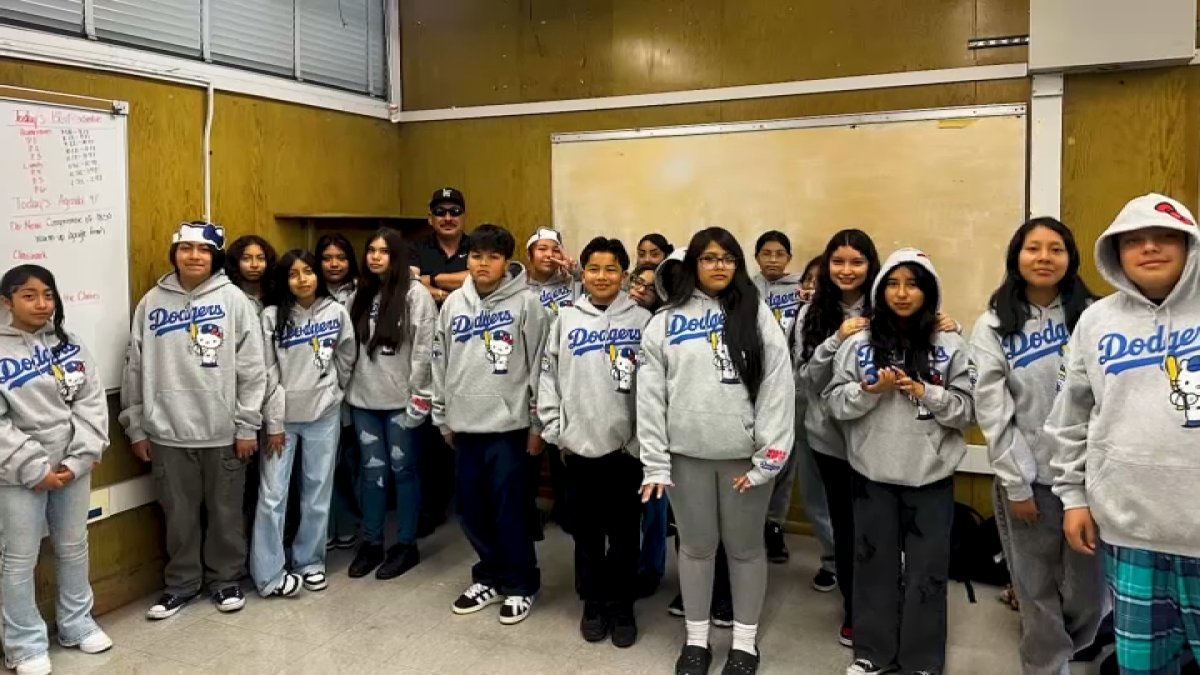
On April 27, 2026, Jose Alvarez, a physical education teacher at John Muir Middle School in South Los Angeles, became the target of widespread online criticism after a video surfaced showing him carrying dozens of Dodgers-Hello Kitty sweatshirts out of Dodger Stadium. The footage, recorded without his knowledge or consent, quickly went viral, with many social media users accusing Alvarez of hoarding the limited-edition giveaway items for personal profit. However, the truth behind the video revealed a far different story—one of generosity, community, and the unintended consequences of snap judgments in the digital age.
Alvarez, who has spent nearly 30 years educating students in the same neighborhood where he grew up, had no intention of reselling the sweatshirts. Instead, he was collecting them as keepsakes for 35 students whose long-awaited field trip to a Dodgers game had been canceled due to a looming strike within the Los Angeles Unified School District (LAUSD). The incident underscores the power—and peril—of social media, where assumptions can spread faster than facts, and where a single misinterpreted moment can overshadow years of dedication.
“I was just trying to do something nice for my kids,” Alvarez told reporters. “When I saw the accusations, it hurt. I didn’t even respond at first because I knew the truth would come out.” His patience paid off. After learning of Alvarez’s intentions, the person who posted the original video issued a public apology, admitting they had jumped to conclusions. The teacher’s story has since resonated far beyond South LA, sparking conversations about empathy, digital responsibility, and the importance of giving others the benefit of the doubt.
From Accusations to Apologies: How a Viral Video Unraveled
The controversy began when Alvarez arrived at Dodger Stadium on April 27 to collect the Hello Kitty-Dodgers sweatshirts, a highly coveted giveaway item for fans attending that day’s game. Due to the canceled field trip, none of his students were present, but Alvarez had arranged with stadium staff to retrieve the sweatshirts on their behalf. According to NBC Los Angeles, stadium officials allowed him to enter in small groups of five at a time to gather the items, which he then packed into large bags.
“I’m walking with this big, heavy bag,” Alvarez recalled. “Looked like Santa Claus walking down.” It was this moment—Alvarez lugging multiple bags of sweatshirts—that was captured on video and shared online. Within hours, the clip spread across social media platforms, with users speculating that he was a reseller or scalper. Some even tagged the Dodgers and local news outlets, demanding an investigation.
The backlash escalated quickly. By the time Alvarez arrived at school the next morning, one of his colleagues had already alerted him to the viral post. “All of a sudden, first period, I get it—a colleague sends me a text,” he said. “He says, ‘Look, Mr. Alvarez, what they’re posting.’” Alvarez chose not to engage with the accusations publicly, opting instead to let the facts speak for themselves. His restraint proved wise. By the end of the day, the original poster had retracted their claims, sharing a follow-up video explaining that Alvarez was, in fact, collecting the sweatshirts for his students.
The incident serves as a stark reminder of how easily misinformation can spread in the digital age. Alvarez, who has built his career on mentoring young people, found himself at the center of a social media storm—one that could have damaged his reputation had the truth not come to light. “I’m saying just moving forward, I wish more people on social media would just believe twice before they post stuff,” he said. “Sometimes it could lead to somebody getting hurt, you know?”
Three Decades of Inspiring Students in South LA
For Jose Alvarez, teaching isn’t just a job—it’s a calling. Born and raised in South Los Angeles, he has spent the past 30 years working at John Muir Middle School, where he serves as a physical education teacher and mentor to hundreds of students. His connection to the community runs deep. “I tell the students, ‘When you do good in school, you do good academically. You get rewarded,’” he said. “It’s about showing them that hard work pays off.”
One of the ways Alvarez rewards his students is by organizing annual trips to Dodgers games for those who excel in their studies. For many of his students, these outings are their first experience attending a Major League Baseball game. “It’s a dream come true for them,” Alvarez said. “Just the happiness on their faces—it’s why I’ve been doing this for so long.”
The tradition holds personal significance for Alvarez, who grew up attending Dodgers games with his late father. “My dad passed away three years ago,” he shared. “He was a huge Dodgers fan. Taking these kids to the games—it’s a way for me to keep that memory alive and share something special with them.” The canceled field trip this year was particularly disappointing for Alvarez and his students, as it marked the first time in years that the trip couldn’t proceed as planned. Determined to salvage something from the experience, Alvarez decided to collect the giveaway sweatshirts as a consolation prize for his students.
John Muir Middle School, located in the heart of South LA, serves a diverse student body, many of whom come from low-income families. For these students, opportunities like the Dodgers game field trip are rare and cherished. Alvarez’s efforts to create positive experiences for his students reflect a broader commitment to uplifting the community he calls home. “I was born and raised here,” he said. “I know what it’s like to grow up in this neighborhood. If I can inspire even one kid to dream big, then I’ve done my job.”
The Bigger Picture: Social Media’s Double-Edged Sword
Alvarez’s story is the latest in a growing number of incidents where social media users have rushed to judgment, only to later retract their accusations once the full context emerges. In recent years, similar cases have made headlines, from viral videos of people being falsely accused of theft to misinterpreted interactions between strangers. These incidents highlight the challenges of navigating a digital landscape where information spreads rapidly, but nuance often gets lost in the process.
Experts warn that the phenomenon of “cancel culture” and online shaming can have real-world consequences, even when the accused is later vindicated. A 2023 study published in the Journal of Computer-Mediated Communication found that individuals who are falsely accused online often experience lasting emotional distress, even after their names are cleared. For public figures like teachers, who rely on community trust, the impact can be particularly damaging.

Alvarez’s case also raises questions about the role of social media platforms in moderating content. Even as platforms like X (formerly Twitter) and Instagram have policies against harassment and misinformation, enforcement can be inconsistent. In many cases, by the time a false accusation is debunked, the damage has already been done. “It’s not just about the original post,” said Dr. Sarah Roberts, a professor of information studies at UCLA. “It’s about the amplification. Once something goes viral, it takes on a life of its own, and even a retraction can’t undo the harm.”
For Alvarez, the experience has reinforced the importance of patience and perspective. “I didn’t reply to any of the comments,” he said. “I knew the truth would come out eventually. But it’s a reminder that we all necessitate to be more careful about what we post online. Words have power, and they can hurt people.”
What Happens Next: Lessons Learned and Moving Forward
In the aftermath of the incident, Alvarez has received an outpouring of support from the South LA community and beyond. Parents, students, and fellow educators have praised his dedication to his students and his ability to turn a negative situation into a teachable moment. The Dodgers organization also reached out to Alvarez, offering to host his students at a future game as a gesture of goodwill.
For Alvarez, the experience has been a reminder of the importance of resilience. “I’ve been teaching for 30 years, and I’ve seen a lot of changes,” he said. “But one thing that hasn’t changed is the need to lead by example. If this situation can teach people to think twice before they post, then maybe something good came out of it.”
As for the students who were supposed to attend the Dodgers game, Alvarez has already distributed the Hello Kitty sweatshirts to them. “They were so happy,” he said. “It’s not the same as being at the game, but it’s a little piece of that experience they’ll always have.”
The incident has also sparked broader conversations about digital literacy and the responsibilities that come with social media use. Schools and community organizations in Los Angeles have begun incorporating lessons on online empathy and critical thinking into their curricula, using Alvarez’s story as a case study. “This isn’t just about one teacher or one viral video,” said Maria Rodriguez, a parent of a John Muir Middle School student. “It’s about how we treat each other online. We all have a role to play in making the internet a kinder place.”
Key Takeaways
- Context Matters: The viral video of Jose Alvarez carrying sweatshirts out of Dodger Stadium was initially misinterpreted as hoarding for profit. In reality, he was collecting them for students whose field trip had been canceled.
- The Power of Social Media: The incident highlights how quickly misinformation can spread online and the potential harm of snap judgments. A single post can damage reputations before the full story emerges.
- Community Impact: Alvarez’s story underscores the importance of educators in underserved communities. His efforts to create positive experiences for students reflect a deep commitment to his neighborhood.
- Digital Responsibility: The case serves as a reminder to think critically before sharing content online. Even well-intentioned posts can have unintended consequences.
- Resilience and Redemption: Alvarez’s decision to remain silent and let the truth unfold ultimately led to his vindication. His story is a testament to the power of patience and integrity.
FAQ
Who is Jose Alvarez?
Jose Alvarez is a physical education teacher at John Muir Middle School in South Los Angeles. He has been an educator for nearly 30 years and is known for his dedication to inspiring students in his community.
Why was Alvarez accused of hoarding sweatshirts?
A video surfaced online showing Alvarez carrying multiple bags of Dodgers-Hello Kitty sweatshirts out of Dodger Stadium. Many social media users assumed he was collecting them for resale, but he was actually gathering them for his students after their field trip was canceled.
What was the outcome of the incident?
The person who posted the original video later issued a public apology after learning the truth about Alvarez’s intentions. Alvarez’s name was cleared, and he received widespread support from the community.

How has the incident affected Alvarez’s students?
Alvarez distributed the sweatshirts to his students as a keepsake from the canceled field trip. The Dodgers organization also offered to host the students at a future game as a gesture of goodwill.
What lessons can be learned from this incident?
The incident highlights the importance of empathy and critical thinking in the digital age. It serves as a reminder to verify facts before sharing content online and to consider the potential impact of our words and actions.
Final Thoughts
Jose Alvarez’s story is a powerful example of how kindness can prevail in the face of misunderstanding. What began as a viral controversy ultimately became a testament to the importance of community, resilience, and the need for greater empathy in our digital interactions. As Alvarez himself put it, “Sometimes it could lead to somebody getting hurt.” His words serve as a call to action for all of us to pause and reflect before we post, share, or judge.
For now, Alvarez is back in the classroom, continuing his mission to inspire the next generation of students. And while the incident may have been painful, it has also reinforced his belief in the power of positivity. “At the end of the day, it’s about the kids,” he said. “If I can make a difference in their lives, then everything else is just noise.”
As this story continues to unfold, one thing is clear: in an era where misinformation can spread in an instant, the truth—and the people behind it—deserve our patience and understanding.
What are your thoughts on this story? Have you ever been quick to judge a situation before knowing all the facts? Share your experiences in the comments below, and don’t forget to share this article to spread awareness about the importance of digital empathy.