
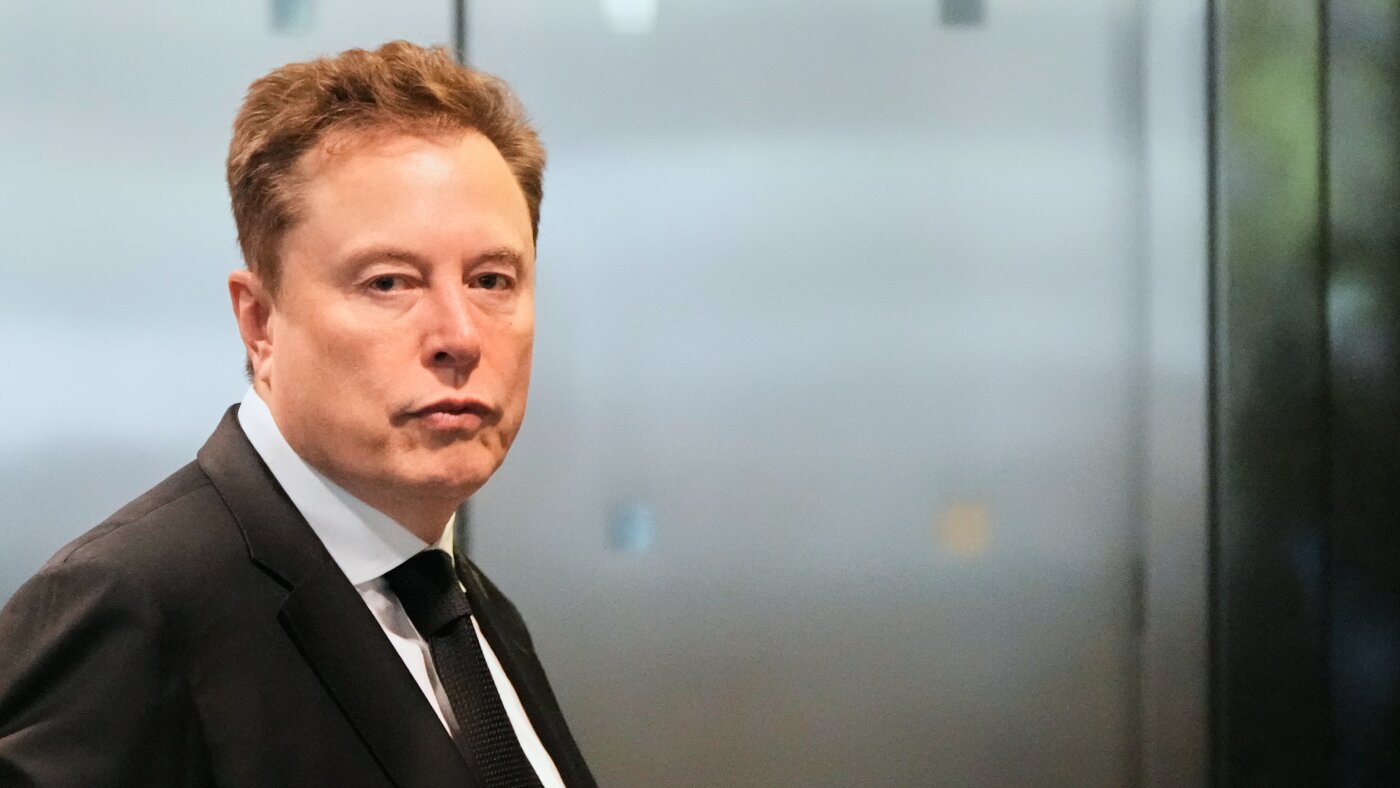
As Trial Against OpenAI Begins, Elon Musk Seeks Sam Altman’s Ouster
OAKLAND, Calif. — A legal showdown that could redefine the future of artificial intelligence began in earnest Tuesday as jury selection opened in a high-stakes lawsuit filed by Elon Musk against OpenAI and its CEO, Sam Altman. Musk, the billionaire founder of Tesla and SpaceX, is seeking not only financial damages but likewise the removal of Altman from OpenAI’s board, alleging that the company betrayed its founding mission to develop AI for the benefit of humanity.
The trial, unfolding in the U.S. District Court for the Northern District of California, pits two of the tech industry’s most influential figures against each other in a dispute that blends corporate governance, ethical commitments, and the commercialization of cutting-edge technology. At its core, Musk’s lawsuit accuses OpenAI, Altman, and the company’s president, Greg Brockman, of abandoning the nonprofit principles that guided its creation in 2015. Instead, Musk claims, OpenAI has prioritized profit-driven growth, culminating in a valuation that now exceeds $850 billion, according to court filings.
If Musk succeeds, the ruling could force OpenAI to revert to its original nonprofit structure or face dissolution, a prospect that has sent ripples through Silicon Valley and the broader AI industry. The case also arrives at a pivotal moment for both men: Musk is preparing to take SpaceX public in what is expected to be a record-setting initial public offering (IPO), while OpenAI is eyeing its own market debut later this year. Legal experts say the outcome could set a precedent for how AI companies balance their ethical commitments with commercial ambitions.
The Origins of the Dispute: A Broken Promise?
OpenAI was founded in December 2015 as a nonprofit research laboratory with a singular mission: to ensure that artificial general intelligence (AGI)—AI systems that can outperform humans at most economically valuable work—benefits all of humanity. Musk, Altman, and Brockman were among its original co-founders, united by concerns about the potential risks of unchecked AI development. In a public announcement at the time, the founders pledged to keep OpenAI’s research and technology open and accessible, with no financial incentives for shareholders.
Musk, who served as co-chair of OpenAI’s board, stepped down from his role in 2018 but remained a donor, contributing a total of $44 million to the organization between 2015 and 2020, according to legal filings. His departure followed disagreements over the company’s direction, particularly its shift toward a more commercial model. In 2019, OpenAI created a for-profit subsidiary, OpenAI LP, to attract investment and talent, a move that Musk has since characterized as a betrayal of the company’s founding principles.
In his lawsuit, filed in 2024, Musk alleges that Altman and Brockman misled him and the public about OpenAI’s commitment to remaining a nonprofit. He seeks an unspecified amount of damages to fund a charitable arm of OpenAI, as well as Altman’s removal from the board. The lawsuit also claims that OpenAI’s partnership with Microsoft—a $10 billion investment announced in 2023—further deviates from its original mission by tying the company’s research to a corporate agenda.
OpenAI’s Defense: A Necessary Evolution
OpenAI has vehemently denied Musk’s allegations, arguing that its evolution into a for-profit entity was necessary to compete with tech giants like Google and Meta, which have poured billions into AI development. In a 2019 blog post, the company explained that the creation of OpenAI LP was essential to secure the resources needed to achieve its mission, including the development of advanced models like GPT-4 and the widely used chatbot, ChatGPT.
On Monday, OpenAI took to X (formerly Twitter) to dismiss Musk’s lawsuit as a “baseless and jealous bid to derail a competitor.” The company’s statement added: “We’ll also finally have the chance to question Mr. Musk under oath before a jury of Californians about this attempt to undermine our work to ensure that artificial general intelligence benefits all of humanity.”

OpenAI responds to Elon Musk’s lawsuit: “This is a baseless and jealous bid to derail a competitor. We’ll finally have the chance to question Mr. Musk under oath before a jury of Californians about this attempt to undermine our work to ensure AGI benefits all of humanity.”
— OpenAI (@OpenAI) April 28, 2026
Legal analysts note that OpenAI’s defense will likely hinge on demonstrating that its for-profit structure does not conflict with its nonprofit mission. The company has maintained a “capped-profit” model, which limits the returns investors can earn, and has pledged to reinvest profits into research and safety initiatives. However, critics, including Musk, argue that this model is insufficient to prevent commercial interests from overshadowing ethical considerations.
What’s at Stake: Billions and the Future of AI
The trial comes at a critical juncture for the AI industry, which has seen explosive growth in recent years. OpenAI’s valuation has skyrocketed to $852 billion, according to the Associated Press, making it one of the most valuable private companies in the world. Meanwhile, Musk’s own AI venture, xAI, has emerged as a direct competitor, launching the chatbot Grok in 2023. Earlier this year, xAI merged with SpaceX in a deal that valued the combined entity at $1.25 trillion, positioning Musk as a formidable rival to OpenAI.
The financial implications of the lawsuit are staggering. Musk is seeking $134 billion in damages, a figure that reflects the scale of his allegations. If the court rules in his favor, OpenAI could be forced to dissolve its for-profit arm or return to its original nonprofit status, a move that could disrupt its operations and investor confidence. Conversely, a victory for OpenAI would solidify its hybrid model as a viable path for AI companies balancing mission and profitability.
Beyond the financial stakes, the trial raises broader questions about the governance of AI companies and their responsibility to society. As AI systems become more powerful and pervasive, the debate over whether they should be developed in the public interest or driven by market forces has intensified. The outcome of this case could influence how other AI labs structure themselves and whether they prioritize ethical safeguards over commercial success.
The Legal Battle Ahead: Key Players and Timeline
The trial is expected to last several weeks, with opening statements likely to begin as early as Tuesday. Judge Yvonne Gonzalez Rogers, who is presiding over the case, will make the final ruling, though the jury will serve in an advisory role. Both Musk and Altman are expected to testify, offering contrasting visions of OpenAI’s past, present, and future.
Musk, 54, has framed the lawsuit as a moral crusade, arguing that OpenAI’s shift toward commercialization undermines its founding mission. In a 2024 court filing, his legal team wrote: “OpenAI was created to be a counterweight to the profit-driven AI development of companies like Google and Meta. Instead, it has become what it sought to prevent.”
Altman, 41, has countered that OpenAI’s success is a testament to its ability to adapt and innovate. In a recent interview with Axios, he said: “We’ve stayed true to our mission, but we’ve also recognized that achieving it requires resources. The idea that we’ve abandoned our principles is simply not true.”
Other key figures in the case include Greg Brockman, OpenAI’s president, who has been named as a defendant alongside Altman. Brockman, a co-founder of OpenAI, has been a vocal advocate for the company’s hybrid model, arguing that it allows OpenAI to attract top talent while maintaining its commitment to safety and transparency.
What Happens Next: Potential Outcomes and Industry Impact
The trial’s outcome could have far-reaching consequences for OpenAI, its employees, and the broader AI ecosystem. Here are some potential scenarios:
- Musk Wins: If the court rules in Musk’s favor, OpenAI could be forced to dissolve its for-profit arm and return to its original nonprofit structure. This could lead to a significant restructuring of the company, including the potential removal of Altman from the board. Investors, including Microsoft, could face losses, and OpenAI’s ability to compete with other AI labs could be diminished.
- OpenAI Wins: A victory for OpenAI would validate its hybrid model and allow it to continue operating as a for-profit entity with a nonprofit mission. This could embolden other AI companies to adopt similar structures, further blurring the line between commercial and ethical AI development.
- Settlement: The parties could reach a settlement before the trial concludes, potentially involving financial compensation to Musk or changes to OpenAI’s governance structure. However, given the high stakes and public nature of the dispute, a settlement seems unlikely at this stage.
Regardless of the outcome, the trial is expected to shed light on the inner workings of OpenAI and the challenges of balancing ethical commitments with commercial realities. It may also prompt regulators and lawmakers to take a closer look at how AI companies are governed and whether new rules are needed to ensure that the development of AGI remains aligned with the public interest.
Key Takeaways: What Readers Demand to Know
- The Core Dispute: Elon Musk alleges that OpenAI, Sam Altman, and Greg Brockman abandoned the company’s founding mission to develop AI for the benefit of humanity, instead prioritizing profits and commercial interests.
- Financial Stakes: Musk is seeking $134 billion in damages and the removal of Altman from OpenAI’s board. OpenAI’s valuation stands at $852 billion, making this one of the most consequential corporate lawsuits in recent history.
- Legal Timeline: Jury selection began on Monday, April 28, 2026, with opening statements expected as early as Tuesday. The trial is expected to last several weeks, with Judge Yvonne Gonzalez Rogers presiding.
- Broader Implications: The outcome of the trial could set a precedent for how AI companies balance ethical commitments with commercial ambitions, potentially influencing the governance of other AI labs.
- Competitive Landscape: The lawsuit arrives as both Musk and OpenAI prepare for major public offerings, adding another layer of complexity to the dispute.
What’s Next: The Road Ahead
The trial is scheduled to continue through May, with testimony from Musk, Altman, and other key figures expected in the coming weeks. The court has not yet set a date for closing arguments, but a ruling could come as early as June. In the meantime, both sides are likely to ramp up their public messaging, with OpenAI emphasizing its commitment to safety and Musk doubling down on his allegations of betrayal.
For those following the case, official updates can be found on the U.S. District Court for the Northern District of California’s website, where court filings and hearing schedules are publicly available. The trial is also expected to be closely watched by regulators, investors, and AI researchers, all of whom have a stake in its outcome.
As the legal battle unfolds, one thing is clear: the future of OpenAI—and perhaps the AI industry as a whole—hangs in the balance.
What do you think about the future of AI governance? Should companies like OpenAI prioritize profit or the public great? Share your thoughts in the comments below and join the conversation.