
For years, the city of Los Angeles has operated under a complex administrative arrangement to tackle one of the most visible and stubborn crises in American urban centers: homelessness. At the heart of this effort is the Los Angeles Homeless Services Authority (LAHSA), a joint powers authority designed to coordinate services between the city and the county. However, as the gap between massive public spending and visible results persists, the city is now moving to implement more stringent Los Angeles Homeless Services Authority oversight to ensure that millions in taxpayer dollars are translating into actual housing exits.
The tension stems from a fundamental friction in governance. LAHSA was created to be a collaborative bridge, but city officials are increasingly viewing it as a bureaucratic layer that obscures accountability. With the city pouring hundreds of millions of dollars into the agency, the debate has shifted from how much money is needed to who actually controls the lever of execution. For a global city like Los Angeles, the inability to effectively manage this transition from street to shelter is not just a humanitarian failure, but a significant economic drag on the municipal core.
This push for control coincides with a period of intense internal volatility for the agency. LAHSA is currently navigating a painful restructuring process that includes significant workforce reductions, signaling a pivot in how the agency intends to operate. As the city seeks a more direct hand in steering these resources, the agency finds itself embattled, fighting to prove its utility while simultaneously slashing its own headcount.
The Governance Gap: Why the City Wants Control
To understand the current conflict, one must understand the “Joint Powers Authority” (JPA) model. LAHSA is not a city department, nor is it a county department; It’s a separate legal entity governed by a board representing both the City of Los Angeles and the County of Los Angeles. While this was intended to prevent duplication of efforts, it has often resulted in a “diffused responsibility” where neither entity feels fully in command of the outcomes.

City leaders, particularly under the administration of Mayor Karen Bass, have pushed for a more aggressive, direct approach through initiatives like “Inside Safe.” This program focuses on moving people from encampments into interim housing quickly. However, the coordination of these exits often relies on the data and provider networks managed by LAHSA. When the process slows down or data proves unreliable, the city finds itself paying the bill for a system it cannot directly manage. This lack of direct municipal control over the “coordinator” role has become a primary point of contention in city hall.
From an economic policy perspective, this is a classic agency problem. The “principal” (the city) provides the funding, but the “agent” (LAHSA) manages the execution. When the agent’s incentives or operational structures are not perfectly aligned with the principal’s goals—specifically the rapid reduction of street homelessness—the result is inefficiency. By seeking greater control, the city is essentially attempting to shorten the chain of command to reduce “leakage” in both time, and capital.
Restructuring and the Toll of Layoffs
The agency’s struggle for relevance is playing out through a series of drastic internal cuts. In a move to reshape its operational footprint, LAHSA recently announced the layoff of 284 workers, a move that reflects both budget pressures and a shift in strategic priorities reported by KTLA. These cuts are not merely a cost-saving measure; they represent a fundamental dismantling of the agency’s previous way of doing business.
For the workers remaining and the service providers relying on LAHSA for funding and coordination, these layoffs create a precarious environment. The risk is that in the rush to “lean out” the agency and increase city control, the institutional knowledge required to manage thousands of complex cases could be lost. The transition from a broad coordination hub to a more tightly controlled municipal tool is rarely seamless, and the human cost—both for the staff and the unhoused population—is substantial.
The layoffs also signal to the public and the city council that LAHSA is in a state of transition. Whether this restructuring will lead to a more efficient delivery of services or simply a hollowed-out agency that is easier for the city to dominate remains a central question for policymakers. The goal is to move toward a system where funding is tied more directly to “exits”—the actual movement of a person from the street into a permanent or interim housing unit.
The Economic Stakes of Street Homelessness
The debate over LAHSA’s control is not just about administrative preference; it is about the economic viability of the city’s urban core. Homelessness creates a complex set of externalities that impact everything from retail revenue to public health costs. When municipal funding fails to produce a measurable decrease in encampments, the economic cost is twofold: the direct loss of the wasted investment and the indirect loss of productivity and safety in the city’s commercial districts.
The city’s desire for “greater control” is essentially a demand for a higher Return on Investment (ROI). In any other sector of municipal spending, such as infrastructure or public safety, the city maintains strict oversight of contractors and departments. The “collaborative” nature of LAHSA has, in some views, shielded it from the kind of rigorous performance auditing that other city-funded entities face. By tightening the leash, the city is attempting to apply a business-like discipline to social services.
the shift in control affects how the city manages its relationship with non-profit service providers. Many of these providers receive city funds *through* LAHSA. If the city takes more direct control, it may change how contracts are awarded, how performance is measured, and which providers are deemed “effective.” This could lead to a shake-up in the non-profit ecosystem, favoring organizations that can demonstrate rapid, data-backed results over those providing long-term, harder-to-measure supportive services.
What This Means for the Unhoused Population
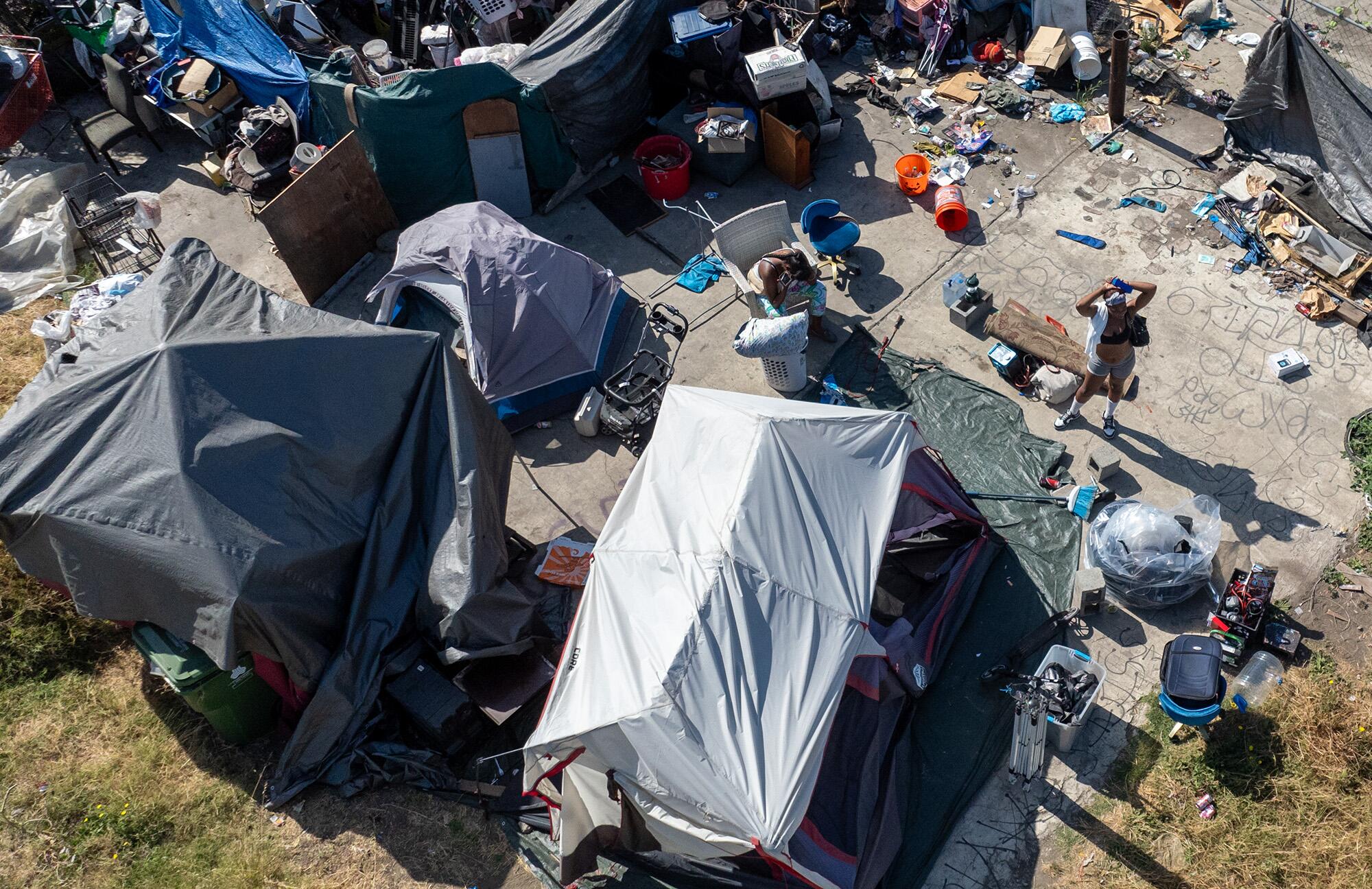
While the political battle focuses on budgets and boards, the real-world impact is felt by those living in tents and vehicles. The transition toward greater city control over LAHSA could lead to a more streamlined “pipeline” from the street to housing, which is the primary goal of the “Inside Safe” strategy. If the city can remove the bureaucratic friction of the JPA model, the speed of housing placements could theoretically increase.
However, there is a significant risk associated with this shift. The JPA model was designed to ensure that the city and county didn’t operate at cross-purposes. If the city gains too much control and the county—which manages the bulk of the healthcare and mental health services—feels sidelined, the “whole-person” approach to homelessness could fracture. Housing a person is only half the battle; maintaining that housing requires the medical and psychological support typically managed at the county level.
The challenge for Los Angeles is to find a middle ground: a system that has the accountability and speed of a city department but the collaborative reach of a regional authority. The current “embattled” state of LAHSA is a symptom of a city trying to evolve its governance in real-time while facing a crisis that refuses to abate.
Key Takeaways: The LAHSA Governance Shift
- Shift in Oversight: The City of Los Angeles is seeking more direct control over the funding and operations of LAHSA to increase accountability and speed up housing exits.
- Structural Friction: The existing Joint Powers Authority (JPA) model is being criticized for creating a bureaucratic layer that diffuses responsibility between the city and the county.
- Workforce Reduction: LAHSA is undergoing a major restructuring, including the layoff of 284 employees, as it attempts to pivot its operational strategy.
- Economic Driver: The push for control is driven by a need for better ROI on millions of dollars in public spending aimed at reducing street homelessness.
- Risk of Fragmentation: Increased city control must be balanced with county cooperation to ensure that housing is paired with necessary health and social services.
The Path Forward: Next Checkpoints
The resolution of this power struggle will likely play out in the coming budget cycles and board meetings. As the city continues to evaluate the effectiveness of its direct interventions, the role of LAHSA may be further diminished or entirely reimagined. Observers should watch for upcoming city council budget hearings and LAHSA board meetings, where the specific mechanisms of this “greater control”—such as new reporting requirements or changes to the board’s voting structure—will be codified.
Whether this administrative pivot can finally turn the tide on the homelessness crisis remains to be seen, but the move toward accountability is a necessary step in managing one of the most expensive and complex social challenges in modern urban history.
Do you believe municipal governments should have direct control over social service agencies, or is a collaborative regional authority more effective? Share your thoughts in the comments below or share this analysis with your network.
Keep reading