
In the current era of geopolitical volatility, the world has become an auditorium. Diplomacy, once a guarded craft practiced in hushed rooms and coded cables, has shifted toward the performative. We now witness a global stage where leaders apply social media platforms to announce breakthroughs, issue ultimatums, and signal strength to their domestic audiences in real-time. While this transparency is often framed as a victory for accountability, it has created a dangerous paradox: the louder the diplomacy becomes, the harder It’s to actually resolve the most intractable conflicts.
As an editor who has spent over a decade covering the friction points of international relations, I have seen how the “performance” of statecraft often comes at the expense of its results. We are witnessing a systemic erosion of the quiet, unofficial channels that historically prevented wars and brokered peace. To navigate the complexities of the mid-2020s, it is imperative that we restore back-channel diplomacy, returning to the understanding that the most meaningful progress often happens when the cameras are turned off.
The allure of the public stage is particularly strong for leaders inclined toward populism. For these figures, foreign policy is not merely about national interest or strategic stability. it is a tool for domestic branding. By portraying themselves as “champions” of the people against a perceived global elite, these leaders often sideline career diplomats—the highly professionals trained in the art of nuance and discretion. When diplomacy is conducted as a public spectacle, the goal shifts from finding a workable compromise to securing a viral victory.
The Strategic Necessity of Silence
To understand why we must restore back-channel diplomacy, we must first define what it is. Back-channel diplomacy refers to unofficial, secret, or clandestine communication lines between opposing parties. These channels operate outside the formal protocols of embassies and official summits. They may involve former officials, trusted intermediaries, or intelligence officers who can speak candidly without the immediate pressure of public scrutiny or the risk of political fallout.
The primary utility of the back channel is the provision of “political cover.” In a public setting, a leader who makes a concession is often branded as weak or a “sell-out” by their political opponents. However, in a secret channel, that same leader can explore compromises, test the waters for a deal, and offer concessions that would be politically suicidal if announced prematurely. The back channel allows leaders to save face while moving toward a resolution.
When diplomacy is moved entirely into the public eye, the “cost” of compromise skyrockets. Every word is parsed by analysts and weaponized by opposition parties. This environment creates a rigid posture where leaders feel compelled to maintain an aggressive stance to avoid appearing fragile. The negotiation becomes a zero-sum game of optics rather than a collaborative effort to solve a problem. The result is often a stalemate, where both parties know a solution exists but neither can afford the public perception of yielding.
Lessons from the Shadows: When Secrecy Saved the World
History provides an abundance of evidence that the most critical breakthroughs occur in the dark. Perhaps the most stark example is the Cuban Missile Crisis of 1962. While the public world watched the buildup of naval blockades and heard the rhetoric of “brinkmanship,” the actual resolution was forged through a secret channel between Robert Kennedy and Soviet Ambassador Anatoly Dobrynin. This private arrangement allowed the United States to secretly agree to remove its missiles from Turkey in exchange for the Soviet withdrawal from Cuba—a deal that would have been politically impossible for the Kennedy administration to announce openly at the time.
Similarly, the opening of relations between the United States and China in the 1970s relied heavily on “ping-pong diplomacy” and secret missions. Before Richard Nixon’s historic visit to Beijing, a series of clandestine meetings and signals were exchanged to ensure that the public announcement of the visit would be a triumph rather than a diplomatic disaster. These intermediaries managed expectations and ironed out the basic framework of the relationship long before the world saw the handshake.
Even the Oslo Accords of the 1990s, which sought to create a framework for peace between Israel and the Palestine Liberation Organization (PLO), began as secret meetings in Norway. By bypassing the formal, highly scrutinized diplomatic channels, the parties were able to build a level of trust and a conceptual framework that would have been stifled by the intense public and political opposition in their respective home countries. While the long-term success of such accords is often debated, the fact that they were achieved at all is a testament to the power of the back channel.
The Rise of Performative Statecraft
The transition toward “loud” diplomacy is not an accident; it is a reflection of the broader shift in how power is exercised in the digital age. The integration of social media into statecraft has transformed the diplomatic cable into a public post. We now see a trend where leaders use public platforms to “leak” demands or mock adversaries, hoping to gain leverage through public pressure. This is often referred to as performative politics, where the audience is not the opposing head of state, but the leader’s own voting base.
This shift has profound implications for international mediation. Traditional mediation requires a “safe space” where parties can be honest about their red lines and their willingness to bend. When the process is transparent—or worse, when it is used as a campaign tool—that safe space vanishes. The mediator is no longer a bridge-builder but a referee in a public shouting match.
the marginalization of professional diplomats has left a void in institutional memory. Career diplomats understand the “grammar” of diplomacy—the subtle cues, the importance of phrasing, and the value of the slow build. Populist-driven diplomacy often ignores these nuances in favor of blunt force. While bluntness can be effective for signaling, it is rarely effective for negotiating. You cannot bully a sovereign state into a sustainable long-term agreement; you can only coerce them into a temporary submission that they will seek to undo at the first opportunity.
The Risks of the “Champion” Model
When leaders adopt the role of the “champion” for their people, they often frame the diplomatic process as a struggle between the “pure” will of the people and the “corrupt” machinery of international bureaucracy. This framing makes the act of negotiating feel like a betrayal. If a leader has spent months telling their public that the opposing side is an existential enemy or a fraudulent actor, any move toward a quiet compromise is seen as a failure of will.
This creates a dangerous cycle:
- Public Posturing: The leader makes an aggressive, public demand to satisfy their base.
- Rigidity: The opposing side, sensing the public nature of the demand, feels they cannot concede without looking weak.
- Escalation: Both sides increase the rhetoric to maintain their domestic standing.
- Failure: The window for a pragmatic solution closes, and the conflict escalates into a crisis or kinetic conflict.
A Framework for Modern Discretion
Restoring back-channel diplomacy does not mean returning to a world of “smoke-filled rooms” where the public is entirely deceived. In a democratic age, transparency is a vital check on power. However, we must distinguish between transparency of outcome and transparency of process. The public has a right to know the terms of a treaty, the cost of a deal, and the goals of a policy. They do not, however, need to see every tentative offer and failed draft that leads to that outcome.
To integrate discretion back into modern statecraft, governments should consider the following strategies:
1. Re-empowering the Professional Corps: Leaders must trust their diplomatic corps to handle the “ugly” work of negotiation. In other words giving diplomats the mandate to engage with adversaries without the requirement of immediate public reporting. It requires a separation between the political head of state (the face of the deal) and the diplomatic team (the architects of the deal).
2. Utilizing “Track Two” Diplomacy: When official channels are frozen, governments should lean into Track Two diplomacy—non-governmental, informal interactions between academics, retired officials, and NGOs. These channels provide a low-risk environment to test ideas and maintain a baseline of communication when official relations have collapsed.
3. Establishing “Red Line” Protocols: There must be a clear understanding of which issues are subject to public debate and which require absolute confidentiality. Establishing these protocols early in a negotiation prevents the “leak culture” that often destroys fragile agreements.
4. Managing Domestic Expectations: Leaders must learn the art of “strategic ambiguity.” By avoiding overly specific, aggressive public promises, they leave themselves the room to pivot when a pragmatic solution emerges. The goal should be to frame a successful compromise not as a “concession,” but as a “strategic victory” for the national interest.
The Human Cost of the Noise
Beyond the geopolitical calculations, there is a human cost to the death of quiet diplomacy. When back channels fail, the alternative is often escalation. We see this in the frozen conflicts of Eastern Europe and the enduring tensions in the Indo-Pacific. In these regions, the rhetoric often moves faster than the diplomacy. When leaders prioritize the “win” on social media over the “work” in the shadows, it is the civilians on the ground who pay the price for the resulting instability.
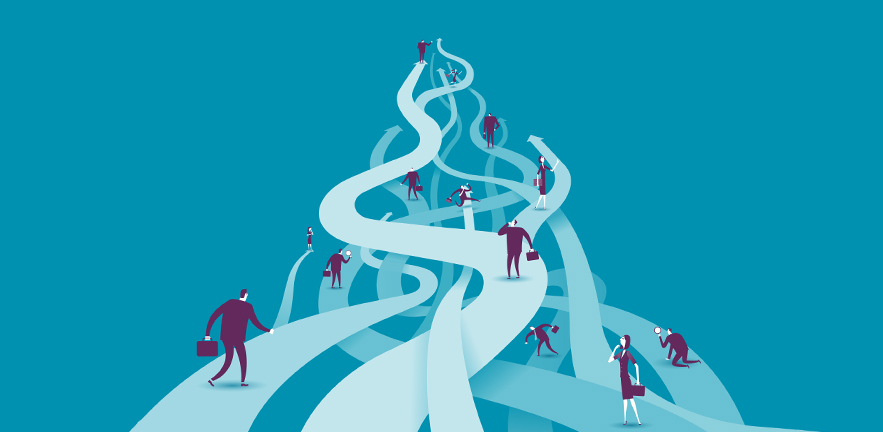
The tragedy of modern statecraft is that we have the tools to communicate instantly across the globe, yet we have lost the ability to listen. True listening requires a level of vulnerability and openness that is impossible in the presence of a camera. It requires the willingness to say, “publicly agree to this, but if you can do X, I can find a way to do Y.” That sentence cannot be tweeted. It cannot be broadcast. It can only be whispered.
Key Takeaways for Global Stability
| Feature | Public/Performative Diplomacy | Back-Channel Diplomacy |
|---|---|---|
| Primary Audience | Domestic voters / Social media | The opposing negotiator |
| Primary Goal | Optics, strength, and branding | Problem-solving and compromise |
| Risk Level | High (Public failure/loss of face) | Low (Plausible deniability) |
| Speed of Process | Instant, reactive | Slow, iterative, deliberate |
| Outcome Tendency | Rigidity or escalation | Flexibility and resolution |
Moving Toward a Quieter Future
The world does not need more “strongmen” who can dominate a press conference; it needs leaders who have the courage to be quiet. It takes more strength to enter a room with an enemy and seek a middle ground in secret than it does to denounce them from a podium. The historical lesson is clear: silence is not a sign of weakness; it is a tool of power.
As we look toward the next cycle of international summits and treaty renegotiations, the litmus test for success will not be how many likes a leader’s announcement receives, but whether the underlying conflict has actually moved toward resolution. If we continue to treat diplomacy as a branch of public relations, we will continue to find ourselves in a state of permanent crisis.
The next critical checkpoint for global diplomatic norms will be the upcoming series of regional security forums scheduled for the second half of 2026. These meetings will provide a glimpse into whether the current trend toward performative statecraft persists or if there is a renewed commitment to the disciplined, discrete art of the back channel.
Do you believe the era of secret diplomacy is over, or is it more necessary now than ever? Share your thoughts in the comments below or join the conversation on our social platforms.