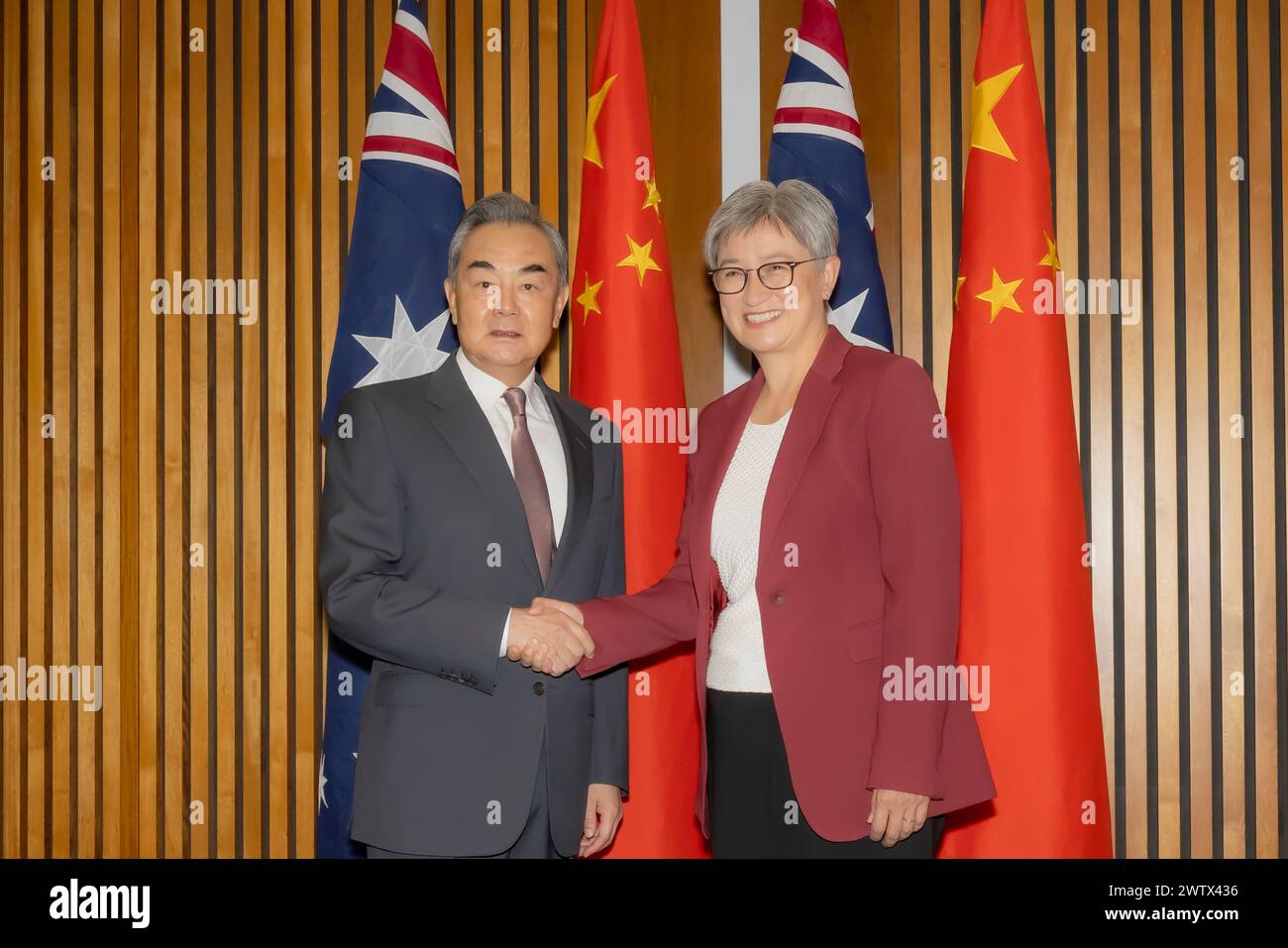
Chinese Foreign Minister Wang Yi and Australian Foreign Minister Penny Wong met in Beijing on April 29, 2026, to conduct the eighth round of the China-Australia Foreign and Strategic Dialogue. The high-level meeting comes as both nations seek to stabilize their complex relationship and build upon strategic communications established between President Xi Jinping and Prime Minister Anthony Albanese last year.
The dialogue focused on implementing the consensus reached by the two heads of state, with a primary goal of consolidating the positive momentum in bilateral ties. According to official reports, the discussions aimed to reduce differences, increase mutual trust, and fully realize the framework of the Comprehensive Strategic Partnership to provide greater certainty for the region and the world.
Foreign Minister Wang Yi emphasized that the diplomatic strategic dialogue has played a critical role in the recent improvement of relations. He noted that maintaining high-level exchanges is essential for expanding areas of cooperation and adding positive factors to the bilateral dynamic during a period of significant global instability and uncertainty.
Strengthening the Comprehensive Strategic Partnership
Central to the discussions was the commitment to the Comprehensive Strategic Partnership, a diplomatic framework intended to guide the long-term interaction between Beijing and Canberra. Wang Yi stated that China is willing to work with Australia to strengthen communication and coordination, ensuring that the partnership is position into practical effect. This approach is designed to move the relationship beyond mere stabilization toward a more sustainable and mutually beneficial cooperation.
The two ministers discussed the necessity of maintaining a steady flow of high-level diplomatic engagement. By fostering strategic mutual trust, both nations aim to create a predictable environment for trade and political interaction. The dialogue highlighted that while differences persist, the priority remains the reduction of friction through consistent diplomatic channels as detailed in official diplomatic records.
Regional Dynamics: APEC and the Pacific Islands
A significant portion of the dialogue addressed regional influence, particularly in the Pacific Islands and the Asia-Pacific Economic Cooperation (APEC) forum. Wang Yi asserted that China’s friendly cooperation with Pacific Island nations is based on mutual respect and equality. He emphasized that China’s efforts are dedicated to promoting the development of these islands and are not directed against any third party, urging Australia to view these relations through an objective and rational lens.
The conversation also touched upon China’s current role as the rotating chair of APEC. Wang Yi expressed China’s willingness to collaborate with all parties, including Australia, to activate and revitalize the Asia-Pacific Community process. By leveraging its chairmanship, China intends to craft a larger contribution to Asia-Pacific cooperation, seeking to foster a more integrated and prosperous regional economy.
Global Governance and the “One China” Policy
The ministers exchanged views on the current state of global governance, with Wang Yi describing the world as experiencing “changes unseen in a century.” He argued that the rise of unilateralism and hegemony has forced the international community to choose between dialogue and confrontation, or peace and war. In response, Wang Yi stated that China continues to advocate for multilateralism and the maintenance of an international system centered on the United Nations.
Wang Yi specifically highlighted President Xi Jinping’s “four global initiatives” and the concept of a “community with a shared future for mankind,” describing these frameworks as being in accordance with the interests of the global population. He suggested that China and Australia should stand on the “correct side of history” by supporting multilateralism and working together to build a more just and reasonable global governance system.
On the matter of core national interests, Wang Yi elaborated on China’s position regarding Taiwan. Foreign Minister Penny Wong responded by affirming that Australia remains committed to developing its relationship with China and continues to adhere to the “One China” policy. Wong further expressed Australia’s willingness to work with China to maintain international rules and ensure global energy security, contributing to overall world peace, stability, and prosperity.
Personnel Security and Human Exchange
Beyond high-level politics and security, the dialogue addressed the importance of people-to-people exchanges. Wang Yi noted that such exchanges are in the interest of both nations and called for both governments to take actions that enhance mutual understanding. However, he specifically requested that the Australian government take effective measures to guarantee the safety and legal rights and interests of Chinese personnel within Australia.
The ministers also briefly exchanged opinions on the current situation in the Middle East, reflecting the broad scope of the strategic dialogue. While specific agreements on the Middle East were not detailed, the inclusion of the topic underscores the expectation that the two nations can coordinate or at least communicate on volatile global flashpoints.
Key Takeaways from the 8th Strategic Dialogue
- Diplomatic Framework: Both nations are prioritizing the “Comprehensive Strategic Partnership” to stabilize ties.
- Pacific Relations: China maintains that its Pacific Island cooperation is not targeted at third parties; Australia continues to monitor regional influence.
- Core Policies: Australia reaffirmed its adherence to the “One China” policy; China elaborated on its stance regarding Taiwan.
- Global Role: China, as APEC rotating chair, seeks to revitalize the Asia-Pacific Community process with Australian cooperation.
- Security Concerns: China explicitly requested better protections for the safety and legal rights of its personnel in Australia.
The meeting concludes a critical round of diplomatic efforts to prevent further deterioration of ties and to establish a baseline for economic and political cooperation. The next confirmed checkpoint for the relationship will be the continued implementation of the consensus reached between President Xi and Prime Minister Albanese, with further high-level engagements expected to track the progress of these commitments.
World Today Journal encourages readers to share their perspectives on the evolving China-Australia relationship in the comments below.
Related reading