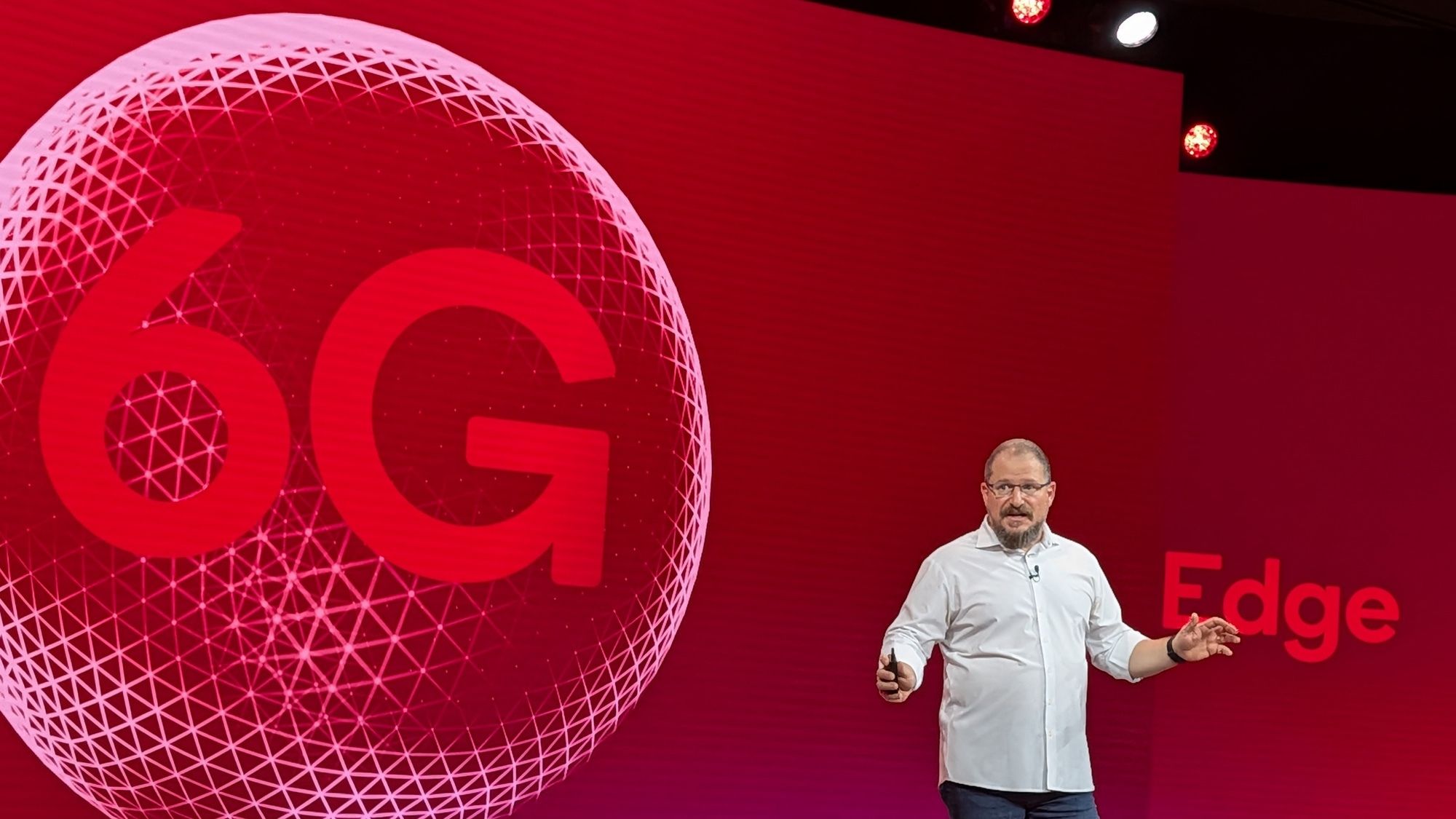
The roadmap for the next generation of mobile connectivity has a fresh, concrete timeline. Qualcomm, a central architect of global wireless standards, has signaled that the transition to 6G is moving from theoretical research into a defined development cycle, with the first 6G-enabled smartphones expected to hit the market in 2029.
During the company’s Q2 2026 earnings call on April 29, 2026, President and CEO Cristiano Amon outlined a phased rollout for the technology. According to Amon, the industry can expect the first 6G demonstrations and the debut of 6G modems in 2028, serving as the precursor to consumer handsets the following year. A period of aggressive growth in 6G device adoption is then projected for 2030.
This timeline suggests a familiar cadence in the evolution of mobile networks. In many markets, including the Netherlands, 4G arrived around 2013, followed by 5G in 2020. The projected 2029 arrival of 6G maintains this approximate decade-long cycle of generational leaps, though the scope of 6G promises to be fundamentally different from the incremental speed boosts seen in previous transitions.
For consumers and enterprises, the Qualcomm 6G timeline represents more than just faster downloads. it marks a shift toward a network that is “AI-native” and deeply integrated with environmental sensors and satellite infrastructure. This evolution is designed to support a new class of devices—such as advanced augmented reality (AR) glasses—that require massive uplink capabilities for real-time, high-resolution data sharing.
Defining the AI-Native Network
Unlike 5G, where artificial intelligence was largely integrated as an overlay to optimize existing processes, 6G is being engineered as an AI-native system. Which means that machine learning is baked into the physical layer of the network, allowing the infrastructure to automatically distribute and optimize data traffic in real-time based on demand and environmental conditions.

A sensor-oriented approach is likewise central to the 6G vision. By utilizing higher frequency bands and more precise signal processing, 6G networks could potentially function as sensors themselves, detecting the position, shape, and movement of objects in their vicinity. This capability is essential for the next wave of consumer electronics, particularly smart glasses that require seamless synchronization between the user’s field of vision and the cloud.
Qualcomm is positioning itself as a primary beneficiary of this transition, leveraging its existing leadership in AI processing and high-performance, low-power computing. The company’s research focuses on ensuring that these advanced capabilities do not reach at the cost of battery life, prioritizing lower energy consumption and increased robustness for the next generation of mobile devices. More details on these technical goals can be found through Qualcomm’s 6G research initiatives.
Satellite Integration and Global Robustness
One of the most significant architectural shifts in 6G is the intended integration of non-terrestrial networks. While 5G introduced limited satellite capabilities, 6G aims for a seamless fusion of satellite connectivity and traditional cellular towers. This integration is intended to eliminate “dead zones,” providing consistent high-speed access in remote areas, over oceans, and in the air.
Beyond coverage, the International Telecommunication Union (ITU) and other standards organizations are emphasizing network resilience. The goal is to design 6G so that failures are minimized and recovery is near-instantaneous. This will be achieved through enhanced interoperability, allowing the 6G network to use other network technologies as a backup to ensure that critical communications remain uninterrupted.
This focus on security and robustness is not merely a technical preference but a requirement for the types of services 6G is expected to enable. Real-time remote surgery, autonomous vehicle coordination, and industrial automation require a level of reliability—often referred to as “five nines” (99.999% uptime)—that 6G is specifically designed to provide.
Strategic Diversification Beyond the Smartphone
The push toward 6G coincides with a broader strategic pivot at Qualcomm to diversify its revenue streams away from a sole reliance on handset chips. The company’s recent financial performance underscores this shift, with significant growth in the automotive and Internet of Things (IoT) sectors.
In its Q2 2026 results, Qualcomm reported total revenue of $10.6 billion. While handsets remain a major contributor, the company’s QCT segment—which includes automotive and IoT—reached $9.1 billion. Notably, automotive revenue hit a record $1.3 billion for the quarter, with the annualized run rate exceeding $5 billion for the first time. According to the Q2 2026 earnings transcript, combined automotive and IoT revenue increased 20% year over year.
This diversification is critical given that 6G will not just live in phones. The “AI-native” nature of the network is specifically designed to support the massive data requirements of autonomous vehicles and smart city infrastructure. By scaling its automotive and IoT presence now, Qualcomm is building the ecosystem that will eventually host 6G connectivity.
Comparison of Mobile Generation Milestones
| Generation | Typical Market Entry (Approx.) | Primary Technological Focus | Key Enabling Feature |
|---|---|---|---|
| 4G LTE | 2013 | Mobile Broadband | IP-based packet switching |
| 5G | 2020 | Low Latency & IoT | Millimeter wave (mmWave) |
| 6G | 2029 (Projected) | AI-Native & Sensing | Satellite-Cellular Fusion |
What This Means for the Future of Tech
The shift to 6G represents a transition from “connecting people” to “connecting intelligence.” The ability of a network to sense its environment and optimize itself using AI means that the hardware we carry will become less about the device’s internal power and more about its ability to interface with a pervasive, intelligent cloud.
For the average user, the most immediate impact will likely be felt in the realm of wearable technology. Current AR and VR headsets are often hampered by the necessitate for heavy onboard processing or tethering to a PC. A 6G network with massive uplink capabilities could offload that processing to the edge of the network, allowing for lightweight glasses with the power of a high-end workstation.
However, the road to 2029 requires global cooperation. The success of 6G depends on the ITU and other bodies agreeing on spectrum allocation and technical standards. Without a unified global standard, the industry risks the same fragmentation that hindered early iterations of previous network generations.
As Qualcomm moves toward its 2028 goal of demonstrating 6G modems, the industry will be watching closely to see how the “AI-native” claims translate into real-world performance. The integration of satellite connectivity and sensor-based networking could fundamentally rewrite the rules of mobile computing, turning the network itself into a global, intelligent operating system.
The next major milestone for the industry will be the release of more detailed technical specifications from the ITU and the first public demonstrations of 6G modem prototypes expected as the 2028 window approaches.
Do you think 6G will be a necessary leap, or is 5G still sufficient for most needs? Share your thoughts in the comments below.