
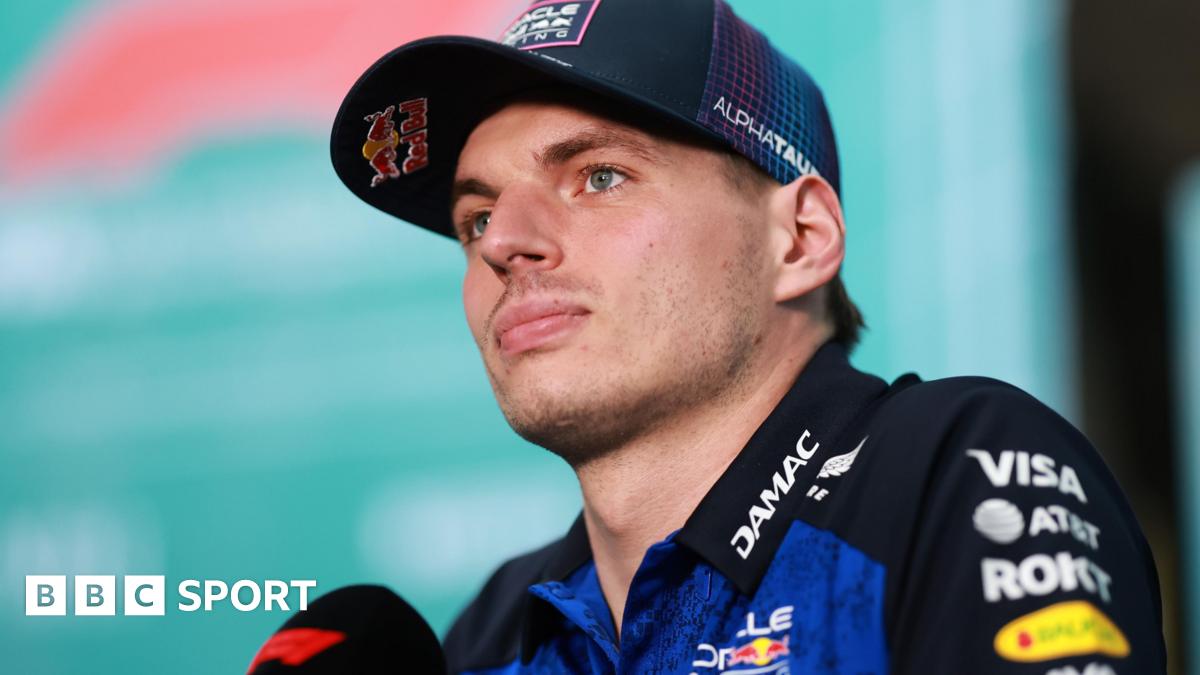
Formula 1’s attempt to refine its current technical landscape has met with a lukewarm reception from the sport’s most successful contemporary driver. Speaking ahead of the Miami Grand Prix, Red Bull Racing’s Max Verstappen dismissed recent regulatory adjustments as just a tickle
, suggesting that the tweaks fail to address the fundamental issues drivers have with the current style of racing.
The comments come as the FIA and Formula 1 management attempt to mitigate some of the more counter-intuitive
driving techniques that have emerged under the current power unit regulations. Specifically, the governing body sought to reduce the need for drivers to “lift and coast” or decelerate prematurely before corners during qualifying sessions—a tactic previously used to optimize battery charging for the hybrid systems.
While some of the grid has welcomed the shift, Verstappen’s critique highlights a deeper friction between the athletes and the technical direction of the sport. The three-time world champion—now a four-time champion—has been vocal about his dissatisfaction with the 2026 regulations, which he has previously described as anti-racing
and compared to Mario Kart
due to the heavy emphasis on battery management over raw speed and driver skill.
The ‘Tickle’ vs. The Transformation
The recent rule changes, implemented during the April break, were designed to be incremental. According to the FIA, these adjustments were not intended to significantly alter the competitive balance of the field but rather to improve the quality of the racing and the logic of the driving techniques employed on track. However, for Verstappen, these minor corrections are insufficient.
Verstappen has argued that the sport requires really big
changes to the power unit regulations, particularly looking toward 2027. His frustration stems from a belief that the current technical framework forces drivers into a style of racing that prioritizes energy recovery over traditional racing lines and aggressive overtaking. By labeling the current efforts as a tickle
, he is signaling that the FIA is treating a systemic problem with a superficial solution.
Despite his criticism of the rules, Verstappen noted a positive trend in the communication between the drivers and the rule-makers. He acknowledged that drivers now have a more prominent role in F1 governance, suggesting that the dialogue is opening up, even if the resulting policy changes have yet to meet his expectations.
Diverging Views on the Grid
Not all drivers share Verstappen’s cynicism. McLaren’s Lando Norris offered a contrasting perspective, suggesting that drivers have to be happy
with the changes. Norris indicated that while the tweaks are subtle, they are a step in the right direction and that the fundamental nature of the race will not be drastically altered by these specific adjustments.
This divide reflects a broader tension within the paddock: the balance between technical innovation and “pure” racing. The current era of F1 engines features a near 50-50 split between internal combustion and electrical power, a transition that has fundamentally changed how drivers approach a lap. For some, this is the evolution of the sport; for Verstappen, it is a distraction from the core essence of competition.
The Stakes: Verstappen’s Future in F1
The ongoing debate over technical regulations is not merely a matter of preference for Verstappen; it has grow intrinsically linked to his future in the sport. Following the Japanese Grand Prix, the Red Bull driver revealed he is considering whether to stay in Formula 1, citing his dissatisfaction with the engine regulations introduced this year.
Verstappen has stated he is taking my time
before making a final decision. His willingness to walk away from the pinnacle of motorsport underscores the severity of his critique. For a driver who has dominated the current era, the prospect of a future defined by battery management rather than driver intuition appears to be a significant deterrent.
The impact of these regulations extends beyond the drivers to the teams. The 2026 rules represent a massive investment for manufacturers, and any significant pivot toward 2027—as Verstappen desires—would require a monumental shift in development cycles and financial planning for the ten teams on the grid.
Summary of Technical Friction
| Perspective | View on Current Tweaks | Desired Outcome |
|---|---|---|
| Max Verstappen | A tickle/ Insufficient |
Fundamental overhaul of power unit rules by 2027 |
| Lando Norris | Positive / Acceptable | Incremental improvement of racing quality |
| FIA / F1 | Corrective / Non-disruptive | Reduction of counter-intuitive driving techniques |
What Happens Next
As the circus moves through the Miami Grand Prix, the focus will remain on whether these “tickle” changes actually translate to better racing on track. The FIA continues to monitor the data from qualifying and race trims to determine if the reduction in lifting-and- coasting is achieving its goal.

The next critical checkpoint for the sport’s technical direction will be the ongoing consultations between the FIA and the teams regarding the 2026 and 2027 roadmaps. Whether these discussions lead to the big changes
Verstappen is demanding, or continue along the path of incremental adjustments, will likely dictate whether the four-time champion remains on the grid.
Do you agree with Verstappen that F1 needs a fundamental reset of its power unit rules, or are the current tweaks enough to keep the racing exciting? Share your thoughts in the comments below.