
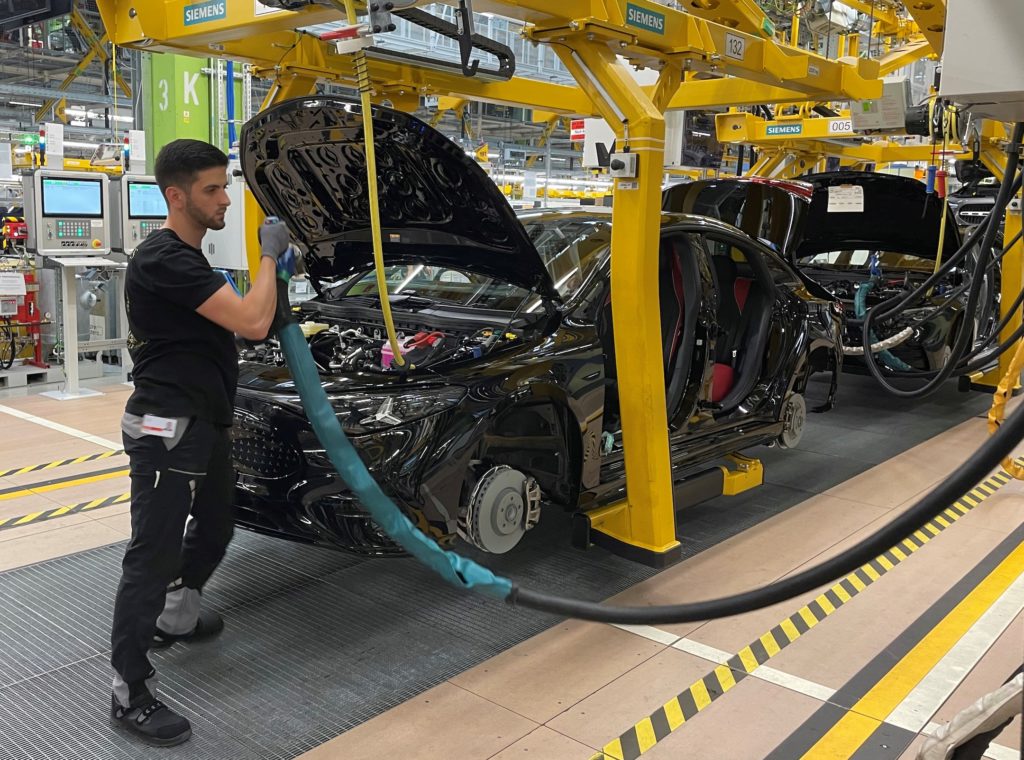
President Donald Trump has announced a significant escalation in trade tensions with the European Union, declaring his intention to impose 25% tariffs on cars and trucks imported from EU member states starting next week. The move signals a sharp return to aggressive trade maneuvers, targeting the European automotive sector in a bid to reduce trade deficits and pressure the bloc into renegotiating trade terms.
The announcement comes as part of a broader strategy to prioritize American manufacturing and domestic industry. By targeting the automotive sector—one of the European Union’s most vital economic engines—the administration is leveraging a high-impact pressure point to secure concessions on other trade issues, including agricultural access and digital services taxes.
The potential for a trade war is now a primary concern for global markets, as EU officials have previously indicated that any such tariffs would be met with “proportionate” retaliatory measures. This cycle of tariffs and counter-tariffs threatens to disrupt global supply chains and increase costs for consumers and manufacturers alike.
The Mechanics of the 25% Automotive Tariffs
The proposed 25% tariffs on cars and trucks are designed to make European imports more expensive, thereby incentivizing consumers to purchase American-made vehicles and encouraging European manufacturers to shift production facilities to the United States. This approach mirrors previous trade actions taken by the administration to protect domestic steel and aluminum industries.
Industry analysts suggest that the timing of the implementation—set for next week—leaves remarkably little room for diplomatic resolution. The automotive industry relies on “just-in-time” logistics, meaning that sudden shifts in tariff structures can lead to immediate price hikes at dealerships and logistical bottlenecks at ports of entry.
For the European Union, the impact is concentrated in heavy-hitting automotive hubs like Germany. The German economy, heavily dependent on vehicle exports to the U.S. Market, faces a significant risk of revenue loss if its luxury and commercial vehicle exports become prohibitively expensive for American buyers.
Pentagon Integrates AI via Tech Partnerships
In a separate development regarding national security and technological advancement, the Pentagon has announced the finalization of agreements with seven major technology companies to integrate advanced artificial intelligence (AI) tools into military operations. These deals are intended to enhance data processing, situational awareness, and autonomous systems across various branches of the U.S. Armed forces.

The collaboration aims to bridge the gap between private-sector innovation and government procurement. By leveraging existing AI frameworks from the tech industry, the Department of Defense seeks to accelerate the deployment of predictive analytics and machine learning capabilities without the lengthy lead times associated with traditional internal development.
Whereas the specific names of the seven companies have not been listed in every official summary, the initiative reflects a strategic shift toward “software-defined warfare,” where AI-driven decision-making is viewed as a critical edge over global adversaries. The Pentagon has emphasized that these tools will be used to augment human decision-making, not replace it, particularly in high-stakes kinetic environments.
Legal Fallout: Conviction of Former Miami Congressman
The U.S. Justice system has delivered a conviction in a high-profile case involving foreign influence and illegal lobbying. A former Miami congressman, who maintained close ties to Senator Marco Rubio, has been convicted of secretly lobbying on behalf of the Venezuelan government.
The case centers on violations of the Foreign Agents Registration Act (FARA), which requires individuals to disclose when they are acting as agents of foreign principals in a political or quasi-political capacity. Prosecutors argued that the former lawmaker leveraged his political connections and former office to advance the interests of the Venezuelan regime without notifying the Department of Justice.
This conviction underscores a broader federal crackdown on “shadow lobbying,” where former officials use their networks to influence U.S. Policy for foreign powers. The legal proceedings highlighted the vulnerability of political networks to foreign infiltration, particularly in regions with high concentrations of exiled political populations and active foreign diplomatic interests.
Global Observations: May Day and International Workers’ Day
Across the globe, millions of people have gathered to mark May Day, also known as International Workers’ Day. The events, which occur annually on May 1, serve as a reminder of the historical struggle for labor rights, including the fight for the eight-hour workday and safer working conditions.
In many European and Latin American cities, the day was marked by massive marches and rallies. While some events remained celebratory of labor achievements, others turned into protests against inflation, stagnant wages, and the precarious nature of the “gig economy.” In several countries, general strikes were called to pressure governments into increasing minimum wages and expanding social security benefits.
The global nature of these protests highlights a recurring theme in 2026: the widening gap between corporate profits and worker compensation. From the industrial heartlands of Europe to the urban centers of Asia, the May Day demonstrations reflected a coordinated demand for a more equitable distribution of wealth in the post-pandemic economic era.
Key Takeaways from the News Wrap
- Trade Tension: The U.S. Will impose 25% tariffs on EU cars and trucks starting next week, risking a transatlantic trade war.
- Military AI: The Pentagon has partnered with seven tech firms to integrate AI tools into defense operations.
- Foreign Influence: A former Miami congressman was convicted of illegal lobbying for Venezuela, violating FARA laws.
- Labor Rights: International Workers’ Day (May Day) saw global protests focusing on wages and labor conditions.
The next critical checkpoint for global markets will be the official implementation date of the automotive tariffs next week, which will likely trigger immediate responses from the European Commission and potential retaliatory tariff lists.
We invite our readers to share their perspectives on the potential impact of these tariffs on the global economy in the comments below.