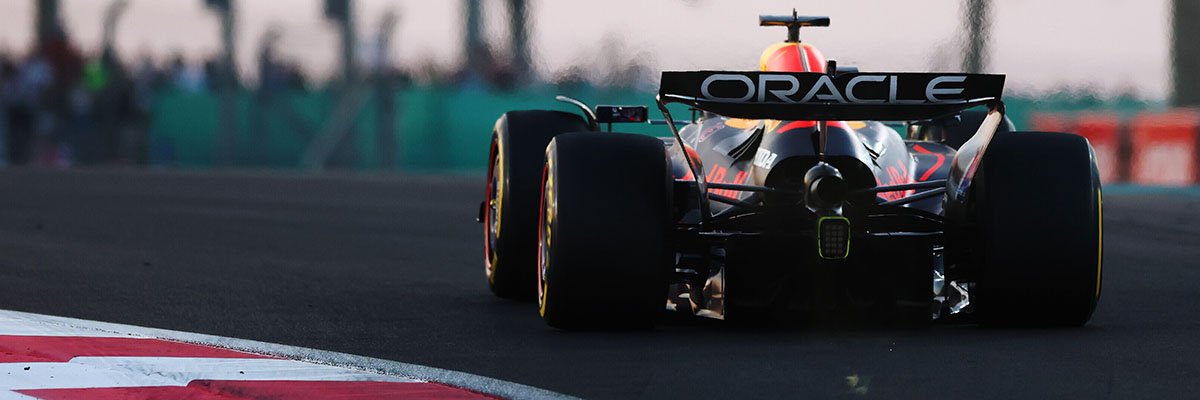
In the high-stakes environment of Formula 1, where victory is often decided by thousandths of a second, the battle for supremacy is fought as much in the server room and the wind tunnel as it is on the asphalt. For Oracle Red Bull Racing, the pressure to innovate is currently amplified by a once-in-a-decade overhaul of sporting regulations that has mandated a ground-up redesign of the cars. To maintain their competitive edge, the Milton Keynes-based team has turned to advanced identity and access management (IAM) to solve a critical operational bottleneck.
The integration of identity technology from 1Password has allowed Oracle Red Bull Racing to dramatically optimize its aerodynamics testing procedures. By streamlining how engineers and technicians access critical systems, the team has managed to recover lost time during technical outages—a move that is vital in a sport governed by strict cost caps and limited testing windows.
The impact of this implementation is most evident in the team’s wind tunnel operations. According to reports from Computer Weekly, Oracle Red Bull Racing has slashed its wind tunnel recovery time from an hour to two minutes
, representing a 97% reduction in downtime during the test and development process.
Solving the Recovery Bottleneck in Aerodynamics
The wind tunnel is one of the most highly regulated environments in F1. Teams are restricted not only by the number of experiments they can conduct but also by the total number of hours they are permitted to operate. When a system failure occurs, every minute of downtime is a direct loss of a finite resource.
Matt Cadieux, the team’s CIO, noted that outages typically occur when engineers push the boundaries of their tools and methods, sometimes overloading the infrastructure with increasingly complex models. In the past, recovering from these outages involved cumbersome identity and access hurdles that delayed the return to active testing.
The guys who are developing and improving the tunnel and its software push boundaries. The models are bigger, the complexity is bigger, and sometimes when you’re running that load for the first time, the infrastructure is not capable enough. Probably once a every few months we have an outage, and it’s largely due to pushing boundaries with our tools and methods.Matt Cadieux, CIO, Oracle Red Bull Racing
By implementing 1Password’s Extended Access Management, the team ensures that every sign-in to every application across all devices is trusted and secure, removing the friction that previously slowed down the recovery process. This allows the team to return to their aerodynamic iterations almost immediately after a crash, ensuring they maximize their allotted testing budget.
The Role of IAM in a Regulated Engineering Environment
For the software development team within the aerodynamics department, the goal is to create a seamless pipeline between Computer Aided Design (CAD) packages and the Computational Fluid Dynamics (CFD) estate. This allows engineers to iterate designs quickly before they ever reach the physical wind tunnel.
Ian Brunton, who leads software development for the Aerodynamics team, emphasizes that high uptime is a non-negotiable requirement. As the team operates on an eight-week audit cycle for their testing budget, any systemic failure can jeopardize the entire development window for a specific car component.
The partnership with 1Password, announced as a multi-year global agreement in February 2025, positions the company as the exclusive Cybersecurity Partner of Oracle Red Bull Racing. The move to an IAM-centric security model allows the team to maintain rigorous security standards without sacrificing the speed required for elite motorsport engineering. According to a Business Wire announcement, the partnership focuses on ensuring that all access is secure and trusted, which is critical when handling proprietary telemetry and aerodynamic data that could be targeted by competitors or threat actors.
Why IAM Matters for F1 Performance
Even as a password manager might seem like a consumer tool, in an enterprise and high-performance context, IAM is about operational resilience. In F1, the “cost” of a security tool is measured not just in dollars, but in the time it takes for an engineer to get back to work. When a recovery time drops from 60 minutes to 120 seconds, the team effectively gains back hours of testing time over a season.
This efficiency is particularly crucial as Oracle Red Bull Racing continues to build a new wind tunnel—a project described by Brunton as significantly challenging but essential for developing the fastest car on the planet.
Key Operational Impacts
| Metric/Area | Previous State | Current State (Post-IAM) |
|---|---|---|
| Wind Tunnel Recovery Time | ~60 Minutes | 2 Minutes |
| Recovery Efficiency Gain | Baseline | 97% Reduction in Downtime |
| Access Management | Manual/Fragmented | Extended Access Management (XAM) |
| Security Partnership | Standard Vendor | Exclusive Cybersecurity Partner |
Looking Ahead: The Road to Miami and Beyond
As the team prepares for the fourth round of the season in Miami, the focus remains on translating these technical efficiencies into on-track performance. With drivers Max Verstappen and Isack Hadjar navigating a challenging start to the season, the ability of the Milton Keynes headquarters to iterate on car design rapidly is the team’s primary lever for recovery.
The integration of 1Password is part of a broader strategy to secure the DevOps pipeline, ensuring that the software used to design the car is as protected as the car itself. By reducing the “friction” of security, Oracle Red Bull Racing is attempting to prove that robust cybersecurity can actually accelerate engineering velocity rather than hinder it.
The team’s next major milestone will be the continued rollout and optimization of their new wind tunnel facility, which will further integrate these IAM protocols to ensure that as the hardware scales, the access management remains seamless.
Do you believe the integration of enterprise security tools like IAM can truly impact physical performance in sports? Share your thoughts in the comments below or share this analysis with your network.
Related reading