
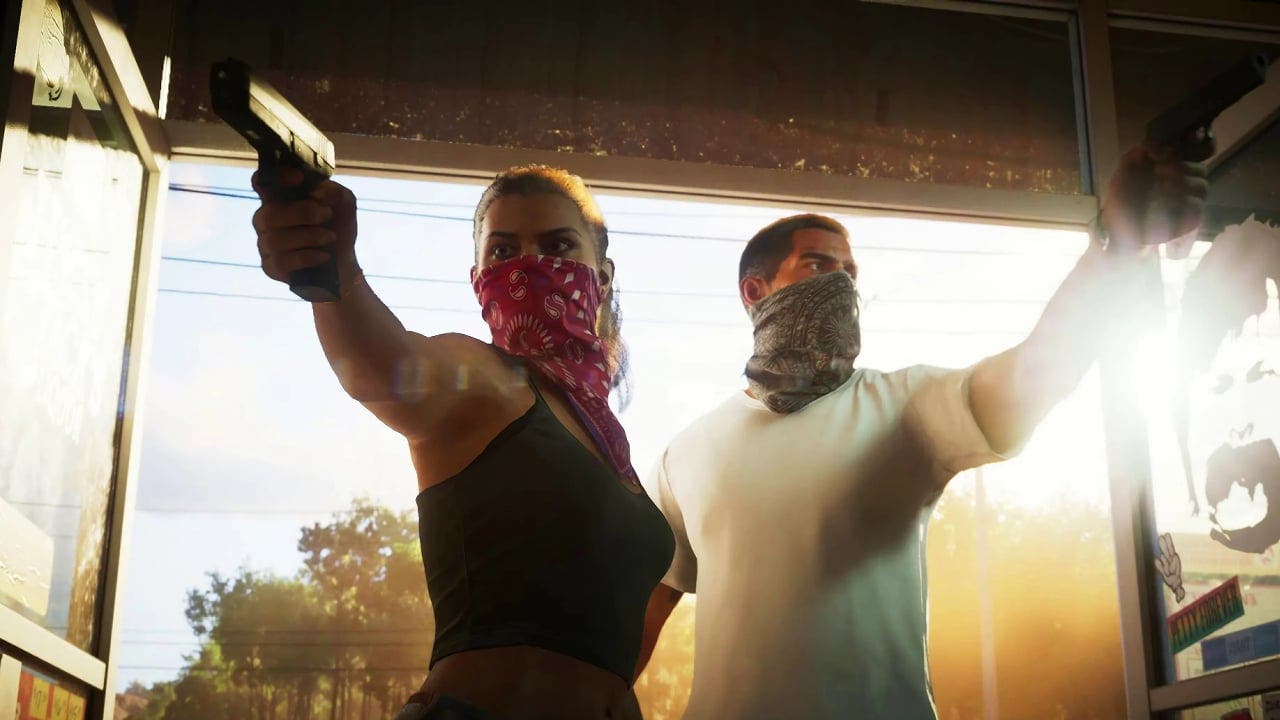
The gaming industry has seen its share of ambitious projects, but few carry the gravitational pull of Grand Theft Auto VI. As the world awaits the return to the neon-soaked streets of Vice City, the conversation has shifted from mere speculation about gameplay to a more staggering realization: the sheer financial scale of the project. For Rockstar Games and its parent company, Take-Two Interactive, this is not just a software release; it is a high-stakes financial gamble on a scale previously unseen in interactive entertainment.
Industry analysts and insiders suggest that the GTA 6 development cost is likely pushing the boundaries of what is considered a “AAA” budget, potentially reaching figures that would dwarf the production costs of the biggest Hollywood blockbusters. While Rockstar Games maintains a legendary level of secrecy regarding its internal ledger, the combination of an extended development cycle, a massive global workforce, and the pursuit of unprecedented technical fidelity suggests a budget that could be measured in the hundreds of millions, if not billions, of dollars.
This investment reflects a strategic shift in how open-world games are constructed. No longer is it enough to create a large map; the modern expectation is a living, breathing ecosystem with advanced artificial intelligence, hyper-realistic physics, and a level of detail that persists across a massive urban environment. For a company that redefined the genre with Grand Theft Auto V—a game that remains one of the most profitable entertainment products of all time—the pressure to exceed previous benchmarks is immense.
As we analyze the economic machinery behind the most anticipated game of the decade, it becomes clear that the financial risk is matched only by the potential reward. The industry is watching not just to see if the game is good, but to see if the “mega-budget” model of game development is sustainable in an era of rising production costs and volatile consumer spending.
The Economics of an Unprecedented Budget
While official figures remain under lock and key at Rockstar’s headquarters, the industry can extrapolate the cost of GTA VI by looking at the trajectory of modern game development. Production costs for top-tier titles have skyrocketed due to “asset inflation”—the requirement for 4K textures, motion-capture for thousands of lines of dialogue, and the need for specialized engineers to optimize the game for the PlayStation 5 and Xbox Series X|S.

To put this in perspective, some of the most expensive games in recent history have seen budgets exceeding $200 million to $300 million. However, GTA VI is a project of a different magnitude. It has been in active development for years, employing thousands of developers across multiple global studios. When factoring in the salaries of elite software engineers, artists, and writers over a decade-long window, the burn rate is astronomical. Some industry projections suggest the total investment, including marketing, could potentially approach or exceed $1 billion, making it a candidate for the most expensive piece of media ever created.
This spending is driven by a commitment to “total immersion.” Reports indicate a heavy investment in AI-driven NPC (non-playable character) behavior and a level of environmental interactivity that aims to eliminate the “static” feeling of previous open worlds. Every dollar spent is an attempt to ensure that the game does not just meet expectations but resets the industry standard for the next decade.
The Fall 2025 Window and Platform Strategy
The financial pressure of such a massive budget makes the release timing critical. Any delay can cost a studio millions in additional overhead and lost opportunity. In a recent update to investors, Take-Two Interactive narrowed the expected release window for Grand Theft Auto VI to Fall 2025. This specific guidance is vital for the company’s stock valuation and allows the industry to calibrate its expectations for the 2025 holiday season.
The game is confirmed for the PlayStation 5 and Xbox Series X|S, focusing on the current generation of hardware to leverage high-speed SSDs and advanced GPU capabilities. By targeting these consoles first, Rockstar can ensure a consistent technical baseline, avoiding the complications of supporting older hardware that would inevitably bottleneck the game’s performance.
One of the most debated topics among the community is the PC release. Historically, Rockstar has employed a staggered release strategy, launching on consoles first and bringing the game to PC months or even a year later. While rumors of a “Day 1” PC launch persist, there is no official confirmation. From a business perspective, a staggered release allows the company to maximize initial console sales and then “refresh” the hype cycle with a definitive PC version that is optimized for a wide array of hardware configurations.
Risk Management in the “Too Considerable to Fail” Era
The scale of the GTA 6 development cost introduces a significant systemic risk. In the current gaming climate, a “mixed” reception for a game of this size could be catastrophic. We have seen other AAA titles struggle under the weight of their own ambition, where massive budgets led to “feature creep” and polished-but-hollow experiences.

Rockstar’s primary hedge against this risk is its reputation for obsessive polish. The company is known for delaying titles until they are deemed “perfect,” a luxury afforded by the massive success of the GTA Online ecosystem. The recurring revenue from GTA Online has provided Take-Two with a financial cushion that few other publishers possess, allowing them to fund the development of GTA VI without the immediate pressure of quarterly profits.
However, the stakes are higher than ever. The game is expected to be a primary driver for hardware sales in late 2025. If the game delivers on its promise, it will likely cement the open-world formula for another generation. If it fails to innovate, it may signal the end of the “mega-budget” era, forcing the industry to pivot back toward smaller, more focused experiences.
Key Financial and Release Factors
- Estimated Budget: While unconfirmed, analyst projections suggest a total cost (development + marketing) that could reach unprecedented heights, potentially crossing the $1 billion mark.
- Official Release Window: Narrowed to Fall 2025 per Take-Two Interactive’s investor guidance.
- Target Platforms: Confirmed for PlayStation 5 and Xbox Series X|S; PC release date remains unannounced.
- Revenue Engine: The continued success of the GTA Online ecosystem provides the capital necessary for such high-risk development.
What This Means for the Future of Gaming
The development of GTA VI is a litmus test for the entire software industry. As the cost of creating “photorealistic” worlds continues to climb, the barrier to entry for AAA development becomes nearly insurmountable for anyone but the largest corporations. This trend is pushing many studios toward the “AA” space—games with high quality but more modest scopes—or toward the indie sector.

If GTA VI becomes a commercial juggernaut, it will justify the continued pursuit of these massive budgets. It will prove that there is a global appetite for “everything games”—titles that attempt to simulate entire cities and social structures with absolute fidelity. For the consumer, this means more immersive experiences, but it also means a likely increase in the retail price of games to offset the rising costs of production.
the technical innovations developed for GTA VI—particularly in AI and procedural generation—will likely trickle down to other titles. The tools created to manage a project of this scale often become the industry standards for the next decade, influencing how every other open-world game is built.
The next major checkpoint for concrete information will be Take-Two Interactive’s upcoming quarterly earnings calls, where leadership typically provides updates on the “pipeline” of major releases. Until then, the world remains in a state of high-tension anticipation, waiting to see if the most expensive game in history can live up to the legend.
Do you think the era of the “billion-dollar game” is sustainable, or is the industry reaching a breaking point? Share your thoughts in the comments below.