
In the high-stakes world of cinema, the trajectory of a career often mirrors the intensity of the art itself. For Filip Renč, one of the Czech Republic’s most recognizable directors and actors, that trajectory has been a study in extremes. From the whirlwind of child stardom and a reputation as a cinematic rebel to a present defined by domestic tranquility and a slower pace of life, Renč’s evolution is a compelling narrative of personal maturation.
For those who followed the Czech entertainment scene during the late 20th and early 21st centuries, the name Filip Renč was often synonymous with a certain restless energy. He was the “enfant terrible” of the industry—a man whose professional ambition was matched only by a public persona that embraced the chaos of the spotlight. However, as he reaches the milestone of 60, the narrative has shifted. The man once known for his stormy temperament and love for the party circuit has transitioned into a phase of life that observers describe as almost “pensioner-like” in its serenity.
This transition is not merely a result of age, but a conscious pivot toward stability, and family. Now residing in a quiet bungalow on the outskirts of Prague with his wife, Marie Kružíková, Renč has traded the volatility of the urban social scene for the predictability of home life. This shift represents a broader theme often seen in high-performance careers—whether in the arts or the professional sports I have covered for over a decade—where the drive for external validation eventually gives way to a search for internal peace.
From Child Star to FAMU Visionary
Filip Renč’s relationship with the camera began long before he stepped behind it. His entry into the world of acting occurred at the age of five, establishing him as a fixture in children’s films. This early exposure to the mechanics of storytelling provided him with a unique vantage point, allowing him to understand the performative nature of the industry before he ever entered formal training.
As he transitioned into adulthood, Renč did not abandon acting, appearing in notable projects such as Vratné lahve and Tmavomodrý svět. However, his true calling lay in the architectural side of filmmaking: directing. He pursued this passion at the prestigious FAMU (Film and TV School of the Academy of Performing Arts in Prague), where he specialized in documentary filmmaking.
It was during his time at FAMU that Renč delivered one of the most impactful works of his early career, Requiem pro panenku (Requiem for a Doll). The film, which garnered significant critical acclaim, was not a product of fiction but was based on a report by journalist Josef Klíma. Renč has noted in interviews that his intent was not to shock the audience for the sake of controversy, but to present a powerful, authentic story based on real-world events. This commitment to emotional truth became a hallmark of his directorial style.
A Legacy of Cinematic Contrast
The body of work produced by Filip Renč is characterized by a stark contrast between mainstream appeal and provocative experimentation. He is widely recognized for directing hits such as Rebely (Rebels) and Román pro ženy (A Novel for Women), films that resonated with broad audiences and cemented his status as a commercially viable director in the Czech market.
Parallel to these successes, Renč continued to push boundaries with more complex biographical and dramatic works. His direction of Lída Baarová and Hlídač č. 47 demonstrated a capacity for handling historical weight and political nuance, moving beyond the “rebel” label of his youth to establish himself as a serious craftsman of the screen. You can explore his extensive filmography and professional credits via his IMDb profile.
Perhaps the most controversial chapter of his professional life came not from a feature film, but from a series of public service announcements. Renč was commissioned to create television spots for the Czech Ministry of Transport under the campaign title “Nemyslíš – zaplatíš” (You don’t think – you pay). These ads were designed to deter reckless driving through visceral, often harrowing imagery. While the campaign sparked intense debate and left some viewers shaken, it was widely regarded as effective in achieving its goal of increasing road safety awareness.
The Great Pivot: Finding Stillness at 60
The public image of Filip Renč for many years was that of a “bouřlivák”—a storm-bringer. He was frequently seen in the company of beautiful women and associated with the high-energy nightlife of Prague. For a man who spent decades in the fast lane, the current state of his life represents a radical departure.
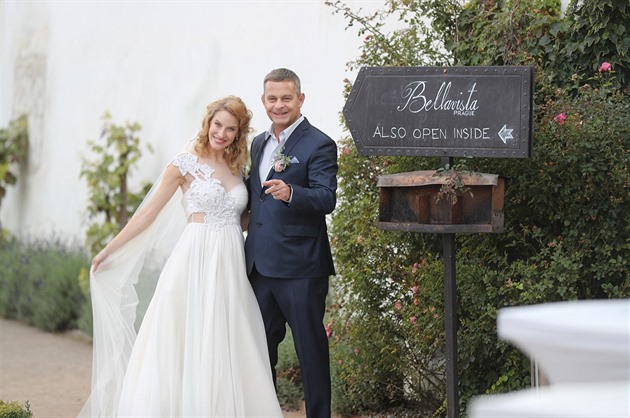
In recent years, Renč has found a grounding influence in his marriage to Marie Kružíková, who is 37. Together, they have moved away from the city center to a bungalow located outside the capital. While he still returns to Prague for professional engagements, the center of his gravity has shifted toward the domestic sphere. This move to the suburbs is more than a change of address; it is a symbolic distancing from the “party animal” persona of his younger years.
This lifestyle change has been viewed by some as a premature retirement—hence the comparisons to living like a “pensioner”—but for Renč, it appears to be a necessary evolution. The intensity required to maintain a high-profile career in the arts often necessitates a period of decompression. By prioritizing his relationship with Kružíková and his role as a father, Renč is redefining success not by the number of premieres he attends, but by the quality of his private life.
His focus has also shifted toward the future of his children. He has expressed a clear desire for his daughter to pursue a path in medicine, hoping she becomes a doctor—a preference that suggests a desire for his children to find a stable, service-oriented profession far removed from the volatility of the entertainment industry.
Understanding the “Rebel to Retiree” Arc
The transition Filip Renč has undergone is a phenomenon often observed in creative fields. The “rebel” phase is frequently a byproduct of the search for identity and the desire to challenge established norms. In the context of Czech cinema, Renč used this energy to break molds and create provocative content.
However, the sustainability of such a lifestyle is limited. The shift toward a quieter existence is often a strategy for longevity. By reducing the external noise of fame and the exhaustion of social obligations, artists are often able to find a new, more refined creative voice. For Renč, the “quiet life” is not an end to his ambition, but a change in its direction.
Key Transitions in Filip Renč’s Life
- Early Childhood: Entry into acting at age 5, establishing a foundational relationship with the film industry.
- Academic Foundation: Study at FAMU, shifting focus from performance to documentary and feature directing.
- Professional Peak: Balancing commercial hits like Rebely with provocative social campaigns for the Ministry of Transport.
- Personal Evolution: Transition from a high-profile socialite to a family-oriented life in a suburban bungalow.
- Current Focus: Celebrating his 60th birthday with a focus on domestic stability and his children’s education.
The Broader Impact of Renč’s Career
Filip Renč’s contribution to Czech culture extends beyond individual films. He represents a generation of filmmakers who bridged the gap between the rigid structures of the past and the commercial freedom of the present. His ability to pivot from a documentary about human suffering to a lighthearted romantic comedy demonstrates a versatility that is rare in the industry.

his willingness to engage with government institutions for public safety campaigns shows a recognition of the director’s role as a social communicator. The “Nemyslíš – zaplatíš” campaign remains a case study in the use of “shock” tactics for the public quality, proving that Renč’s instinct for provocation could be harnessed for purposes beyond artistic expression.
For the global audience, Renč’s story is a reminder that the public persona is often a performance in itself. The “rebel” that the tabloids loved was only one facet of a man who also possessed the discipline to study at FAMU and the empathy to tackle difficult social subjects. The current “quiet” version of Filip Renč is perhaps the most authentic version of the man.
What Happens Next?
As Filip Renč enters his seventh decade, the question is no longer “what will he provoke?” but “what will he preserve?” While there is no official announcement of a complete retirement from filmmaking, his current lifestyle suggests a preference for selective projects over prolific output. The focus has clearly shifted toward his family and the support of his daughter’s aspirations in the medical field.
Whether he returns to the director’s chair for a major feature or continues to enjoy the tranquility of his bungalow, Renč has already secured his place in the history of Czech cinema. His journey from a five-year-old actor to a 60-year-old patriarch serves as a blueprint for navigating the pressures of early fame and finding a sustainable path to personal contentment.
We invite our readers to share their thoughts on the evolution of public figures in the comments below. Do you believe a period of “rebellion” is necessary for artistic growth, or is the transition to a quiet life the ultimate goal of a successful career?