
The landscape of political discourse in Germany is facing a critical inflection point as the nation navigates the most significant shift in its security architecture since the Cold War. Armin Laschet, a prominent figure within the Christian Democratic Union (CDU) and former candidate for chancellor, has raised urgent warnings regarding the shrinking space for legitimate political disagreement, suggesting that the country is drifting toward a “black-and-white” approach to governance and diplomacy.
At the heart of this concern is the concept of the “opinion corridor”—the range of views deemed acceptable by the political and media establishment. Laschet argues that this corridor has narrowed to a degree that threatens democratic pluralism, particularly concerning Germany’s approach to the conflict in Ukraine and its long-term relationship with Russia. He asserts that holding a view contrary to the prevailing consensus should not result in moral discredit or the accusation that one is an agent of a foreign power.
This tension arises during the ongoing Armin Laschet political discourse Germany debate, where the necessity of a “hard line” against aggression is increasingly viewed as the only permissible stance. While Laschet does not advocate for the abandonment of support for Ukraine, he emphasizes that advocating for diplomatic channels or discussing the eventual terms of a peace settlement should not be equated with being a “Putin troll” or a traitor to national interests.
The debate reflects a broader struggle within the German center-right and the governing coalition to balance the immediate requirements of military deterrence with the long-term reality that diplomatic resolutions are inevitable. As Germany continues its Zeitenwende—the historic “turning point” in policy announced by Chancellor Olaf Scholz—the pressure to maintain a monolithic front has, according to Laschet, led to the marginalization of nuanced strategic thinking.
The Narrowing of the ‘Opinion Corridor’
The “opinion corridor” refers to the boundaries of acceptable public discourse. When these boundaries shrink, political actors may feel pressured to adhere to a singular narrative to avoid professional or social ostracization. Laschet suggests that this trend is particularly evident in foreign policy, where the complexity of geopolitical maneuvering is often reduced to a binary choice between total alignment with specific allies or suspected loyalty to an adversary.
This polarization is not merely a matter of rhetoric but has practical implications for how policy is formulated. When dissenting voices are silenced or discredited, the risk of “groupthink” increases, potentially leaving the government blind to strategic alternatives or the evolving needs of the population. Democratic pluralism relies on the ability to debate the means to an end—such as how to achieve a lasting peace—without the debate being framed as a question of loyalty to the state.
For Laschet, the danger lies in the “moral discredit” applied to political opponents. By framing policy disagreements as moral failings or security threats, the political process shifts from a negotiation of interests to a battle of identities. This shift makes compromise more difficult and alienates segments of the electorate who may feel their pragmatic concerns about energy security or escalation risks are being ignored.
Diplomacy vs. Deterrence in the Russia Conflict
The tension between maintaining a robust military deterrent and keeping diplomatic doors open is the central friction point in current German foreign policy. The prevailing strategy has been one of “strategic ambiguity” regarding the ceiling of military support, combined with a firm refusal to negotiate with the Kremlin until specific conditions are met.
However, Laschet points out that the ability to communicate with an adversary is a tool of statecraft, not a sign of weakness. The argument is that if the only acceptable position is one of total diplomatic silence, Germany loses its agency in shaping the eventual conclusion of the war. The fear is that by criminalizing the suggestion of dialogue, the political class is removing the very tools necessary to prevent the conflict from expanding into a broader European or global confrontation.
This internal debate occurs against a backdrop of immense pressure to increase defense spending and modernize the Bundeswehr. The challenge for the CDU and the broader political establishment is to support the defense of sovereignty while ensuring that the domestic political environment remains open to the strategic pivots that usually accompany the end of a major conflict.
The Strategic Vacuum: US Relations and European Autonomy
The debate over political discourse is inextricably linked to Germany’s anxiety over the reliability of the United States. For decades, the “nuclear umbrella” provided by Washington has been the cornerstone of European security. However, shifting political tides in the U.S. Have led many in Berlin and Brussels to question whether this guarantee remains absolute.
There is a growing consensus among security analysts that Europe must move toward greater strategic autonomy. This includes the possibility that the U.S. May eventually provide only the nuclear component of deterrence, leaving the conventional military burden entirely to European nations. This shift necessitates a more independent European security architecture, one that can withstand the volatility of American domestic politics. NATO’s strategic concept continues to emphasize the importance of burden-sharing, but the practical implementation is fraught with political difficulty.
One concrete manifestation of this drive for autonomy is the German government’s pursuit of enhanced long-range capabilities. Following limitations or refusals from U.S. Partners to provide certain advanced missile technologies, Berlin has signaled an intent to accelerate the development of its own cruise missile capabilities. This move is seen as a necessary step to ensure that Germany can contribute meaningfully to the deterrence of aggression without being entirely dependent on the political whims of a foreign capital.
The push for these capabilities is not merely technical but symbolic. It represents a departure from the post-WWII era of strategic dependence and a move toward a role where Germany accepts the responsibility—and the risk—of being a primary security provider in Europe.
The Domestic Cost of Political Polarization
The erosion of the opinion corridor has domestic repercussions that extend beyond foreign policy. When the political center is squeezed, the fringes often grow stronger. If voters feel that the mainstream parties have become ideological monoliths that punish dissent, they may seek out alternative movements that promise a return to “common sense” or “realism,” even if those movements are aligned with anti-democratic forces.
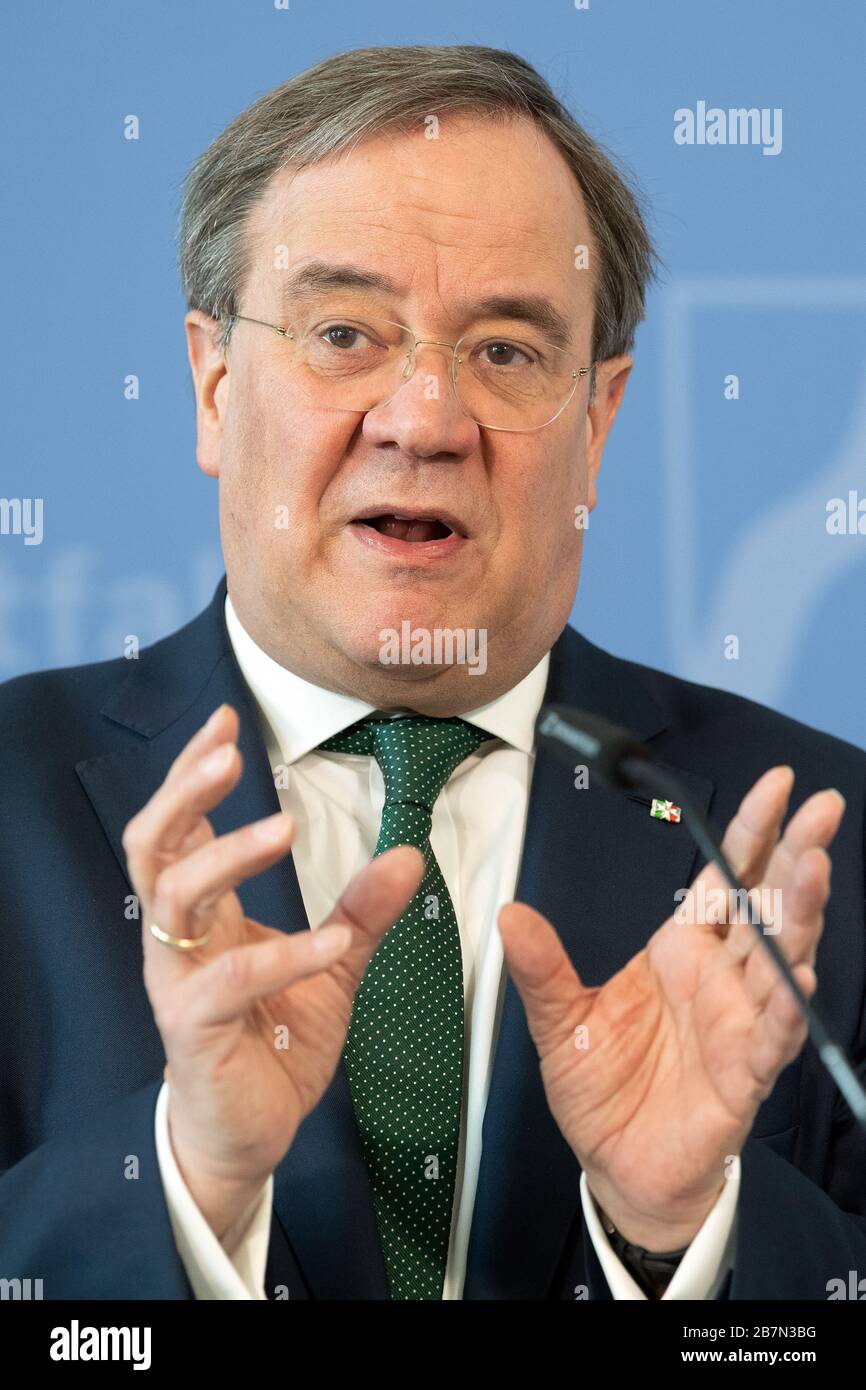
Laschet’s critique is, a warning about the health of the Republic. A “black-and-white republic” is one where the nuance of governance is replaced by the purity of ideology. In such an environment, the ability to govern a diverse and complex society is diminished because the tools of compromise and coalition are viewed as betrayals of the “correct” position.
this atmosphere affects the civil service and the diplomatic corps. If diplomats fear that suggesting a pragmatic opening to an adversary will lead to accusations of being a “foreign agent,” they may be less likely to provide the candid, unvarnished assessments that leaders need to make informed decisions. The result is a feedback loop where leaders only hear what they want to hear, further narrowing the opinion corridor.
Key Takeaways on the German Political Shift
- The Opinion Corridor: Armin Laschet warns that the range of acceptable political views in Germany has narrowed, leading to the marginalization of dissenting but legitimate opinions.
- Diplomatic Stigma: Advocating for dialogue with Russia is increasingly framed as a lack of loyalty or a sign of foreign influence, rather than a strategic choice.
- Strategic Autonomy: Germany is actively seeking to reduce its dependence on the U.S. By developing independent cruise missile capabilities and rethinking the European security architecture.
- Democratic Risk: The trend toward a “black-and-white” political culture may drive voters toward the fringes and hinder the government’s ability to find pragmatic exits from the Ukraine conflict.
As Germany continues to navigate the complexities of the Zeitenwende, the balance between security and pluralism remains precarious. The ability of the state to maintain a strong defense while preserving a vibrant, open, and critical political discourse will likely determine the stability of the European project in the coming decade.
The next critical checkpoint for these developments will be the upcoming federal budget negotiations, where the allocation of funds for the 100-billion-euro special defense fund will reveal the actual priority given to strategic autonomy over traditional procurement. The next NATO summit will provide further clarity on the evolving nature of the U.S. Security guarantee for Europe.
We invite our readers to share their perspectives on the balance between national security and political pluralism in the comments below.
Keep reading