For decades, the medical community viewed myopia—commonly known as nearsightedness—as a simple inconvenience of modern life, a hurdle easily cleared with a pair of glasses or a quick corrective surgery. But as a physician and health journalist, I have watched the narrative shift from one of convenience to one of clinical urgency. We are no longer dealing with a mere trend in prescription eyewear; we are facing a global public health crisis that threatens to impair the vision of billions.
The scale of the challenge is staggering. Projections suggest that by the year 2050, nearly half of the world’s population could be myopic. This surge is not merely a result of genetics, but a direct response to the way we live, work, and learn in the 21st century. From the classrooms of East Asia to the digital hubs of Europe and North America, the human eye is struggling to adapt to an environment dominated by “near-work” and a profound lack of natural light.
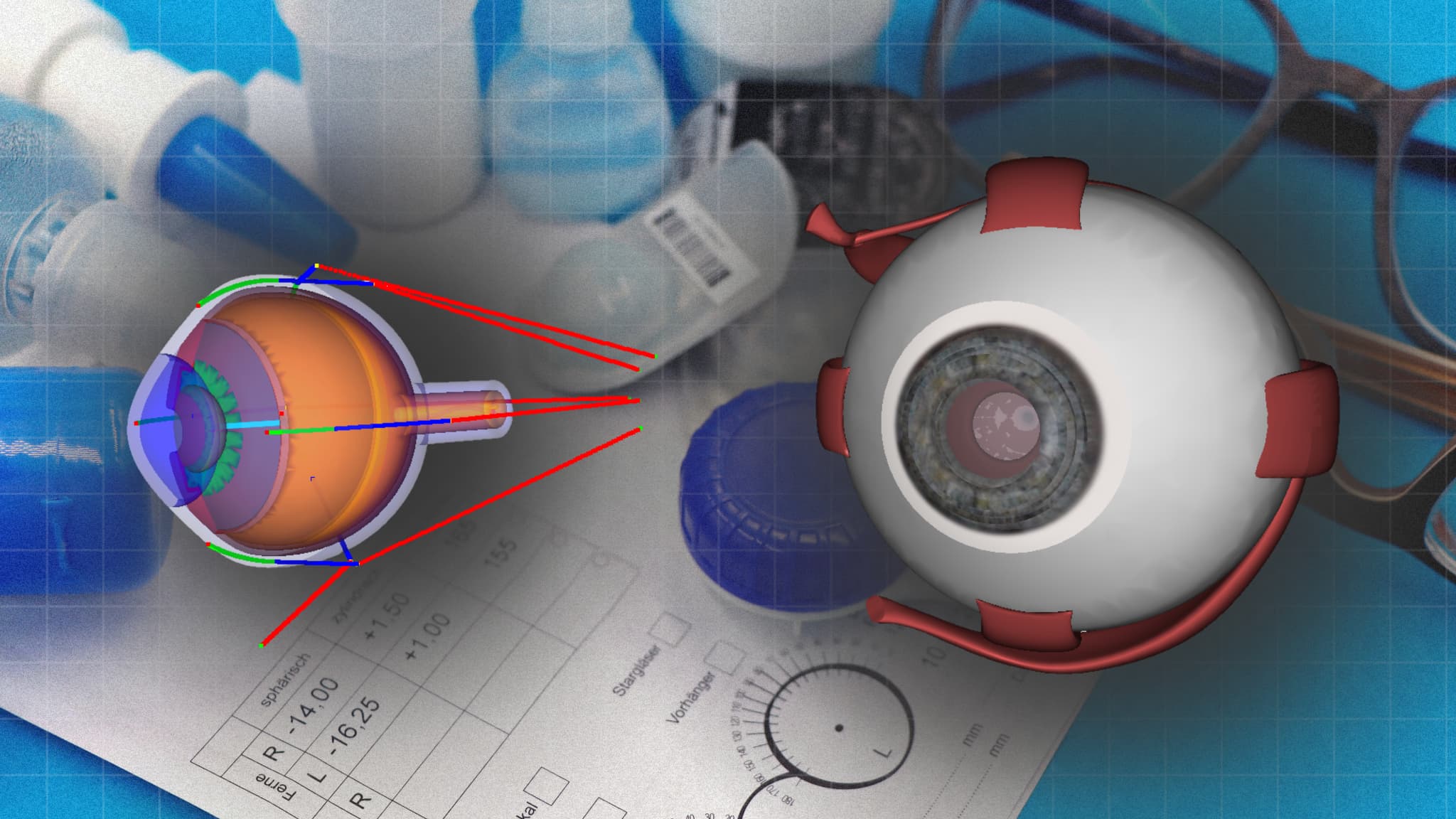
However, amidst this alarming trajectory, a new frontier of personalized medicine is emerging. Researchers are now leveraging “digital twins”—sophisticated virtual replicas of the human eye—to predict how myopia progresses in individual patients. By simulating the biological growth of the eye in a digital space, clinicians hope to move beyond the “one size fits all” approach to vision correction and instead implement preventative strategies tailored to a child’s specific ocular anatomy.
This shift toward predictive modeling represents a critical turning point. If we can understand exactly why a specific child’s eye is elongating too quickly, we can intervene before the condition evolves into “high myopia,” which carries significant risks of permanent vision loss, including retinal detachment and glaucoma. The goal is no longer just to help people see; it is to stop the progression of the disease itself.
The 2050 Projection: A Looming Global Epidemic
To understand why the medical community is sounding the alarm, one must look at the data. A landmark study published in the journal Ophthalmology estimated that by 2050, approximately 5 billion people—roughly 50% of the global population—will be myopic (Holden et al., 2016). This is not a linear increase; it is an acceleration.
Myopia occurs when the eyeball grows too long (increased axial length) or the cornea is too curved. This causes light to focus in front of the retina rather than directly on it, making distant objects appear blurry. While mild myopia is manageable, the real danger lies in high myopia (typically defined as refractive errors of -6.00 diopters or more). High myopia is not just about needing stronger glasses; it is a structural pathology. The stretching of the eye’s posterior wall thins the retina and choroid, dramatically increasing the lifetime risk of blinding complications.
The World Health Organization’s World Report on Vision emphasizes that the prevalence of refractive errors is rising globally, often exacerbated by a lack of access to basic eye care in developing regions. When millions of children develop myopia without access to correction, the impact on educational attainment and economic productivity is profound. We are witnessing a systemic failure of our environment to support our biological needs.
Digital Twins: The Future of Personalized Vision Care
The most exciting development in the fight against this epidemic is the application of “digital twin” technology. In engineering, a digital twin is a virtual model of a physical object used to test performance and predict failure. In ophthalmology, this means creating a mathematical and biological simulation of a patient’s eye.
Currently, most myopia management is reactive. A child fails a vision screen, gets glasses, and the optometrist monitors the prescription every year. If the prescription worsens, the glasses are strengthened. This approach treats the symptom (the blur) but does not address the cause (the elongation of the eye).
Digital twins change this dynamic by allowing researchers to input a patient’s specific data—such as current axial length, corneal curvature, and genetic markers—into a computer model. This virtual eye can then be “stressed” under different simulated conditions. For example, a clinician could simulate how a specific child’s eye might react to two hours of additional outdoor light per day versus a specific dosage of atropine drops.
By predicting the trajectory of the eye’s growth, doctors can identify “high-risk” children long before their vision deteriorates significantly. This allows for a precision-medicine approach where the intervention is chosen based on the simulated outcome of the digital twin, rather than a generalized clinical guideline. This technology aims to transform myopia from a condition we manage into a condition we can potentially halt.
The Environmental Catalyst: Why the World is Losing Focus
As a physician, I am often asked if screens are the sole culprit. The answer is more nuanced. While digital devices contribute to “visual fatigue” and a phenomenon known as Computer Vision Syndrome, the broader issue is the “indoor lifestyle.”
Human eyes evolved to look at the horizon. Natural sunlight triggers the release of dopamine in the retina, which acts as a biological brake, slowing the elongation of the eyeball. In the modern era, we have traded the outdoors for climate-controlled rooms and the horizon for a screen 30 centimeters from our faces. This combination—excessive “near-work” and insufficient light—creates a perfect storm for myopia.
The disparity in prevalence is most evident in East Asia, where intense academic pressure leads to extreme amounts of near-work and minimal outdoor time. In some urban areas, myopia rates among teenagers have soared toward 80% to 90%. This suggests that while genetics provide the blueprint, the environment pulls the trigger. The “myopia pandemic” is, in many ways, a biological manifestation of our sociological shift toward urbanization and digitalization.
Beyond Glasses: Modern Strategies for Myopia Control
For decades, the only answer to myopia was corrective lenses. However, we now know that standard single-vision glasses can sometimes inadvertently accelerate myopia in children by creating “peripheral defocus,” which may signal the eye to grow even longer to compensate.
Modern myopia management focuses on “slowing the growth” rather than just “fixing the blur.” Several evidence-based interventions are now widely used, as outlined by the American Academy of Ophthalmology:
- Low-Dose Atropine: Special eye drops administered nightly can gradual the elongation of the eye. Unlike traditional atropine used to dilate the pupil, these low doses (often 0.01% to 0.05%) target the growth mechanisms of the eye without causing significant side effects.
- Orthokeratology (Ortho-K): These are specialized hard contact lenses worn only overnight. They gently reshape the cornea while the patient sleeps, allowing for clear vision during the day without glasses and, crucially, slowing the progression of myopia in children.
- Peripheral Defocus Lenses: New generations of glasses and soft contact lenses are designed to create a “myopic defocus” in the periphery of the retina. This tricks the eye into thinking it has already grown too long, effectively signaling the growth process to slow down.
- The “20-20-20” Rule: To combat digital eye strain, clinicians recommend that every 20 minutes, you look at something 20 feet away for at least 20 seconds. While this doesn’t stop axial elongation, it reduces the acute strain on the ciliary muscles.
The Socio-Economic Implications of a Myopic World
The implications of 5 billion myopic people extend far beyond the cost of eyeglasses. From a public health perspective, the rise of high myopia is a ticking time bomb for healthcare systems. The cost of treating retinal detachments, cataracts, and glaucoma—all of which occur earlier and more frequently in myopic populations—will be astronomical.

there is a significant equity gap. In high-income countries, children have access to Ortho-K and atropine. In low- and middle-income countries, millions of children remain uncorrected, leading to “educational poverty.” A child who cannot see the blackboard cannot learn, and a teenager who cannot see the road cannot safely navigate their environment. Myopia is not just a medical issue; it is a barrier to global development.
Addressing this requires a policy-level shift. We need “vision-friendly” urban planning that ensures children have safe access to green spaces and natural light. We need educational reforms that break up long periods of sedentary near-work with mandatory outdoor breaks. The solution to the myopia epidemic cannot be found in the clinic alone; it must be found in the architecture of our daily lives.
What Happens Next: The Road to 2050
As we move toward the mid-century mark, the focus of ophthalmology is shifting from correction to prevention. The integration of AI and digital twins will likely lead to a world where a child’s ocular growth is monitored as closely as their height and weight. We may soon see “prescription environments”—schools and homes designed with specific lighting and spatial layouts to protect developing eyes.
The next critical checkpoint for global eye health will be the continued implementation of the WHO’s Integrated People-Centered Eye Care (IPEC) framework, which aims to bring essential vision services to the most underserved populations. Success will be measured not by how many glasses we sell, but by how many children we prevent from developing high myopia.
We are at a crossroads. We can either accept a future where half the world is visually impaired, or we can use the tools of digital innovation and environmental change to protect our sight. The technology exists; the data is clear. Now, we need the collective will to change how we live for the sake of our vision.
Do you have questions about myopia management for your children, or have you experienced the impact of the “digital strain” in your own life? We invite you to share your experiences and questions in the comments below to help us foster a broader conversation on global eye health.
Keep reading