
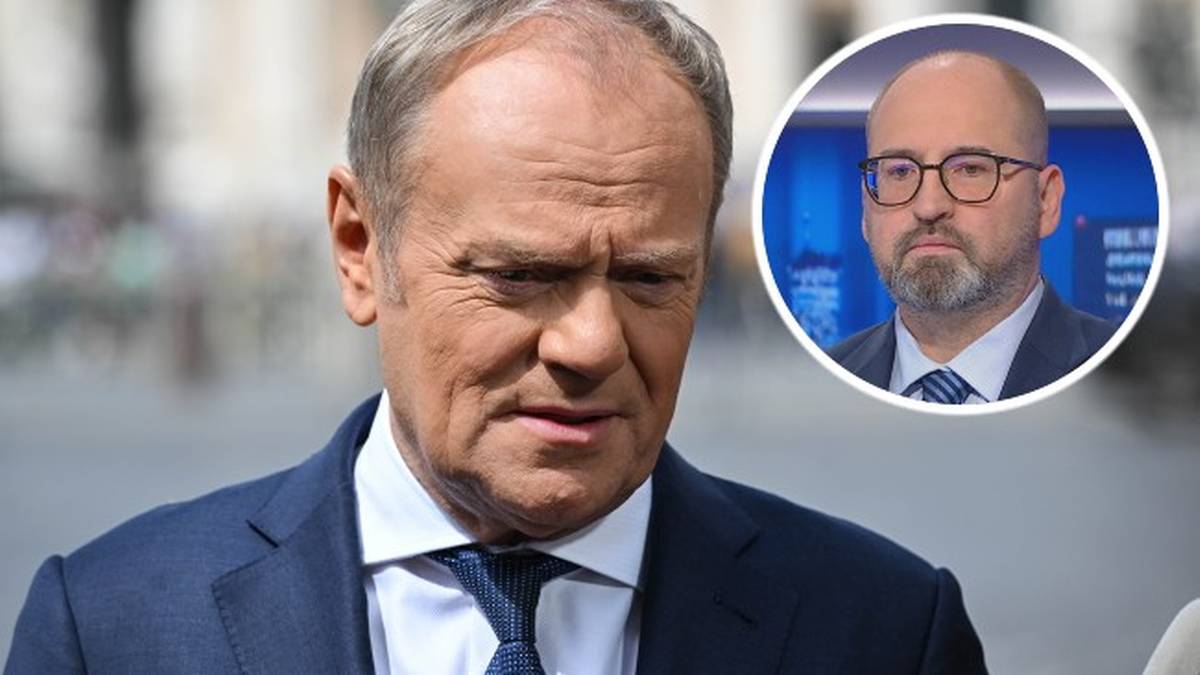
The current climate of Poland political tension has reached a new peak of rhetorical volatility, as members of the opposition Law and Justice (PiS) party continue to employ increasingly sharp language to describe Prime Minister Donald Tusk. In a recent exchange that underscores the deep polarization of the Polish state, a PiS politician described the Prime Minister’s behavior as that of a “troll,” signaling a shift from policy-based critique to personalized social media-style attacks.
For global investors and diplomatic observers, this verbal warfare is more than mere political theater. The friction between the current governing coalition and the PiS party represents a fundamental struggle over the direction of the Polish state, its judicial independence, and its relationship with the European Union. As Warsaw attempts to navigate a complex path of institutional “cleaning” following years of PiS rule, the resulting friction creates a volatile environment for both domestic policy and foreign direct investment.
From a macroeconomic perspective, the stability of the Polish government is inextricably linked to the release of billions of euros in European Union funding. While the Tusk administration has made significant strides in meeting the “milestones” required by Brussels to unlock these funds, the persistent hostility from the opposition threatens to complicate the legislative process required to sustain these reforms. The use of derogatory terms like “troll” reflects a broader strategy of delegitimization that complicates the consensus needed for long-term economic stability.
The Rhetoric of Polarization: From Policy to Personal Attacks
The description of Donald Tusk as a “troll” is not an isolated incident but part of a systemic pattern of communication within the Law and Justice party. By framing the Prime Minister’s public communications and social media presence as provocative or deceptive, PiS seeks to undermine the perceived legitimacy of the current administration’s efforts to reverse previous judicial changes.
This strategy of polarization serves a specific political purpose: it galvanizes a loyal base by painting the government as an “external” or “Brussels-led” force rather than a domestic representative. However, this approach often alienates moderate voters and creates a perception of instability that can worry international markets. When political discourse shifts from the merits of economic policy to personal insults, the risk of legislative deadlock increases, potentially stalling critical infrastructure projects and regulatory updates.
The tension is further exacerbated by the Prime Minister’s own history as a former President of the European Council, which PiS frequently uses to characterize him as more loyal to the EU than to Poland. This narrative of “divided loyalties” is the bedrock upon which these personal attacks are built, transforming standard political opposition into a clash of national identities.
Economic Stakes: EU Recovery Funds and the Rule of Law
The primary driver of current Polish political tension is the struggle over the rule of law. The European Commission had previously frozen significant portions of Poland’s share of the Recovery and Resilience Facility (RRF)—commonly known in Poland as the KPO—due to concerns over judicial independence and the independence of the judiciary. Under the Tusk government, Poland has worked to dismantle the mechanisms that the EU deemed contradictory to European values.

According to the European Commission, the unlocking of these funds is contingent upon the implementation of specific judicial reforms. The financial stakes are massive, involving billions of euros intended for the green transition and digitalization of the Polish economy. Any political instability that slows the implementation of these reforms directly impacts Poland’s ability to modernize its energy grid and industrial base.
The opposition’s attempts to characterize the government’s actions as “capitulation” to Brussels create a precarious balancing act for the Prime Minister. He must satisfy the stringent requirements of the EU to secure the funding while managing a domestic political landscape where a significant portion of the electorate views these changes as an infringement on national sovereignty.
Market Impact and Investor Confidence
For the business community, the primary concern is not the specific words used in political spats, but the underlying instability they signal. Poland has long been seen as a powerhouse of Central and Eastern European growth, attracting significant foreign direct investment (FDI) due to its skilled workforce and strategic location. However, the “judicial chaos” resulting from years of conflicting rulings between Polish and EU courts has created a legal uncertainty that complicates long-term corporate planning.
Investors typically prioritize predictability over ideology. The ongoing conflict between the Tusk government and the PiS-aligned elements still present in some state institutions creates a “dual power” dynamic that can lead to contradictory administrative decisions. When a politician describes a head of government as a “troll,” it reinforces the image of a country in the midst of a volatile transition rather than a stable, predictable partner.
the volatility of the Polish Zloty (PLN) often mirrors these political fluctuations. While the currency has shown resilience, sudden escalations in political rhetoric or threats of renewed EU sanctions can lead to short-term volatility, affecting import-export costs and the valuation of foreign-owned assets within the country.
Navigating the ‘New Normal’ in Warsaw
The current state of affairs suggests that Poland is entering a period of prolonged institutional friction. The Tusk government is attempting to “reset” the state, but the remnants of the previous administration’s influence in the judiciary and state-owned enterprises mean that the transition will be far from seamless.
Stakeholders affected by this tension include:
- International Corporations: Who must navigate a shifting regulatory landscape as old laws are repealed and new ones introduced.
- EU Member States: Who view Poland’s return to the “European mainstream” as critical for the unity of the bloc, especially in the face of security threats on the eastern border.
- Polish SMEs: Who rely on the timely disbursement of KPO funds to upgrade technology and compete globally.
To understand what happens next, observers should monitor the legislative progress of the “rule of law” bills and the official communications from the European Commission regarding the next tranches of funding. The ability of the government to move past the “troll” rhetoric and establish a functional, if cold, relationship with the opposition will be the true measure of Poland’s political maturity in this era.
Key Takeaways for Global Observers
- Rhetorical Escalation: The use of terms like “troll” indicates a shift toward highly personalized, social-media-driven political warfare in Poland.
- Financial Dependency: The release of EU RRF/KPO funds remains the most critical economic lever and the primary source of political friction.
- Institutional Friction: A “dual power” struggle persists between the new government and holdovers from the previous PiS administration.
- Investor Risk: Legal uncertainty remains the primary deterrent for long-term FDI, outweighing specific political disputes.
Looking Ahead: The Path to Stability
The immediate focus for the Polish administration will be the continued synchronization of national law with EU mandates. The next critical checkpoint will be the upcoming quarterly review of the recovery milestones by the European Commission, which will determine the next disbursement of funds. This process will serve as a litmus test for whether the Tusk government can maintain legislative momentum despite the aggressive rhetoric of the PiS opposition.

As Poland continues to redefine its role within the European Union, the transition from a populist-driven policy to a more liberal-democratic framework will likely remain fraught with tension. However, the economic imperative of modernization and the security necessity of EU integration provide a strong counterweight to the internal political strife.
We invite our readers to share their perspectives on the impact of political polarization on emerging markets in the comments below. For further updates on European economic policy, subscribe to the World Today Journal business briefing.