
For the modern university student, the digital portal is no longer just a tool; This proves the campus itself. From submitting a final thesis to checking a grade or communicating with a professor, the entire academic experience is now mediated by a handful of cloud-based platforms. But when the screen goes dark, the result is more than a technical glitch—it is a total cessation of academic operations.
This systemic fragility is the hidden cost of educational software centralization. As institutions across North America move their core functions to “software-as-a-service” (SaaS) models, they are trading local control for administrative efficiency. While the benefits of streamlined grading and centralized data are clear, the reliance on a few dominant providers creates a single point of failure that can leave thousands of students and faculty stranded during the most critical moments of the semester.
The vulnerability of this ecosystem is laid bare during large-scale outages. When a primary Learning Management System (LMS) fails, the immediate impact is a surge of “digital anxiety.” Students, conditioned to seek instant confirmation and performance-based metrics, find themselves unable to submit work or verify requirements. Faculty, in turn, discover that their own intellectual property—such as grading rubrics and assignment criteria—is locked inside a proprietary cloud, inaccessible without a functioning login.
This shift represents a fundamental change in the nature of higher education, moving from a decentralized model of human interaction to one managed by algorithmic “courseware.” The result is a precarious environment where a single server failure or a cybersecurity breach can effectively shut down a university’s instructional capacity.
The ‘Courseware’ Paradox: Efficiency vs. Resilience
The rise of platforms like Canvas by Instructure has revolutionized how courses are managed. By providing a unified interface for assignments, grading, and communication, these tools allow universities to standardize “learning objectives” and “learning outcomes” for accreditation and bureaucratic reporting. However, this standardization comes with a significant trade-off in resilience.
In the analog era, a professor’s grading criteria existed in a syllabus or a physical notebook. Today, those criteria often reside exclusively within the LMS. When the system goes down, the “rubric”—the detailed set of standards used to assess a student’s work—disappears. This creates a pedagogical vacuum where neither the teacher nor the student knows exactly how a project will be evaluated, rendering the educational process arbitrary until the software returns.
This dependency is exacerbated by the outsourcing of course management. By moving to the cloud, universities have offloaded the technical burden of IT maintenance to third-party vendors. While this reduces the need for on-campus server farms, it creates a strategic risk: the institution no longer controls the uptime or the security of its most vital instructional assets.
The Domino Effect of Integrated Systems
The complexity of the modern digital campus is further compounded by the integration of multiple, overlapping SaaS platforms. It is common for a university to use one system for learning (the LMS), another for enterprise resource planning (ERP) like Workday, and a third for security and authentication, such as Duo Security.
When the primary LMS fails, faculty often attempt to pivot to these secondary systems to maintain communication. However, these ERPs are frequently designed for administrative tasks—payroll, enrollment, and registration—rather than the fluid, interpersonal communication required during a crisis. The result is an “awkward” transition where professors must navigate alien dashboards to send basic messages, often with no certainty that the communication has reached the students.
Adding another layer of friction is the requirement for two-factor authentication (2FA). While 2FA is essential for protecting sensitive student data against unauthorized access, it introduces a hardware dependency. If a student’s mobile device fails or loses power, they are effectively locked out of their education, regardless of whether the university’s servers are functioning. The security measure intended to protect the user becomes a barrier to their academic progress.
The Human Cost of Digital Dependency
Beyond the technical failures, there is a profound psychological impact on the participants of the digital classroom. Modern students are increasingly oriented toward performance and professionalization, treating their degrees as a series of deliverables to be optimized. This mindset transforms a technical outage into a source of acute distress.
The “abundance of caution” that now defines academic interaction—students submitting work via multiple channels “just in case,” and professors sending redundant notifications across different platforms—is a symptom of a lack of trust in the tools they are forced to use. The ambiguity and uncertainty that were once accepted parts of human interaction have been replaced by a demand for absolute, real-time confirmation.
When the software fails, the gap between the human need for reassurance and the system’s inability to provide it creates a vacuum filled by anxiety. The reliance on software to manage every interaction means that when the software disappears, the human connection is often lost as well, leaving both students and faculty feeling trapped by the very tools designed to empower them.
Pathways to Academic Continuity
To mitigate these risks, institutions must move toward a model of “digital resilience” rather than total reliance on a single provider. This involves developing robust academic continuity plans that do not rely on the primary LMS.
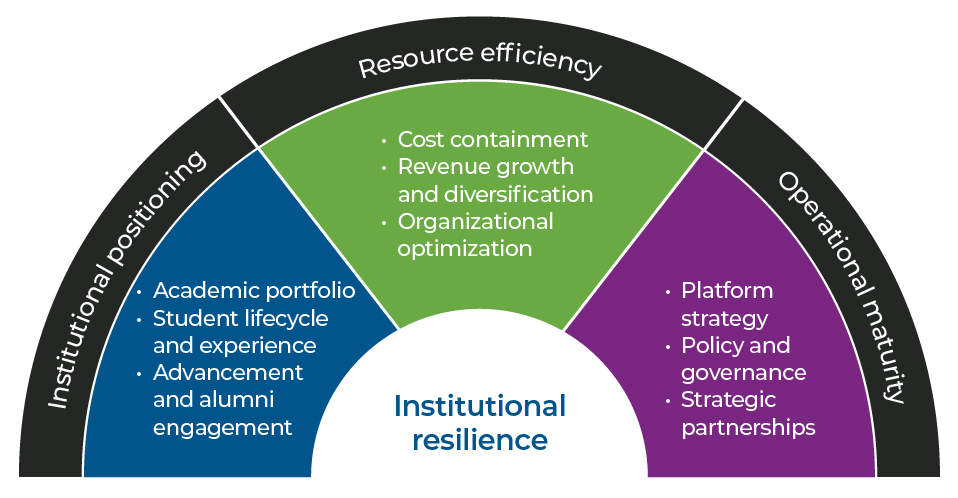
Key strategies for increasing resilience include:
- Analog Backups: Requiring faculty to maintain offline copies of rubrics, syllabi, and essential grading criteria.
- Diversified Communication: Establishing secondary, non-SaaS communication channels that students are encouraged to check regularly.
- Decentralized Submission Options: Creating pre-approved alternative submission methods (such as secure email or local drives) for use during system outages.
- Hybrid Authentication: Exploring 2FA alternatives that do not rely solely on a single mobile device.
The goal is not to abandon the efficiencies of cloud computing, but to ensure that the act of teaching and learning can survive the failure of the software that supports it. Higher education must recognize that while software can manage a course, it cannot replace the fundamental human relationship between teacher and student.
As universities continue to invest millions in enterprise software, the priority must shift from mere functionality to systemic durability. The “software-as-a-service” life is a reality of the 21st century, but it should not be a vulnerability that threatens the stability of the academic mission.
The next critical checkpoint for many institutions will be the upcoming cybersecurity audits and budget reviews for the next academic year, where the balance between SaaS efficiency and institutional resilience will be debated.
We want to hear from you. Has your institution experienced a systemic software failure? How did it impact your ability to learn or teach? Share your experiences in the comments below.
Keep reading