
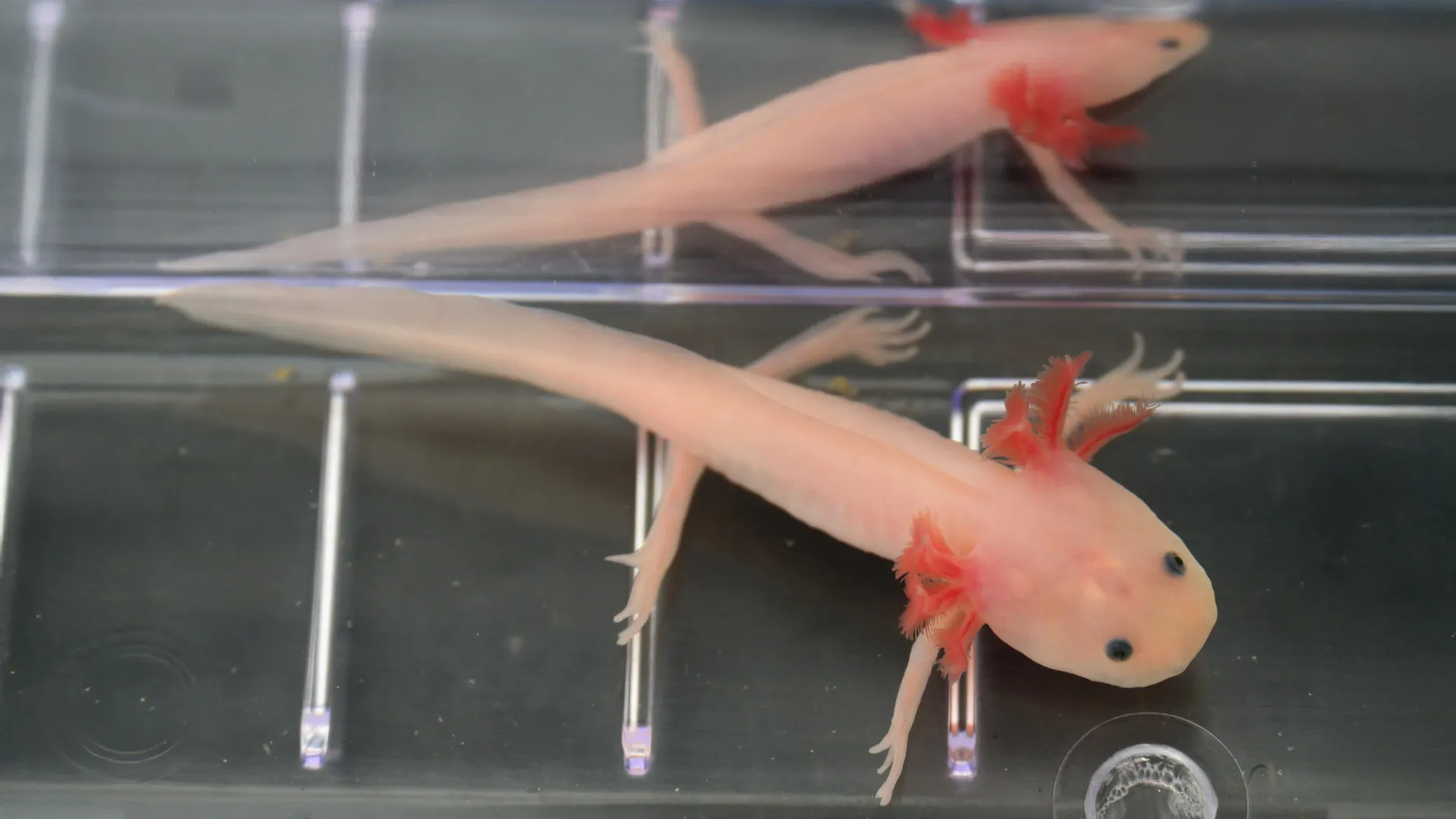
For decades, the ability to regrow a lost limb has remained the realm of science fiction and a handful of biological outliers in the animal kingdom. While humans can heal skin and regenerate portions of the liver, the loss of a complex appendage—complete with bone, muscle and nerve—has historically been permanent, leaving millions to rely on prosthetic technology to regain mobility.
However, a groundbreaking cross-species study has uncovered a universal genetic program that governs regeneration, offering a potential roadmap for future therapies that could one day allow humans to regrow lost limbs. By identifying a shared set of genes across three vastly different organisms—the Mexican axolotl, zebrafish, and mice—researchers have found a “unifying” biological mechanism that could shift the goal of regenerative medicine from replacement to restoration.
The findings, published in the Proceedings of the National Academy of Sciences (PNAS), suggest that the genetic instructions for regeneration are not unique to “super-regenerators” like the axolotl, but are instead shared across species, including mammals. The research indicates that while these genetic programs are present in mice and potentially humans, they are often dormant or suppressed, preventing the type of comprehensive regrowth seen in amphibians.
This discovery marks a pivotal shift in how scientists approach limb loss. Rather than attempting to “teach” human cells to behave like axolotl cells, the research suggests that we may simply need to unlock and activate the regenerative pathways already encoded within our own DNA.
The Search for a Universal Genetic Program
The study was the result of an ambitious collaboration between three specialized laboratories, each focusing on a different model of regeneration. The team included Wake Forest Assistant Professor of Biology Josh Currie, whose lab focuses on the Mexican axolotl salamander; David A. Brown, a plastic surgeon at Duke University who studies digit regeneration in mice; and Kenneth D. Poss of the University of Wisconsin-Madison, whose research centers on fin regeneration in zebrafish.
By comparing these three organisms, the researchers sought to identify whether regeneration is a series of isolated evolutionary tricks or a shared biological blueprint. The axolotl is widely regarded as the gold standard of regeneration, capable of perfectly regrowing entire limbs, spinal cords, and even portions of its brain without scarring. Zebrafish possess a similar, though slightly different, ability to regenerate fins and heart tissue. Mice, representing mammals, have very limited regenerative capacity, typically limited to the very tips of their digits.
The researchers discovered that all three species utilize a specific group of genes known as “SP genes.” These genes appear to act as a central control switch for the regeneration process. When these genes are active, they coordinate the complex cellular signals required to trigger bone regrowth and tissue reorganization.
To test the necessity of these genes, the team disabled the SP genes in both salamanders and mice. The results were definitive: without the function of these genes, the axolotls—which usually regenerate limbs with ease—were unable to achieve proper bone regrowth. Similarly, the regenerative capacity of the mice was halted. This confirmed that the SP genes are not just associated with regeneration but are essential for it to occur across species.
From Inhibition to Restoration: The Gene Therapy Breakthrough
The most promising aspect of the research lies in the team’s ability to not only disable regeneration but to partially restore it. After identifying the critical role of SP genes, the researchers looked toward zebrafish biology for a solution. Zebrafish possess a highly efficient regenerative response that the team used as a template for a new gene therapy.
By applying a gene therapy inspired by the zebrafish’s biological mechanisms, the researchers were able to partially restore regeneration in mice. While the mice did not regrow full limbs, the ability to trigger some level of regrowth in a mammal represents a significant leap forward. It proves that the “machinery” for regeneration in mammals is not entirely absent; it is merely inactive or insufficient.
This partial restoration is a critical “proof of concept.” In medical science, the transition from a state of zero regeneration to partial regeneration is often the hardest hurdle. Once a pathway is proven to be viable in a mammal, the next phase of research typically involves optimizing the therapy to increase the volume and quality of the regrown tissue.
Addressing the Global Burden of Amputation
The drive for this research is rooted in a pressing global health crisis. According to Global Burden of Disease data, more than 1 million amputations occur every year worldwide. These losses are driven by a variety of factors, including traumatic injuries, cancer, and infections, but a primary driver is the rising prevalence of diabetes, which leads to peripheral neuropathy and vascular complications in the lower extremities.
As the global population ages and diabetes rates continue to climb, the number of people requiring amputations is expected to increase. While modern prosthetics have become incredibly sophisticated—incorporating AI, myoelectric sensors, and carbon-fiber materials—they remain external tools. They cannot replicate the sensory feedback, fine motor control, or biological integration of a natural limb.
The ultimate goal of the Wake Forest, Duke, and UW-Madison team is to move beyond the prosthetic model. By harnessing SP genes, the hope is to develop treatments that replace damaged or missing limbs with living, sensing tissue. This would not only improve the physical mobility of patients but also significantly enhance their quality of life by restoring the natural biological connection between the brain and the limb.
The Challenges Ahead: From Mice to Humans
Despite the excitement surrounding the discovery of SP genes, the path to human clinical application is long and complex. You’ll see several biological and safety hurdles that must be cleared before “limb regrowth” becomes a medical reality.
One of the primary challenges is the mammalian tendency toward scarring, or fibrosis. When a human loses a limb, the body’s immediate response is to seal the wound with a scar to prevent infection and blood loss. In axolotls, this scarring response is suppressed, allowing a “blastema”—a mass of undifferentiated stem cells—to form at the stump. This blastema is what eventually grows into the new limb. In humans, the scar tissue acts as a physical and chemical barrier that prevents the formation of a blastema.

the scale of regeneration is a major factor. Regrowing a mouse digit is a vastly different undertaking than regrowing a human arm or leg, which involves massive amounts of bone, complex muscle groups, and miles of nerve fibers. The gene therapy must not only trigger growth but ensure that the growth is organized and anatomically correct.
There is also the critical concern of oncogenesis. Genes that promote rapid cell growth and division—like those involved in regeneration—are often closely related to the mechanisms that drive cancer. Any future therapy using SP genes will require rigorous safety testing to ensure that triggering regeneration does not inadvertently trigger the growth of tumors.
What Which means for the Future of Medicine
While we are not yet at the stage where a clinic can offer limb regrowth, this research fundamentally changes the conversation around regenerative medicine. It moves the field away from the idea that mammals are “hard-wired” to be unable to regenerate and toward the idea that we simply have a “locked” genetic program.
The identification of the SP genes provides a specific target for future drug development and gene editing. Instead of broad, experimental approaches, scientists now have a precise set of genetic markers to study and manipulate.
This research also opens the door for other applications. If the SP genes can be used to regrow bone and tissue in a limb, similar pathways might be explored to treat spinal cord injuries, organ damage, or degenerative joint diseases. The “universal” nature of these genes suggests that the potential for regeneration extends far beyond the extremities.
Key Takeaways
- Universal Genetic Code: Researchers identified “SP genes” that control regeneration in axolotls, zebrafish, and mice.
- Essential Function: Disabling these genes stopped bone regrowth in both salamanders and mice, proving they are critical for the process.
- Mammalian Potential: Gene therapy inspired by zebrafish partially restored regeneration in mice, suggesting mammals possess dormant regenerative abilities.
- Clinical Goal: The research aims to move beyond prosthetics to restore natural sensory and motor functions through living tissue.
- Global Impact: With over 1 million amputations annually, there is a critical need for biological alternatives to prosthetic limbs.
The next phase of this research will likely involve refining the gene therapy to achieve more complete regeneration in mammals and investigating the specific epigenetic “locks” that keep these genes dormant in humans. While the timeline for human application remains undetermined, the discovery of a shared genetic language for regeneration is a landmark achievement in biological science.
We will continue to monitor updates from the collaborating institutions at Wake Forest, Duke, and the University of Wisconsin-Madison as they move toward further mammalian trials.
Do you believe biological regeneration will eventually replace prosthetics, or will the two technologies evolve to work together? Share your thoughts in the comments below.