
The surfing community in the landlocked heart of Bavaria is celebrating a hard-won victory this week. The famed standing wave of the Eisbach River, a global icon of urban surfing located in Munich’s English Garden, has officially reopened to the public.
The return of the Munich Eisbach river wave comes after a tumultuous year that tested the resilience of the local scene. Between a fatal accident that sparked safety debates and a mysterious disappearance that left surfers baffled, the wave’s absence felt like a cultural void in a city where river surfing is more than a sport—it is a symbol of identity.
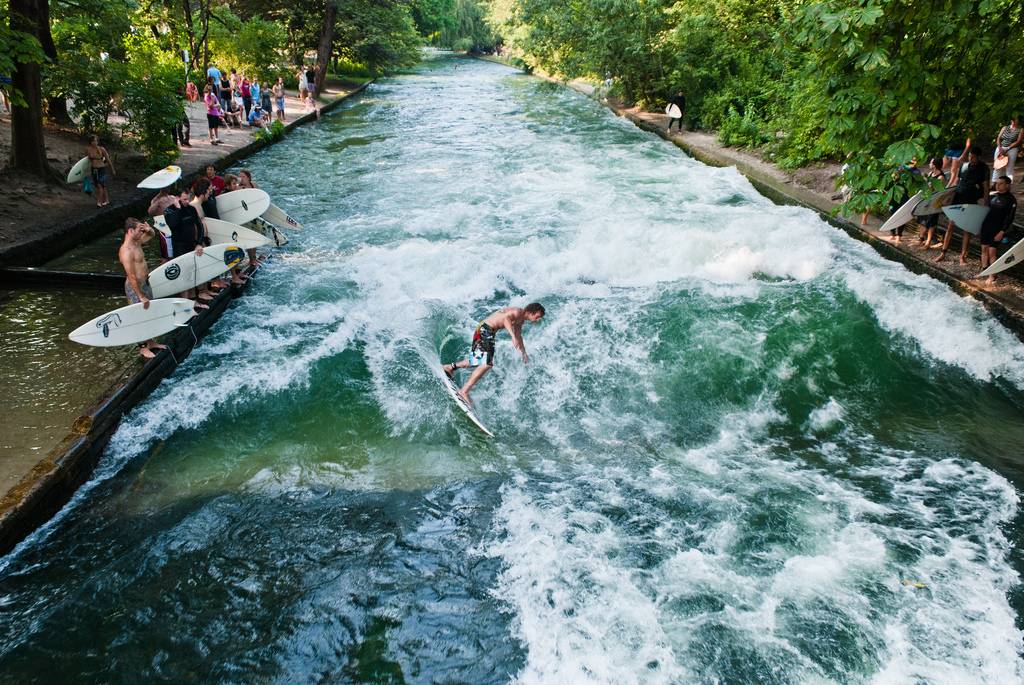
For those who have never visited the Bavarian capital, the Eisbach is a marvel of hydraulic coincidence. In a city hundreds of miles from the nearest coastline, the river creates a permanent, stationary wave that allows surfers to ride the same break for as long as their balance holds. It is widely regarded as one of the inaugural destinations for river surfing, with a history dating back to the 1980s.
As Sports Editor for World Today Journal, I have covered many triumphs in athletics, but few are as visceral as the return of a community’s “sacred” space. The reopening is not merely about the return of a sporting venue; it is about the restoration of a lifestyle that has survived both nature and bureaucracy.
A Year of Tragedy and Disappearance
The path to this reopening was marked by a sobering tragedy. In April 2025, the community was devastated when a 33-year-old surfer died following an accident on the river. Reports indicate that the surfer’s leash became snagged on a rock beneath the surface, pinning her underwater. Despite subsequent medical efforts at a hospital, she passed away.
The incident ignited a critical conversation regarding the hidden dangers of the Eisbach. Moritz von Sivers, a representative of the Munich Surfing Association, has highlighted that the primary risks are often invisible to the naked eye. According to von Sivers, several stones—roughly the size of bricks—protrude from the riverbed. While these stones are intended to prevent erosion, they pose a significant hazard to surfers, as they can easily catch a leash and trap a rider beneath the powerful current.
While the community was still grieving and grappling with safety concerns, a new mystery emerged. Last November, following a routine annual cleaning of the riverbed conducted by the city, the wave simply vanished. For surfers who had frequented the spot for decades, the sight of a flat current where a powerful break should have been was shocking.
Klaus Rudolf, a veteran Eisbach surfer, described the moment of discovery as surreal. Rudolf noted that he had stood at the river’s edge on a Friday evening only to find the wave gone, leaving the surfing community in a state of disbelief.
The Politics of the Current
The return of the wave has been met with a mixture of relief and defiance. The Munich Surf Club, the primary steward of the local culture, celebrated the reopening on social media, describing the wave as a “symbol of Munich’s surf culture.” However, the club was careful to distance the victory from official city channels.
In a pointed statement, the Munich Surf Club asserted that “politics did not bring the wave back” and that “the administration did not bring the wave back.” The club emphasized that no official process delivered the moment, attributing the return to the river itself and the persistent fighting of the community.
This tension highlights a long-standing friction between the organic, often rebellious nature of urban surfing and the rigid administrative structures of city management. The club’s “call to arms” suggests that while the wave is back for now, the fight for a sustainable and community-led future for the Eisbach continues. They have urged the community to keep pushing for decisions that include the people who actually live and breathe the surf culture, rather than top-down mandates.
Understanding the Eisbach Phenomenon
To understand why the return of this specific wave matters so much, one must understand the unique nature of the Eisbach. Unlike ocean surfing, where waves travel across vast distances to break on a shore, a standing wave is created when water flows over a submerged obstacle—in this case, a combination of riverbed geometry and concrete blocks—at a specific velocity.
This creates a “stationary” wave. The water moves, but the wave stays in one place. This allows surfers to ride the same face of the wave indefinitely, provided they have the strength and technique to maintain their position. Because the ride is concentrated in a small area, the average ride on the Eisbach often lasts less than a minute due to the sheer power of the current pushing the surfer toward the banks.
The wave’s disappearance in November 2025 illustrated how delicate this balance is. Even a “routine cleaning” of the riverbed can shift the sediment or alter the flow of the water just enough to destroy the hydraulic conditions necessary to sustain the wave. The fact that it returned naturally suggests that the river’s flow eventually re-established the necessary equilibrium, though the community remains wary of future interventions.
Safety and the Future of Urban Surfing
As surfers return to the water, the lessons of April 2025 remain paramount. The danger of “leash snagging” is a known risk in river surfing, where the riverbed is often cluttered with debris or erosion-control stones. Many river surfers now advocate for specific safety protocols, including the use of quick-release leashes or avoiding leashes entirely in high-risk zones, though the latter is a subject of ongoing debate among practitioners.
The Munich Surfing Association continues to monitor the conditions of the riverbed. The challenge for the city and the surfing community moving forward will be to find a way to maintain the river’s health and prevent erosion without inadvertently destroying the wave or creating new underwater hazards.
For the people of Munich, the Eisbach is more than just a tourist attraction or a sports venue; it is a testament to the city’s ability to embrace the unexpected. The return of the wave is a victory for the spirit of the sport and a reminder that some things—much like the river itself—cannot be fully controlled by administration.
The next major checkpoint for the community will be the upcoming seasonal review of riverbed conditions, where surfers hope to establish a more collaborative relationship with city officials to ensure the wave’s permanence and safety.
Do you think urban surfing spots should be officially regulated by cities, or left to the community? Share your thoughts in the comments below and share this story with your fellow surf enthusiasts.
Worth a look