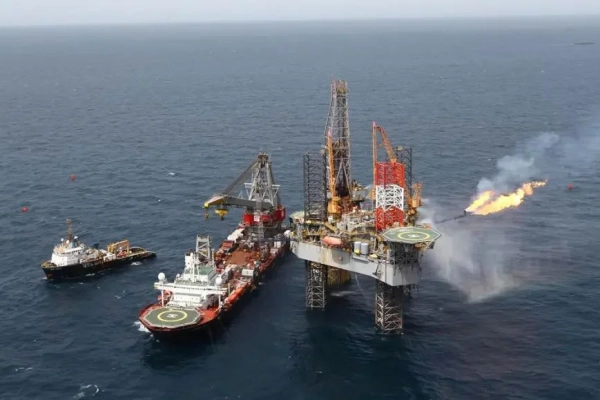
The intersection of geopolitical volatility and energy security has rarely been as visible as it is in the waters between Venezuela and Trinidad and Tobago. At the heart of this tension lies the Dragon gas field, a massive offshore reserve that represents both a potential economic windfall for Caracas and a vital lifeline for Port of Spain’s struggling liquefied natural gas (LNG) sector.
Shell, the global energy giant, has emerged as the primary architect in a complex plan to monetize these Venezuelan reserves. The strategy focuses on piping natural gas from the Dragon field into Trinidad and Tobago’s existing infrastructure, specifically utilizing the Atlantic LNG plant to liquefy and export the resource to global markets. This arrangement is not merely a commercial venture; it is a high-stakes exercise in energy diplomacy, requiring a delicate balance between corporate interests and the stringent sanctions regime imposed by the United States.
For Trinidad and Tobago, the stakes are existential for its industrial base. The island nation has seen a steady decline in domestic gas production, threatening the viability of its petrochemical plants and its status as a regional energy hub. By securing a steady flow of gas from the Dragon field, Trinidad can maintain the operational capacity of Atlantic LNG, ensuring that its export terminals remain competitive and its economy remains anchored by energy exports.
However, the path to monetization is paved with regulatory hurdles. Because the Dragon field is located in Venezuelan waters and involves the state-owned oil company Petróleos de Venezuela (PDVSA), any development requires explicit authorization from the U.S. Department of the Treasury’s Office of Foreign Assets Control (OFAC). The ability of Shell to move forward depends entirely on the continuity of these licenses, which serve as the only legal bridge between Western capital and the Maduro administration.
The Strategic Architecture of the Dragon Gas Project
The proposal to monetize Venezuelan gas via Atlantic LNG is designed to bypass the need for Venezuela to build its own expensive liquefaction infrastructure—which it currently lacks the capital and stability to develop. Instead, the “Dragon” model leverages the existing “midstream” capabilities of Trinidad and Tobago. In this framework, the gas is extracted from the offshore field, transported via pipeline to Trinidad, and processed at the Atlantic LNG facility in Point Fortin.
From an economic perspective, this is a classic “asset-light” approach for the producer. Venezuela gains a mechanism to generate hard currency from its reserves without the massive upfront cost of building LNG trains, while Shell manages the technical extraction and logistics. For the global market, this represents a potential increase in LNG supply at a time when energy security remains a primary concern for European and Asian importers.
The Dragon field is estimated to hold trillions of cubic feet of natural gas, making it one of the most significant untapped resources in the Caribbean. The ability to bring this gas online would not only stabilize Trinidad’s energy sector but could also shift the regional power dynamics, positioning the Caribbean as a more reliable node in the global energy supply chain.
Navigating the Sanctions Minefield
The primary obstacle to the project remains the complex web of U.S. Sanctions. The U.S. Government has historically used energy sanctions as a tool of political pressure against the Venezuelan government. However, the Treasury Department has recognized that certain energy projects, particularly those that benefit strategic allies like Trinidad and Tobago, can serve as “measured” tools of diplomacy.

To facilitate the Dragon project, the U.S. Department of the Treasury has previously issued specific licenses allowing Shell and the government of Trinidad and Tobago to negotiate with PDVSA. These licenses are typically time-bound and subject to strict conditions, such as prohibiting direct cash payments to the Maduro government and requiring the participation of U.S. Companies to ensure transparency and alignment with American strategic interests.
The fragility of these licenses creates a precarious environment for investment. Shell must navigate a landscape where a single political shift in Washington or a diplomatic breakdown in Caracas could render billions of dollars in planned infrastructure obsolete. This “sanctions risk” is why the project has remained in a state of prolonged negotiation for years, moving forward in increments rather than with a full-scale commitment.
Economic Implications for Trinidad and Tobago
For the government of Trinidad and Tobago, the monetization of the Dragon field is less about profit and more about preservation. The nation’s economy is heavily reliant on the energy sector, and the decline of domestic reserves has created a “gas gap” that threatens thousands of jobs in the petrochemical sector.
By integrating Venezuelan gas into the Atlantic LNG stream, Trinidad achieves several critical objectives:
- Capacity Utilization: It prevents the “under-utilization” of the Atlantic LNG plant, ensuring that the facility operates at or near its designed capacity.
- Industrial Stability: It provides a reliable feedstock for downstream industries, such as ammonia and methanol production, which are the backbone of the country’s non-oil GDP.
- Regional Leadership: It cements Trinidad’s role as the indispensable energy gateway for the Caribbean.
The economic ripple effects extend beyond the energy sector. A revitalized LNG industry supports a vast ecosystem of maritime services, engineering firms, and logistics providers. However, the dependency on Venezuelan gas introduces a new vulnerability: the risk that political instability in Caracas could lead to sudden supply disruptions, mirroring the volatility that has plagued Venezuela’s own oil production.
Shell’s Regional Play and the Global LNG Market
For Shell, the Dragon project fits into a broader global strategy of diversifying gas sources and securing long-term supply contracts. As the world transitions toward lower-carbon energy, natural gas is viewed by many as a “bridge fuel.” Shell’s expertise in deep-water extraction and LNG logistics makes it the ideal partner for a project of this complexity.
By leading the development of the Dragon field, Shell not only secures a significant resource but also demonstrates its ability to operate in high-risk geopolitical environments. This capability is a competitive advantage in an era where energy resources are increasingly found in politically unstable regions. The project allows Shell to strengthen its relationship with the government of Trinidad and Tobago, a key partner in the Western Hemisphere.
The broader implication for the global LNG market is one of diversification. While the U.S. And Qatar currently dominate the landscape, the addition of Caribbean-sourced LNG—even if the gas originates in Venezuela—adds a layer of redundancy to the global supply chain, potentially lowering prices and increasing stability for importers.
Key Takeaways for Investors and Analysts
- Strategic Dependency: The project is a symbiotic relationship where Venezuela provides the resource, Trinidad provides the infrastructure (Atlantic LNG), and Shell provides the technical and financial bridge.
- Regulatory Bottleneck: The U.S. Treasury’s OFAC licenses are the single most important variable; without them, the project cannot legally proceed.
- Energy Security: For Trinidad and Tobago, the Dragon field is a critical necessity to avoid the decay of its petrochemical industry.
- Geopolitical Risk: The venture remains highly sensitive to the relationship between the U.S. And Venezuela, making it a high-risk, high-reward asset.
The Path Forward: What Happens Next?
The immediate future of the Dragon gas project depends on the renewal and expansion of the existing U.S. Licenses. As the current windows for negotiation close or expire, all eyes are on the U.S. Treasury and the diplomatic channels between Port of Spain and Caracas. The next critical milestone will be the formal signing of a definitive development agreement between Shell, PDVSA, and the government of Trinidad and Tobago, which would signal the transition from negotiation to actual construction.

Industry analysts are closely watching for any official announcements regarding the “Phase 2” implementation of the project, which would involve the actual laying of the pipeline from the Dragon field to the Trinidadian coast. Until such a commitment is made, the project remains a masterclass in “energy diplomacy”—a plan that is technically sound but politically fragile.
We invite our readers to share their perspectives on the intersection of energy and diplomacy in the comments below. Do you believe energy security should outweigh political sanctions in the Caribbean? Let us know.