
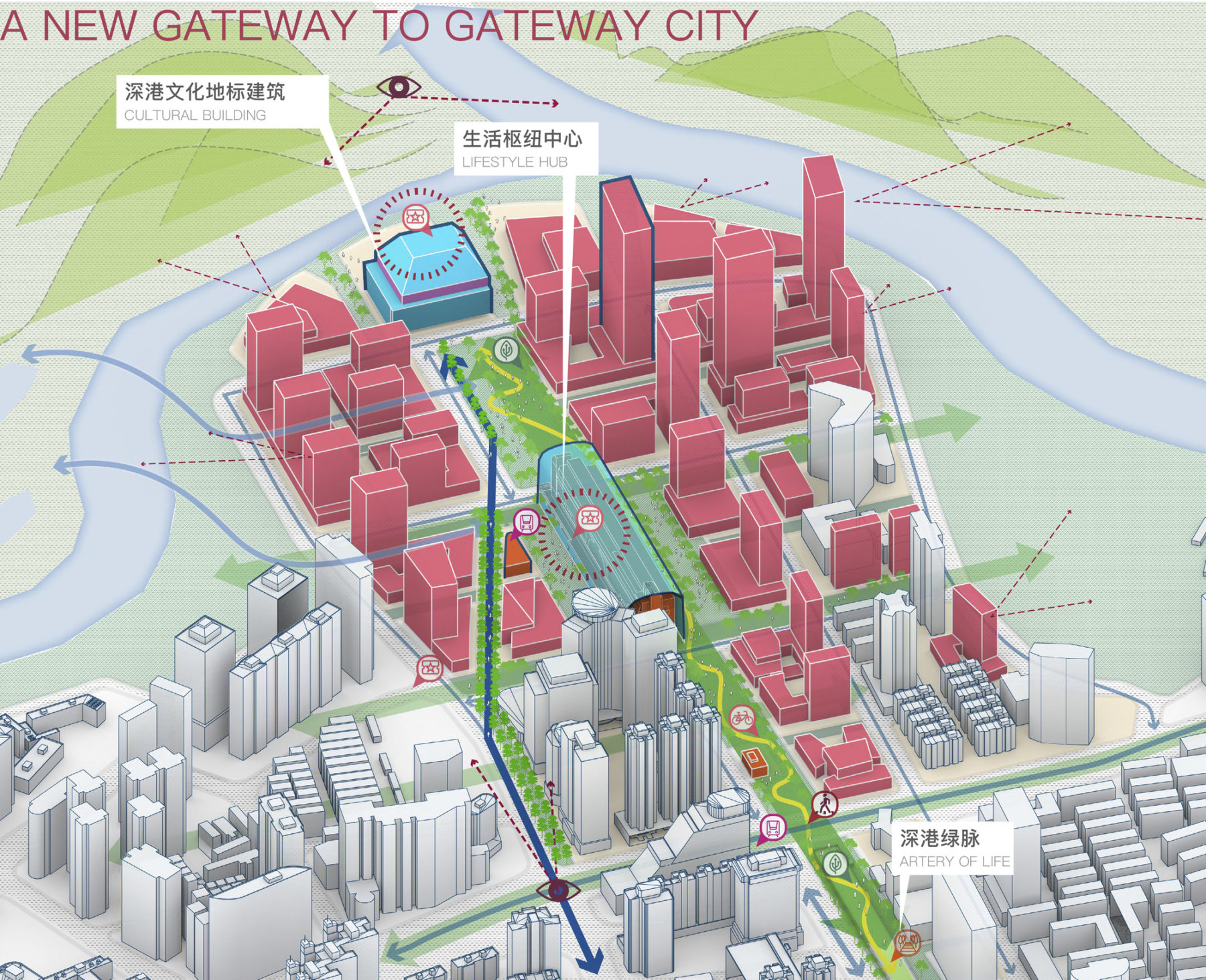
For decades, the Luohu Port has served as the symbolic and functional gateway between Shenzhen and Hong Kong, acting as the primary artery for millions of travelers, traders and commuters. However, as Shenzhen’s urban center of gravity shifts westward toward newer hubs like Futian and the burgeoning Qianhai area, the historic Luohu crossing faces a critical inflection point. The “westward shift” of Hong Kong visitors is no longer a theoretical trend but a tangible challenge to Luohu’s status as the city’s busiest land port.
In response, Luohu district authorities are pivoting from a strategy of mere transit management to one of destination creation. Through an ambitious “old town revitalization” initiative, the district is attempting to transform its core commercial zones from simple stop-overs into comprehensive hubs for medical services, gastronomy, and hospitality. The goal is clear: to give Hong Kong residents a reason to stay in Luohu rather than simply passing through it on their way to the newer districts of the Greater Bay Area.
This strategic pivot comes at a time of significant demographic and economic integration. Luohu currently supports a robust ecosystem of cross-border ties, housing nearly 40,000 Hong Kong permanent residents and hosting more than 8,000 Hong Kong-funded enterprises, according to the Luohu District Government. These fundamentals provide a critical foundation for a port-centered economy that seeks to blend traditional commerce with modern service-oriented attractions.
The Westward Shift: Competition in the Greater Bay Area
The challenge facing Luohu is rooted in the rapid development of Shenzhen’s infrastructure. Newer checkpoints, such as the Futian checkpoint and the Shenzhen Bay Port, offer more direct access to the city’s emerging financial districts and high-tech corridors. For many Hong Kong visitors, these western gateways provide a more seamless transition into the modern urban landscape of Shenzhen, leading to a gradual decline in the relative appeal of the older Luohu crossing.

The “westward shift” is not merely about geography but about the evolution of consumer preferences. While Luohu was once the undisputed center of shopping and transit, the rise of integrated malls and luxury developments in other districts has diluted its monopoly on the “shopping trip” experience. To counter this, Luohu is redefining its value proposition, moving away from the high-volume, low-margin retail model toward a specialized service economy.
‘Old Town Revitalization’: Medical, Dining, and Lodging
The centerpiece of Luohu’s recovery strategy is a targeted revitalization of its urban core, focusing on three primary pillars: medical services, gastronomy, and accommodation—often referred to in local planning as the “medical, food, and lodging” (醫食住) approach.
Medical Integration: Luohu is leveraging its established healthcare infrastructure to attract Hong Kong residents seeking specialized medical treatment and traditional Chinese medicine (TCM). By integrating healthcare services with tourism, the district aims to create “medical tourism” packages that encourage longer stays. This approach targets the aging population of Hong Kong and those seeking cost-effective, high-quality healthcare options within a short commute.
Gastronomic Appeal: To recapture the interest of leisure travelers, the district has launched the Luohu cross-border culture and tourism consumption route. This initiative utilizes frequent shuttle services to connect the port directly with core commercial and dining areas. By highlighting authentic local cuisine and traditional markets, Luohu is positioning itself as the “cultural heart” of Shenzhen, contrasting with the more sterile, corporate feel of the newer western districts.
Hospitality Upgrades: The revitalization includes a concerted effort to upgrade lodging facilities. The objective is to transform Luohu from a day-trip destination into a multi-day stay location. By renovating older hotels and encouraging the development of boutique accommodations, the district hopes to attract business travelers and families who wish to explore the historic center of the city.
Technological Modernization and Border Efficiency
While the “soft” infrastructure of tourism and healthcare is vital, Luohu is also investing heavily in “hard” technological upgrades to maintain its competitive edge in throughput efficiency. The port has implemented AI-driven systems to manage passenger flow, allowing authorities to forecast crowd density and reallocate personnel in real time. This agility is crucial during peak travel periods, ensuring that the port remains a viable option for those who prioritize speed and reliability.
Further enhancing the traveler experience is the introduction of biometric kiosks. These systems allow arrivals to submit necessary data digitally, reducing the reliance on paper forms and shortening the time spent at immigration counters. By streamlining the border process, Luohu aims to remove the friction associated with crossing, making the transition from Hong Kong to Shenzhen as seamless as possible.
Economic Implications for the Greater Bay Area
The struggle to maintain Luohu’s dominance is a microcosm of the broader challenges facing the Greater Bay Area (GBA) integration. The GBA is designed to be a global powerhouse of innovation and commerce, but this requires a delicate balance between the development of new “smart cities” and the preservation of historic urban centers.
Luohu’s success or failure in its revitalization efforts will serve as a blueprint for other older districts within the GBA. If Luohu can successfully pivot to a service-oriented economy, it proves that “old town” districts can remain relevant in the face of rapid urbanization. The continued presence of thousands of Hong Kong-funded enterprises in Luohu underscores the district’s role as a bridge for capital and entrepreneurial talent flowing between the two cities.
For the residents of Hong Kong, these developments mean more choices. The ability to choose between the high-efficiency, corporate environment of the west and the culturally rich, service-heavy environment of the east reflects the maturing nature of the Shenzhen-Hong Kong relationship. The “looser” definition of the cross-border commute—where individuals may reside on one side and work on the other—further drives the need for Luohu to remain a vibrant, livable hub rather than just a transit point.
As the district continues to refine its “medical, food, and lodging” strategy, the focus remains on creating a sustainable ecosystem that benefits both local businesses and international visitors. The integration of shuttle services and the promotion of culture-based tourism are early steps in a long-term plan to ensure that the “east” remains as attractive as the “west.”
The next significant indicator of success will be the official release of the mid-year tourism and crossing statistics, which will reveal whether the revitalization efforts are effectively stemming the tide of the westward shift. These figures will likely influence further investment in the Luohu cross-border culture and tourism routes.
World Today Journal encourages readers to share their experiences with the evolving Shenzhen-Hong Kong border crossings in the comments section below.