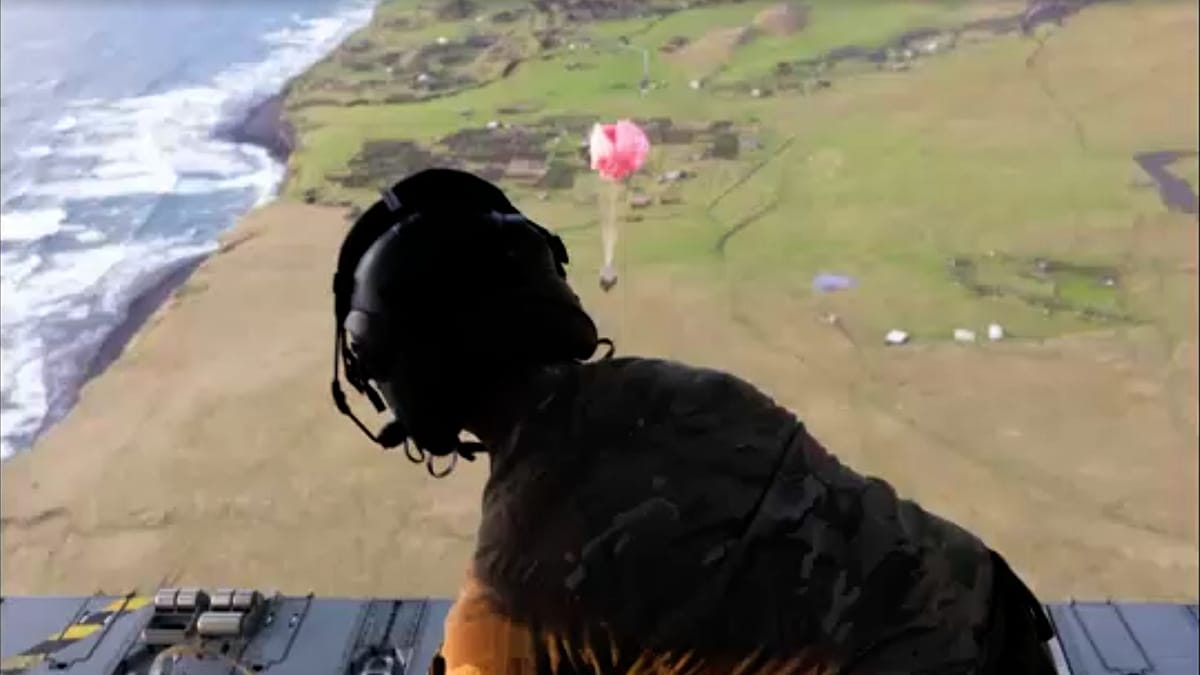
In a rare and daring humanitarian operation, the British military has deployed a specialist team via parachute to Tristan da Cunha, the United Kingdom’s most remote inhabited overseas territory, to provide urgent medical intervention for a resident suspected of contracting hantavirus.
The mission, which unfolded on May 10, 2026, involved the deployment of medical personnel and the air-dropping of critical supplies to the South Atlantic archipelago. The operation was triggered after the UK Health Security Agency (UKHSA) confirmed a suspected case of the virus in a British national living on the island.
Because Tristan da Cunha has no airstrip and is typically accessible only by boat, the UK government opted for a high-risk aerial insertion to bypass the geographic isolation and address a critical shortage of medical oxygen on the island.
Rapid Response: The 16 Air Assault Brigade Operation
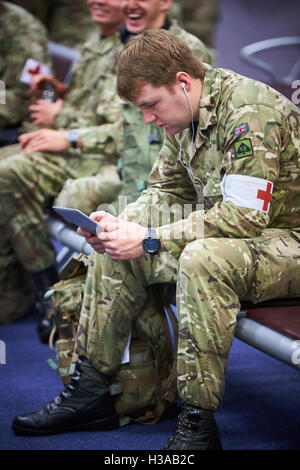
The deployment was carried out by a specialist team from the 16 Air Assault Brigade, consisting of six paratroopers and two military clinicians—an intensive care doctor and an intensive care nurse. The team parachuted from an RAF A400M transport aircraft to reach the remote volcanic islands.
Simultaneous with the personnel jump, the Ministry of Defence (MoD) coordinated the air-drop of vital oxygen supplies and other medical equipment. According to the MoD, oxygen levels on the island had reached a “critical level,” necessitating the emergency drop to ensure the patient could be properly stabilized and treated. This operation marks the first time the UK military has inserted medical personnel to provide humanitarian support via a parachute jump.
Tracing the Outbreak: The MV Hondius Connection
The suspected case is linked to a wider, deadly outbreak of hantavirus aboard the MV Hondius, a Dutch cruise ship. The British national involved in the Tristan da Cunha case had been aboard the vessel before disembarking at the remote territory on April 14, according to the World Health Organization (WHO).
The timeline of the illness suggests a delayed onset of symptoms. The resident first reported experiencing diarrhoea on April 28 and developed a fever two days later. He is currently reported to be in stable condition and remains in isolation to prevent further spread within the small community.
Medical officials have identified the cause as the Andes strain of hantavirus. While most hantaviruses are not transmitted between humans, the Andes strain is a notable exception capable of person-to-person transmission. The outbreak on the MV Hondius has been severe, with three deaths recorded, two of whom were confirmed to have hantavirus. Six cases of the virus have been confirmed in total, including two other British nationals who are currently receiving treatment off the ship.
The MV Hondius has since arrived in Tenerife, where authorities are managing the disembarkation and repatriation of more than 100 people.
The Logistics of Extreme Isolation
The urgency of the parachute drop underscores the extreme vulnerability of Tristan da Cunha. Located deep in the South Atlantic Ocean, the archipelago is one of the most remote inhabited places on Earth, with a total population of just 221 inhabitants. Government records emphasize that the island’s lack of an airstrip makes it entirely dependent on maritime transport for routine supplies, rendering it ill-equipped for sudden medical emergencies of this magnitude.
The ability of the RAF and the Army to deploy clinicians and life-saving oxygen at such short notice demonstrates a critical capability for the UK to provide humanitarian aid to its most distant territories during health crises.
Official Response and Strategic Implications
Foreign Secretary Yvette Cooper praised the speed and precision of the military response. “I am deeply grateful to the personnel across the Armed Forces and the RAF who acted at pace to get urgent medical support to Tristan da Cunha,” Cooper stated in an official release via the Ministry of Defence.
Beyond the immediate medical need, the MoD highlighted that the mission serves as a demonstration of how the military can deploy globally on very short notice for a diverse range of tasks, from combat to humanitarian relief.
Key Takeaways: Tristan da Cunha Medical Emergency
- The Mission: Six paratroopers and two intensive care clinicians from 16 Air Assault Brigade parachuted onto the island via an RAF A400M.
- The Cause: A suspected case of the Andes strain of hantavirus, which is capable of person-to-person transmission.
- The Source: The patient disembarked from the MV Hondius, a cruise ship that experienced a deadly hantavirus outbreak resulting in three deaths.
- Critical Need: The operation included emergency air-drops of oxygen supplies, which had reached critical levels on the island.
- Location: Tristan da Cunha is the UK’s most remote inhabited overseas territory, with a population of 221 and no airstrip.
The medical team will remain on the island to provide support while the patient continues to isolate. Further updates on the patient’s condition and the status of the Andes strain containment are expected as the UK Health Security Agency continues its monitoring.
World Today Journal will continue to monitor this developing story. We invite our readers to share their thoughts in the comments section below.