
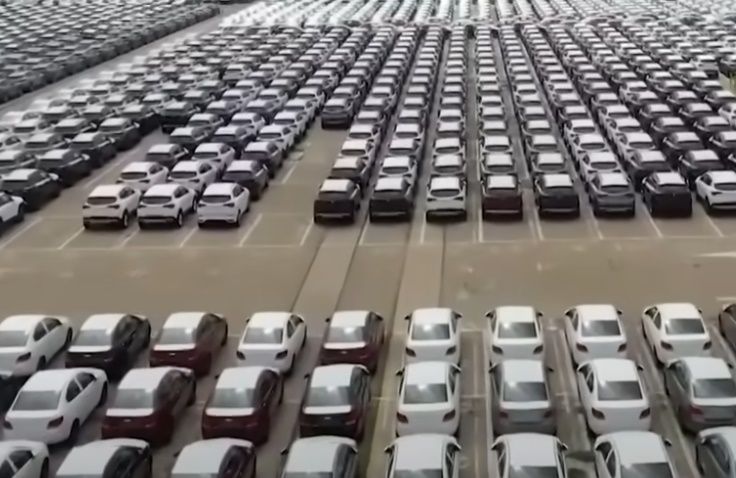
For decades, the purchase of a new car was viewed as a decade-long commitment—a significant financial investment in a mechanical asset designed to last until the engine faded or the chassis rusted. However, in the bustling urban centers of China, a fundamental shift in consumer psychology is underway. The automobile is no longer being treated as a piece of heavy machinery; it is being treated as a piece of consumer electronics.
This phenomenon, often described as the “smartphone-ization” of the electric vehicle (EV) market, has seen the traditional ten-year ownership cycle shrink dramatically. In many segments of the Chinese market, consumers are now upgrading their vehicles every two to three years, mirroring the upgrade patterns of high-end smartphones. This rapid turnover is driven by a relentless pace of technological iteration, where the value of a car is increasingly tied to its software, connectivity, and digital ecosystem rather than its horsepower or leather upholstery.
The shift toward software-defined vehicles (SDVs) has turned the Chinese automotive landscape into a high-speed laboratory. When a vehicle’s most prized features—from autonomous driving capabilities to in-car entertainment and AI assistants—can be updated over-the-air (OTA), the physical hardware begins to feel like a mere shell for the software. As new models launch with significantly more powerful processors and more intuitive interfaces, older models depreciate not because they are broken, but because they are “obsolete.”
This acceleration is not accidental. It is the result of an ecosystem where tech giants and automotive startups collaborate to integrate the car into a broader digital life. For the modern Chinese consumer, the seamless transition from a smartphone to a smart home and then into a smart car is the ultimate luxury. This integration has created a competitive environment so fierce that manufacturers must release new versions or entirely new models at a frequency that would baffle traditional legacy automakers in Europe or North America.
The Rise of the Software-Defined Vehicle (SDV)
At the heart of this trend is the concept of the Software-Defined Vehicle. Unlike traditional cars, where the hardware is fixed at the point of sale, SDVs are designed to evolve. Through Over-The-Air updates, manufacturers can remotely improve battery efficiency, add new safety features, or redesign the user interface while the car sits in the owner’s driveway. This capability has effectively shifted the “center of gravity” of automotive value from the engine bay to the cockpit’s silicon chips.
In China, this has led to a culture of constant beta-testing. Consumers are often willing to accept a vehicle with imperfect software on the condition that it will be “patched” and improved over time. This mirrors the “minimum viable product” (MVP) approach common in Silicon Valley. The gap between a model released in 2023 and one released in 2025 can feel as vast as the difference between an early-generation smartphone and a modern flagship device.
The integration of advanced AI assistants and deep ecosystem ties—such as the ability to control home appliances or manage professional calendars directly from the dashboard—has made the car an extension of the user’s digital identity. When a competitor releases a new chip that allows for faster voice recognition or more fluid augmented-reality navigation, the incentive to upgrade becomes powerful, driving the trend toward shorter ownership cycles.
A Cutthroat Competitive Landscape
The speed of this cycle is fueled by an unprecedented number of players in the market. While a few giants dominate the global scene, China’s domestic market is a crowded field of established state-owned enterprises, aggressive private companies, and tech-native startups. This saturation has triggered a “price war” and a “feature war” that forces companies to innovate or perish.

Companies like BYD have scaled with incredible speed, leveraging vertical integration—manufacturing their own batteries and semiconductors—to bring new models to market faster than almost any other automaker globally. By controlling the supply chain, they can iterate on hardware and software simultaneously, ensuring that the latest consumer trends are reflected in their fleet within months, not years.
Meanwhile, brands like NIO have attempted to solve the “obsolescence” problem through hardware innovation, such as battery-swapping stations. By allowing users to swap a depleted or outdated battery for a fresh, potentially higher-capacity one in minutes, they are attempting to decouple the lifespan of the car’s chassis from the lifespan of its power source. This approach acknowledges that battery technology evolves faster than the car’s interior, offering a way to “upgrade” the vehicle without replacing the entire machine.
Consumer Psychology and the Depreciation Trap
The transition to a 2-3 year upgrade cycle has profound implications for the economics of car ownership. In a traditional market, a car is a depreciating asset, but it retains a predictable value over several years. In the “smartphone” model, depreciation is far more aggressive. Once a new generation of software or a more efficient battery chemistry becomes the industry standard, the resale value of the previous generation can plummet.
For many young, tech-savvy urbanites in China, this is an acceptable trade-off. The social status associated with owning the latest “smart” vehicle outweighs the long-term financial loss of rapid depreciation. The car has become a fashion statement and a tech gadget, where the prestige comes from having the most current version of the operating system and the most advanced autonomous driving features.
However, this creates a sustainability paradox. While EVs are marketed as “green” alternatives to internal combustion engines, the environmental cost of manufacturing a new vehicle every three years is significantly higher than maintaining one for a decade. The industry is currently grappling with how to balance this consumer demand for “the newest thing” with the necessity of battery recycling and sustainable production.
From Domestic Saturation to Global Expansion
Because the Chinese domestic market has become so saturated and the competition so intense, Chinese EV manufacturers are increasingly looking toward international markets to sustain their growth. This export push is bringing the “smartphone” approach to the rest of the world. Global consumers are now being introduced to vehicles that offer a level of digital integration and update-frequency that legacy brands have struggled to match.
This global expansion is not without friction. Many countries are responding with tariffs or regulatory hurdles, citing concerns over data security—given the highly connected nature of these vehicles—and the potential for domestic industries to be undercut by the aggressive pricing strategies born from the Chinese price wars. The “smart” nature of these cars means they collect vast amounts of data on user behavior and surroundings, turning the automotive trade dispute into a broader conversation about digital sovereignty.
As these vehicles enter European and Southeast Asian markets, they are likely to begin shifting consumer expectations globally. Once drivers experience a car that updates its features overnight and integrates perfectly with their digital life, the traditional “static” car begins to feel antiquated. This is forcing legacy automakers to pivot their entire business models toward software development, effectively trying to learn how to be tech companies while still maintaining their identity as manufacturers.
Key Takeaways: The Shift in Mobility
- Software Over Hardware: The primary value of the modern Chinese EV is shifting from mechanical performance to software capabilities and digital ecosystems.
- Accelerated Cycles: Ownership periods are shrinking to 2–3 years, mirroring the upgrade patterns of consumer electronics.
- OTA Evolution: Over-The-Air updates allow cars to evolve after purchase, but also make older hardware feel obsolete more quickly.
- Market Pressure: Extreme competition in China is driving rapid iteration and pushing manufacturers to expand aggressively into global markets.
- Sustainability Challenges: The move toward frequent vehicle replacement poses new challenges for battery recycling and overall environmental impact.
The transformation of the automobile into a “smartphone on wheels” represents more than just a change in how cars are built; it is a change in how we perceive mobility. The car is no longer a destination or a tool for transport, but a mobile living space and a node in a larger digital network.

The next major checkpoint for this industry will be the continued rollout of higher-level autonomous driving certifications and the integration of generative AI into vehicle operating systems, which are expected to trigger the next wave of upgrades across the Chinese market. As these technologies mature, the industry will likely see whether the “smartphone model” is a sustainable long-term strategy or a bubble fueled by temporary subsidies and novelty.
Do you think the “smartphone model” of upgrading cars every few years is the future of transportation, or is it an environmental disaster in the making? Share your thoughts in the comments below.