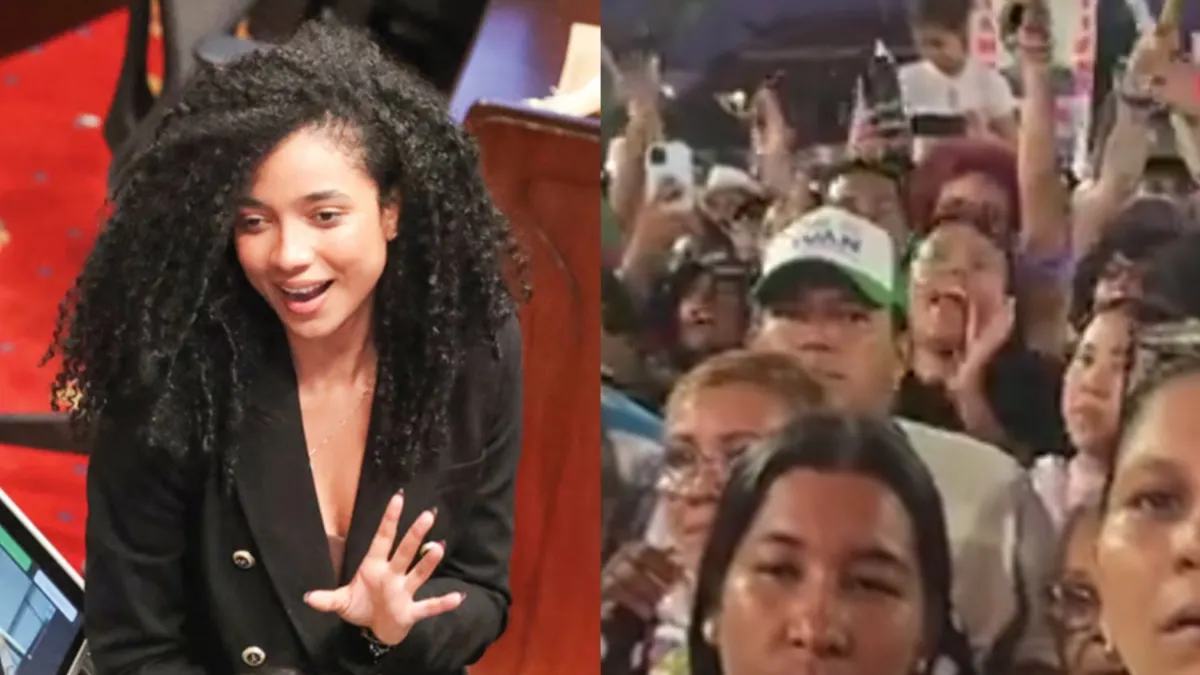
The political atmosphere in Valledupar reached a boiling point this week as Senator Iván Cepeda, a prominent figure of the Colombian left, held a high-stakes campaign event that blended presidential ambition with local cultural superstition. While the rally was intended to consolidate support for the 2026 electoral cycle, the event was marred by a moment of intense friction when local figure Juliana Guerrero was loudly booed by the crowd, signaling deep-seated tensions within the regional political landscape.
The Iván Cepeda Valledupar campaign event, held at the historic Plaza Alfonso López, served as a platform for the Senator to formally signal his intentions for the presidency. Cepeda, known for his career as a human rights defender and his legislative work in the Colombian Senate, positioned himself not merely as a supporter of the current administration’s legacy, but as a leader capable of securing a first-round victory in the upcoming national elections.
However, the narrative of unity was interrupted when the audience turned on Juliana Guerrero. The outburst, characterized by chants of “¡Fuera!” (Out!), highlighted a volatile disconnect between some of the campaign’s representatives and the grassroots base in the Cesar department. This incident underscores the challenges Cepeda faces in unifying a diverse coalition of left-wing and centrist voters in a region where political loyalties are often fragmented and fiercely contested.
Tensions at Plaza Alfonso López: The Juliana Guerrero Incident
The rally in Valledupar was designed to be a show of force, but the focus shifted abruptly during the appearance of Juliana Guerrero. As she attempted to engage with the crowd, a significant portion of the attendees responded with audible hostility. The shouting of “Out!” was not an isolated occurrence but a sustained reaction that forced the campaign to navigate a sudden crisis of public perception in real-time.
While the campaign attempted to maintain its momentum, the incident involving Guerrero suggests a friction point within the local political machinery. In Colombian regional politics, such reactions often stem from perceived betrayals, disagreements over local governance, or the rejection of specific political intermediaries. The visceral nature of the response in Valledupar indicates that Cepeda’s path to the presidency will require more than just national visibility; it will necessitate a delicate navigation of local grievances.
This clash occurs against a backdrop of increasing political polarization in Colombia. As the country looks toward the 2026 elections, the “Pacto Histórico” and its affiliated movements are struggling to balance the ideological purity of the left with the pragmatic need for broad-based regional alliances. The rejection of Guerrero serves as a microcosm of this struggle, where the local electorate demands accountability and authenticity from those ascending the political ladder.
Presidential Aspirations: “I Want to Be Your President”
Beyond the localized drama, the event served as a definitive declaration of intent. Iván Cepeda explicitly stated his goal to lead the nation, framing himself as the natural successor to the political movement initiated by President Gustavo Petro. By asserting, “I am Iván Cepeda and I want to be your President,” the Senator moved from a supporting legislative role to a front-facing candidate persona.
Cepeda’s strategy involves leveraging his reputation as a philosopher and human rights activist to appeal to a global and national audience. His long-standing commitment to the memory of the Patriotic Union (UP) victims—who were targeted in what institutions have described as a political genocide—gives him a moral authority that resonates with the Colombian left. However, transitioning from a specialized human rights advocate to a generalist presidential candidate requires a shift in rhetoric, moving from the courtroom and the Senate floor to the public squares of cities like Valledupar.
The Senator’s claim that his coalition could win “by far” in a first-round vote is an ambitious projection. Historically, Colombian presidential elections have frequently trended toward a second-round runoff due to the fragmented nature of the party system. Cepeda’s confidence suggests a belief that the current political alignment is shifting toward a more consolidated left-wing bloc, though the events in Valledupar suggest that this consolidation is far from seamless.
The “Mango Tree” Legend and Political Superstition
In a move that blended political strategy with local folklore, Cepeda leaned into a specific regional “cábala” or superstition involving a mango tree. In Valledupar, there is a persistent local legend that clinging to or associating oneself with a specific mango tree can bring political fortune and ensure victory in elections.
By engaging with this tradition, Cepeda attempted to “localize” his image, signaling to the residents of the Cesar department that he respects and understands their cultural idiosyncrasies. This tactical use of folklore is a common feature of Colombian campaigning, where candidates often seek the blessing of local myths or religious icons to bridge the gap between the urban elite of Bogotá and the rural or provincial voters.
The imagery of a Senator—typically associated with the formal halls of power—clinging to a tree for luck provides a stark contrast to the serious nature of his human rights work. While some critics may view this as a superficial gesture, in the context of Colombian regionalism, such acts can be powerful tools for building rapport with a population that often feels ignored by the central government.
Analysis: The Broader Political Implications
The events in Valledupar are more than just a campaign stop; they are a litmus test for the future of the Colombian left. Iván Cepeda is attempting to bridge three distinct identities: the intellectual philosopher, the dogged human rights investigator, and the populist candidate. The success of this synthesis will determine his viability on a national stage.
For those following the 2026 trajectory, the key takeaways from the Valledupar rally include:
- Regional Volatility: The booing of Juliana Guerrero proves that the “Pacto Histórico” is not a monolith and that local figures can become liabilities overnight.
- The Petro Connection: Cepeda is positioning himself as the “heir” to the current administration’s ideological project, which ensures a baseline of support but also inherits the administration’s detractors.
- Cultural Integration: The use of the mango tree legend shows a calculated effort to move beyond the “Bogotá bubble” and engage with provincial identities.
Cepeda’s focus on a “citizen rebellion against rampant corruption” echoes a broader trend in Latin American politics where candidates frame their campaigns as a battle between a corrupt establishment and a virtuous populace. By calling for this rebellion in Valledupar, Cepeda is attempting to channel local frustration into a national movement.
Who is Iván Cepeda?
To understand the stakes of the Valledupar campaign, it is essential to recognize Cepeda’s role in Colombian history. As a member of the Senate of Colombia, he has been a pivotal figure in the peace processes and the pursuit of transitional justice. His work has frequently put him at odds with the military and right-wing political factions, making him a polarizing but respected figure in international human rights circles.
His background as the son of Manuel Cepeda Vargas, who was assassinated in 1994, informs his relentless pursuit of historical memory. This personal tragedy has fueled his legislative efforts to uncover the truth behind the systemic killing of left-wing activists in Colombia. For his supporters, this makes him the moral choice for the presidency; for his opponents, it makes him an ideologue who is too closely tied to the grievances of the past.
As he expands his reach into the Cesar department and beyond, Cepeda must decide whether to remain the “conscience” of the Senate or to evolve into a pragmatic executive leader. The tension witnessed in Valledupar suggests that the transition from advocate to candidate is fraught with risk.
What Happens Next?
The fallout from the Valledupar event is expected to lead to an internal review within Cepeda’s campaign team regarding the selection of regional representatives. The public rejection of Juliana Guerrero cannot be ignored if the campaign hopes to maintain a cohesive image leading into the primary stages of the 2026 election cycle.
The next critical checkpoint for the Senator will be his upcoming series of town halls in other regional capitals, where he will likely continue to test his “first-round victory” thesis. Observers will be watching closely to see if the “citizen rebellion” he calls for translates into actual voter registration and mobilization, or if it remains a rhetorical tool for the campaign trail.
As the Colombian political landscape continues to shift, the ability of candidates to navigate the intersection of national policy and local superstition will be paramount. Whether the “mango tree” luck holds for Iván Cepeda remains to be seen, but the volatility of the Valledupar rally serves as a reminder that in Colombian politics, the crowd can turn as quickly as the wind.
We want to hear from you. Do you believe local cultural traditions and superstitions play a genuine role in Colombian electoral outcomes, or are they merely superficial campaign tactics? Share your thoughts in the comments below and share this analysis with your network.
- Politician Kirill Basin Caught on Video in Shocking Public Confrontation
- Kumamoto Earthquake: Farmers Face Crisis as Water Shortages and Crop Damage Threaten Agriculture
- South Korean Police Raid Starbucks Korea Over Gwangju Uprising Ad Campaign (archyworldys.com)
- Behind the Scenes: The Struggle of Theater Rehearsals (archynewsy.com)