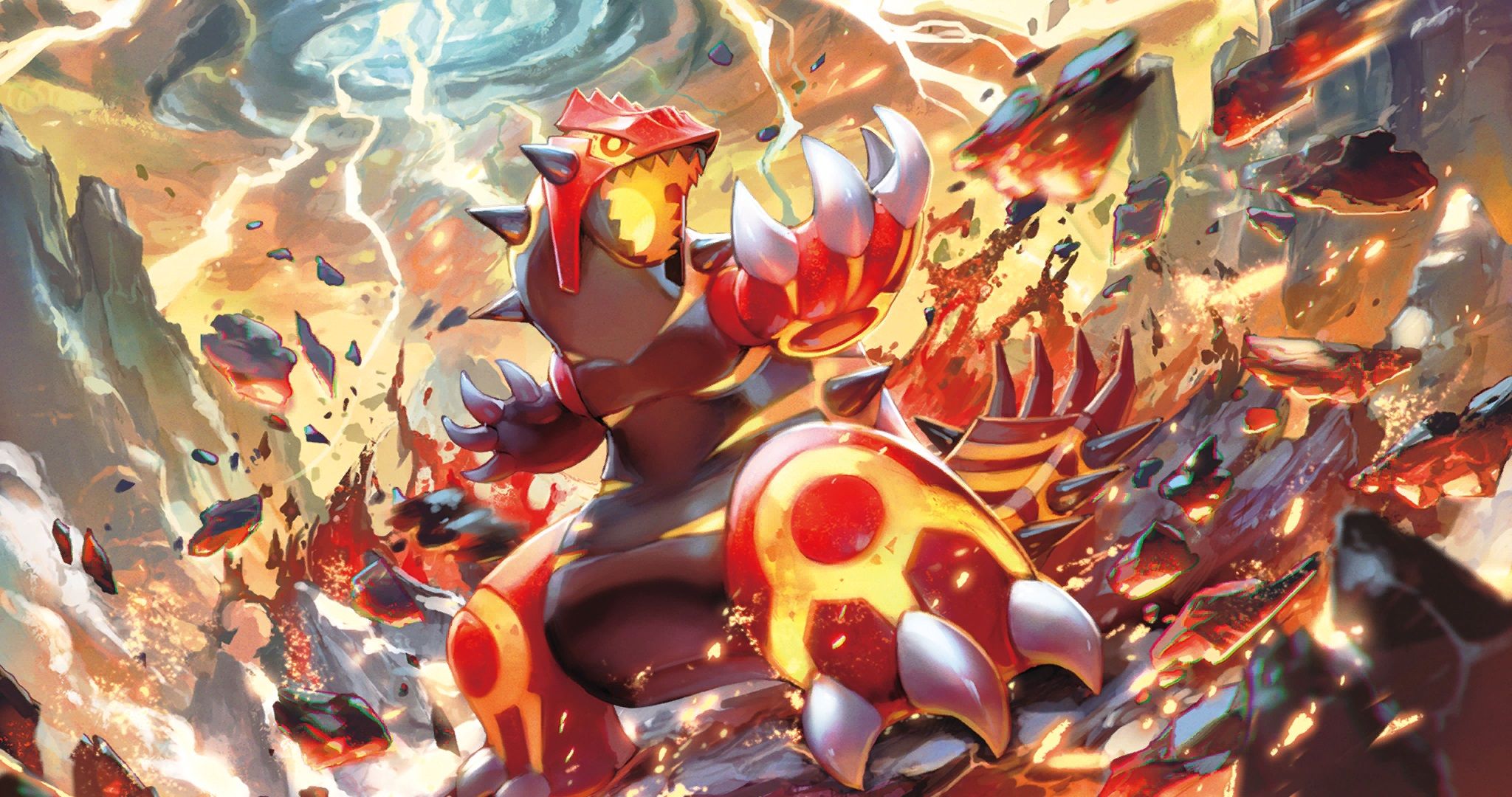
In the sprawling universe of Pokémon, few entities command as much respect and fear in the competitive arena as Groudon. While many casual fans recognize the behemoth as the legendary personification of the land from the Hoenn region, seasoned players know that its true power is unlocked through a process known as Primal Reversion. When discussed in the context of the “meta”—the most effective tactics available—Primal Groudon isn’t just a strong Pokémon; it is often a cornerstone of entire team architectures.
For those stepping into the world of high-level battling, understanding why this specific form of Groudon dominates is essential. The shift from a standard Ground-type to the dual Ground/Fire typing of its Primal form fundamentally alters how opponents must approach the game. It transforms a powerful attacker into a strategic wall that can dictate the pace of a match simply by stepping onto the field.
The fascination with “Meta Groudon” stems from its ability to nullify one of the most common weaknesses in the game. In Pokémon, Ground-types are traditionally terrified of Water-type attacks. However, Primal Groudon utilizes a unique biological and environmental synergy that renders these threats obsolete, making it one of the most oppressive forces in the history of the franchise’s competitive play.
The Evolution of Power: Understanding Primal Reversion
Primal Reversion is a mechanic introduced in the sixth generation of games, specifically within Pokémon Omega Ruby and Alpha Sapphire, which were released in North America on November 21, 2014. Unlike Mega Evolution, which requires a trainer to trigger the transformation during battle via a Mega Ring, Primal Reversion occurs automatically if Groudon is holding a specific item: the Red Orb.
The Red Orb acts as a catalyst, returning Groudon to its “primal” state—a form that represents its original, untapped power from prehistoric eras. Upon reverting, Groudon undergoes a massive increase in its base statistics, particularly in Attack and Special Defense. This transformation doesn’t just make the Pokémon hit harder; it makes it significantly more difficult to take down, allowing it to survive hits that would knock out almost any other non-legendary Pokémon.
Beyond the raw numbers, the typing shift to Ground/Fire is a critical strategic pivot. While adding the Fire type normally would increase its vulnerability to Water, the Primal form introduces an ability that completely rewrites the rules of engagement.
Why Primal Groudon Dominates the Competitive Meta
In competitive Pokémon, the “meta” is defined by the most successful strategies and Pokémon used in tournaments, such as the Video Game Championships (VGC) or the Smogon “Uber” tier. Primal Groudon’s dominance in these spaces is primarily attributed to its signature ability: Desolate Land.
Desolate Land creates an environment of extreme sunlight, far more intense than the standard “Sunny Day” effect. The most devastating aspect of this ability is that it completely evaporates all Water-type moves. If an opponent attempts to use a move like Surf or Hydro Pump against Primal Groudon while Desolate Land is active, the attack will fail entirely. By removing its primary weakness, Primal Groudon forces opponents to rely on Grass or Dragon-type moves, which are far less common and often less effective across a broad range of team compositions.
This ability creates a “weather war” on the battlefield. When Primal Groudon faces off against Primal Kyogre—whose ability, Primordial Sea, creates torrential rain—the Pokémon that entered the field last typically determines the weather. This tug-of-war is a hallmark of high-level competitive play, as controlling the weather can either empower a team or leave them completely vulnerable.
The Impact of Precipice Blades
A significant part of the Primal Groudon meta is its access to the signature move Precipice Blades. This high-damage Ground-type move allows Groudon to deal massive physical damage to opponents. Because Groudon’s Attack stat reaches staggering heights in its Primal form, Precipice Blades can often secure one-hit knockouts (OHKOs) against enemies that aren’t specifically built to resist Ground-type attacks.
Strategically, players often pair Primal Groudon with “Sun-boosted” teammates. Since Desolate Land provides intense sunlight, it naturally buffs other Fire-type moves and enables abilities like Chlorophyll, which doubles the speed of certain Grass-type Pokémon. This synergy allows a trainer to build a cohesive offensive engine centered around Groudon’s environmental control.
Strategic Implementation in High-Level Play
To maximize Primal Groudon’s utility, competitive players focus on a few key areas: positioning, prediction, and counter-play. Because it is such a high-priority target, opponents will often lead with Pokémon designed to check Groudon, such as those with high Special Defense or specific immunities.
The most common strategy involves using Primal Groudon as a “pivot.” By switching Groudon in and out, a player can reset the weather to Desolate Land, thereby shutting down an opponent’s Water-type strategy just as they prepare to launch a decisive attack. This psychological game of “prediction” is what separates amateur players from professionals in the VGC circuit.
However, no Pokémon is invincible. The primary counters to Primal Groudon are usually Pokémon with the “Unaware” ability or those that can utilize powerful Grass-type moves like Giga Drain. Because Primal Groudon is locked into the Red Orb item to maintain its form, it cannot hold other beneficial items like Leftovers for healing or a Life Orb for additional damage, which is a minor but notable trade-off.
Comparison: Groudon vs. Primal Groudon
The difference between the base form and the Primal form is stark, illustrating why the Red Orb is one of the most coveted items in the game’s history.
| Feature | Base Groudon | Primal Groudon |
|---|---|---|
| Type | Ground | Ground / Fire |
| Required Item | None | Red Orb |
| Primary Ability | Drought | Desolate Land |
| Water-type Interaction | Weak to Water | Water moves evaporated |
| Competitive Tier | High | God-Tier / Uber |
The Legacy of the Earth-Shaper
While newer generations of Pokémon have introduced increasingly complex mechanics—such as Dynamaxing in Generation 8 or Terastallization in Generation 9—the impact of Primal Groudon remains a gold standard for how a single Pokémon can warp the competitive landscape. It taught players the importance of “weather control” and showed how a change in typing, combined with a powerful ability, could redefine the viability of an entire species.

For those looking to experiment with this strategy, the best way to start is by studying the current “Uber” tier rankings on community hubs like Smogon or watching VGC World Championship replays. Analyzing how top players manage Groudon’s positioning reveals the depth of the game beyond simple attacking and defending.
As the Pokémon Company continues to release new titles and legendary forms, the “meta” will always shift. However, the era of Primal Groudon stands as a testament to the power of environmental manipulation in gaming. Whether you are a competitive climber or a casual collector, Groudon’s ascent to “Meta” status is a masterclass in game design and strategic depth.
With the ongoing support for legacy titles and the integration of legendary Pokémon into newer formats, the community continues to track how these ancient powers fit into the modern game. The next major update to the competitive rankings usually follows the release of new DLC or seasonal tournament cycles, which will determine if any new threats can finally displace the king of the land.
What are your thoughts on Primal Groudon? Do you think its ability to evaporate water is too powerful, or is it a fair trade for its other weaknesses? Let us know in the comments below and share this article with your fellow trainers!
Keep reading