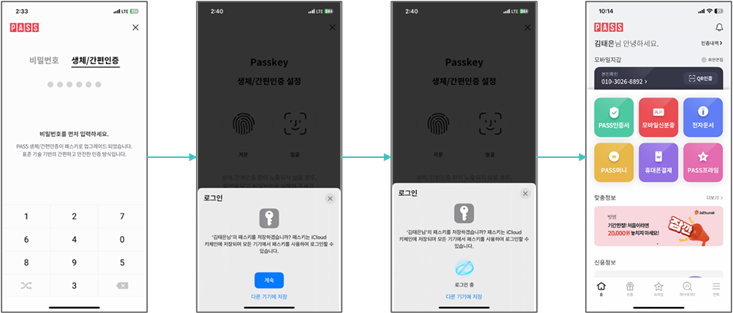
The era of the forgotten password may finally be reaching its expiration date. For decades, the digital world has relied on a fragile system of alphanumeric strings—often reused across multiple sites—that serve as the primary gatekeepers to our most sensitive data. However, a fundamental shift toward “passwordless” authentication is underway, driven by a move toward cryptographic keys and biometric verification.
Leading this transition in the Asian market, SK Telecom (SKT) has reached a significant milestone with its next-generation authentication solution, SKT Passkey. The company has officially secured the GS (Good Software) Certification Level 1, the highest grade of software quality certification in South Korea. This designation serves as a critical validation of the platform’s reliability, security, and functional stability, positioning it as a viable enterprise-grade alternative to traditional login methods.
For the average user, In other words a future where logging into a bank account or a corporate portal requires nothing more than a fingerprint scan, a facial recognition check, or a device PIN. For the industry, the GS Level 1 certification provides the necessary trust for large-scale deployment across government and corporate sectors, where security audits are rigorous and the cost of failure is high.
The Technical Foundation: WebAuthn and FIDO2
At its core, SKT Passkey is not merely a new app, but a sophisticated implementation of the FIDO2 (Prompt Identity Online) and WebAuthn standards. Unlike traditional passwords, which are stored on a server and can be stolen in a data breach, a passkey uses public-key cryptography. This system generates a pair of keys: a public key stored on the service provider’s server and a private key that never leaves the user’s device.

According to documentation from the SK Telecom Passkey Team, the solution provides a passwordless experience by utilizing biometric recognition or a device PIN to unlock the private key. Because the private key remains securely stored in the device’s hardware, there is no “shared secret” for a hacker to intercept during the login process. This architecture makes the system inherently phishing-resistant, as there is no password for a user to accidentally enter into a fraudulent website.
The interoperability of the system is a key driver of its adoption. By adhering to W3C WebAuthn standards, SKT Passkey is designed to work seamlessly across diverse environments, including major web browsers such as Chrome, Safari, and Edge, ensuring that users maintain a consistent experience regardless of their hardware choice.
What GS Certification Level 1 Means for the Industry
In the South Korean software ecosystem, GS Certification is a rigorous quality mark administered by the Telecommunications Technology Association (TTA). Achieving Level 1 indicates that the software has passed exhaustive testing for functionality, efficiency, usability, and security. This proves essentially a “seal of approval” that minimizes the risk for organizations adopting new technology.
The achievement of this certification is particularly meaningful for SKT Passkey because it bridges the gap between a promising technical standard and a commercially deployable product. For government agencies and large enterprises, GS Level 1 certification often acts as a prerequisite for procurement, allowing the solution to be integrated into public infrastructure and high-security corporate environments.
By validating the stability of the platform, SKT is signaling to the market that passwordless authentication is no longer a conceptual luxury but a production-ready tool capable of supporting large-scale, 24/7 operations. This represents critical as organizations face increasing pressure to combat credential-stuffing attacks and sophisticated phishing campaigns that bypass traditional two-factor authentication (2FA) methods.
Empowering Developers via SDK Integration
To ensure the rapid adoption of passwordless security, SK Telecom provides its Passkey solution as a Software Development Kit (SDK). This approach allows third-party developers and enterprise IT teams to integrate high-level authentication into their own applications without having to build the complex cryptographic infrastructure from scratch.
The SDK is designed for versatility, offering native support for both Android and iOS environments. By providing a developer-friendly toolkit that includes RESTful APIs and comprehensive documentation, SKT lowers the barrier to entry for companies wanting to modernize their user experience. The integration process allows businesses to replace legacy login screens with a streamlined biometric prompt, reducing “login friction” and potentially increasing user conversion and retention rates.
the platform can be integrated with SK Telecom’s broader Passkey Platform to build enterprise-grade systems. This combination of a local SDK for device interaction and a robust cloud-based platform for management ensures that organizations can scale their authentication needs while maintaining strict compliance with security standards.
Comparing Traditional Passwords vs. SKT Passkey
| Feature | Traditional Passwords | SKT Passkey (FIDO2) |
|---|---|---|
| Storage | Stored on server (hashed) | Private key stays on device |
| User Effort | Memorization/Typing | Biometrics or Device PIN |
| Phishing Risk | High (Easily spoofed) | Very Low (Cryptographically bound) |
| Breach Impact | Mass credential theft possible | No shared secrets to steal |
| Interoperability | Universal (but insecure) | Standardized via WebAuthn/FIDO2 |
The Broader Impact on Digital Identity
The move toward passkeys is part of a larger global trend to decouple identity from memory. For years, the “security vs. Convenience” trade-off has plagued the tech industry: more security usually meant more complex passwords and cumbersome MFA (Multi-Factor Authentication) codes sent via SMS. Passkeys resolve this tension by making the most secure method also the most convenient.
The implications extend beyond simple logins. As SK Telecom continues to integrate these capabilities into its ecosystem, we can expect a ripple effect across digital services. From healthcare portals to financial apps, the removal of the password reduces the cognitive load on the user and eliminates the most common vector for cyberattacks.
this development aligns with SK Group’s broader strategic push into AI and advanced infrastructure. As AI makes phishing attacks more convincing—using deepfakes and perfectly written social engineering emails—the only reliable defense is a system that does not rely on human judgment or secret strings of text. A cryptographic handshake, verified by a biometric scan, is the only way to ensure the person accessing the account is truly the owner of the device.
Key Takeaways for Users and Businesses
- For Users: Expect a shift toward “biometric-first” logins that are faster and significantly more secure than passwords.
- For Developers: The availability of an SDK for Android and iOS means passwordless integration is now a plug-and-play option rather than a custom engineering project.
- For Enterprises: GS Level 1 certification removes the regulatory and quality-assurance hurdles for deploying FIDO2-based authentication in corporate or government settings.
- For Security Officers: The transition to passkeys effectively neutralizes the threat of credential stuffing and traditional phishing.
As the digital landscape evolves, the reliance on “what you know” (passwords) is being replaced by “what you have” (a secure device) and “who you are” (biometrics). The certification of SKT Passkey is a pivotal step in normalizing this standard across the enterprise sector.
The next major milestone for the platform will be its wider integration into public sector services and its adoption by major third-party application providers in South Korea and beyond. As more services adopt the FIDO2 standard, the “password” may soon become a legacy artifact of the early internet era.
Do you think you’re ready to give up your passwords entirely for biometric logins? Share your thoughts on the future of digital identity in the comments below.