
Few films manage to capture the precise ache of longing and the fleeting nature of intimacy as profoundly as Portrait of a Lady on Fire. Since its debut, this French masterpiece has transcended the boundaries of a traditional period piece to be widely recognized as one of the Portrait of a Lady on Fire best films of the 21st century. It is a work that does not merely tell a story of forbidden love, but meticulously examines the act of seeing and being seen, challenging the historical biases of the cinematic lens.
Directed by Céline Sciamma, the film transports audiences to the rugged coast of Brittany in the late 18th century. It is a setting that feels both expansive and claustrophobic, mirroring the emotional journey of its protagonists. By stripping away the typical artifice of the “costume drama,” Sciamma delivers a raw, visceral exploration of desire that feels timeless. For global audiences and cinema scholars alike, the film serves as a definitive example of how minimalism in dialogue can lead to maximum emotional impact.
At its core, the narrative is a study of power, art, and the subversive nature of the female gaze. In an era where women were often the passive subjects of art—painted by men for the pleasure of men—Sciamma flips the script. The result is a cinematic experience that feels like a painting coming to life, where every frame is composed with an intentionality that demands the viewer’s full attention. As the film continues to appear on “best of” lists worldwide, its legacy is cemented not just by its beauty, but by its intellectual rigor.
A Masterclass in the ‘Female Gaze’
To understand why Portrait of a Lady on Fire is frequently cited as a pinnacle of modern cinema, one must understand the concept of the “female gaze.” While traditional cinema has often utilized the “male gaze”—a term coined by Laura Mulvey to describe how women are depicted as objects of desire—Sciamma employs a perspective rooted in equality and mutual observation. The relationship between the artist, Marianne, and her subject, Héloïse, is built on a foundation of reciprocal looking.
Marianne is commissioned to paint a wedding portrait of Héloïse, a young woman who refuses to pose for the artist. Because the portrait must be completed in secret, Marianne must observe Héloïse from a distance, memorizing her features, and expressions. This dynamic transforms the act of painting into an act of deep, focused attention. The tension arises not from the secrecy of the commission, but from the growing intimacy that develops as Héloïse begins to look back at Marianne with the same intensity.
This reciprocity is the heartbeat of the film. The gaze is no longer a tool of ownership or surveillance; it becomes a bridge of understanding. By centering the narrative on two women who truly see one another, Sciamma creates a space where intimacy is earned through observation and empathy. This approach allows the film to explore the complexities of desire without relying on clichés, making the eventual emotional payoff devastatingly effective.
The Path to Critical Immortality and Global Acclaim
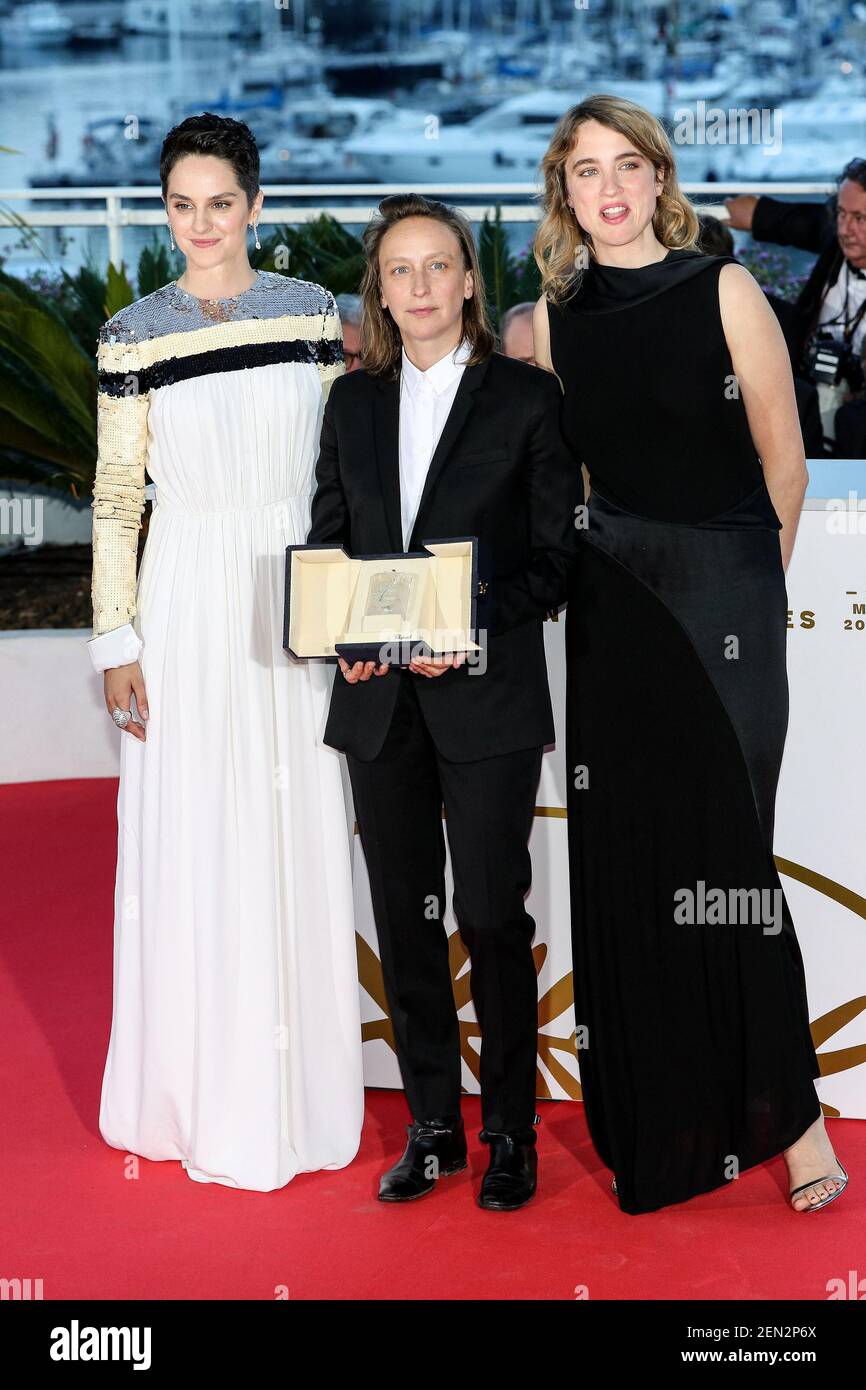
The film’s trajectory from a French production to a global phenomenon was signaled early during its premiere at the 2019 Cannes Film Festival. It was not merely well-received; it was hailed as a revelation. The film achieved a significant milestone by winning the Queer Palm, becoming the first film directed by a woman to receive the honor. This recognition underscored the film’s importance in LGBTQ+ cinema, presenting a queer romance that is treated with the same gravity and prestige as any classical epic.

Beyond its representation, the film was lauded for its writing. Céline Sciamma won the award for Best Screenplay at Cannes, a testament to the precision of the film’s dialogue and structure. The screenplay avoids the melodrama often associated with forbidden romances, opting instead for a slow-burn tension that mirrors the actual process of falling in love. Every conversation is weighted with subtext, and the silence between lines is often more communicative than the words themselves.
The critical consensus remained overwhelmingly positive upon its wider release. On the review aggregator Rotten Tomatoes, the film maintains a staggering 97% approval rating from critics. This near-universal acclaim is rare for foreign-language films in the mainstream English-speaking market, proving that the themes of art, memory, and longing are universal, regardless of the language spoken on screen.
Technical Brilliance: Light, Sound, and Silence
The visual language of Portrait of a Lady on Fire is perhaps its most enduring quality. Cinematographer Claire Mathon utilized a palette of deep greens, vibrant reds, and the soft, natural light of the Brittany coast to create a world that feels tactile. The use of light is particularly symbolic; the flickering candlelight in the interior scenes creates an intimacy that contrasts with the harsh, bright sunlight of the beaches, reflecting the duality of the protagonists’ secret world versus their public obligations.
One of the most daring technical choices Sciamma made was the near-total absence of a traditional musical score. There is no sweeping orchestral accompaniment to tell the audience how to feel. Instead, the soundscape is composed of natural noises: the crackle of a fire, the rustle of a dress, the sound of wind across the cliffs, and the scratching of charcoal on paper. This sonic minimalism forces the viewer to lean in, heightening the sensory experience and making the few moments of music—such as the haunting choral piece during the film’s climax—feel like an emotional explosion.
The performances of Noémie Merlant and Adèle Haenel are equally pivotal. Merlant brings a disciplined intensity to Marianne, capturing the obsession of an artist who is losing herself in her subject. Haenel, as Héloïse, delivers a performance of incredible nuance, conveying a mixture of resignation, curiosity, and eventually, fierce passion. Their chemistry is not based on overt passion but on a gradual alignment of souls, making their connection feel authentic and inevitable.
The Philosophy of Memory and Art
While the plot centers on a romance, the underlying theme of Portrait of a Lady on Fire is the preservation of memory through art. The film asks a fundamental question: how do we remember those we have lost? For Marianne and Héloïse, the painting is more than a commission; it is a record of their existence at a specific moment in time. It is a way to freeze a feeling and a gaze so that it can be revisited long after the people involved have parted.
The film explores the tragedy of the “arranged” life—the societal expectations that dictate who women should love and how they should live. By setting the story in 1770, Sciamma highlights the constraints of the era, but the emotional core speaks to any situation where love must be hidden or sacrificed for the sake of social survival. The art created in the film becomes a form of rebellion; by painting Héloïse as she truly is, rather than as a compliant bride-to-be, Marianne commits a radical act of truth-telling.
This focus on memory culminates in the film’s final sequence, which is widely regarded as one of the most powerful endings in modern cinema. Without spoiling the specifics, the scene ties together the themes of music, art, and the enduring power of a shared glance. It suggests that while the physical presence of a loved one may vanish, the “portrait” we carry of them in our minds—and the art we create in their honor—allows them to live forever.
Key Takeaways for Cinema Lovers

- The Female Gaze: The film is a primary example of shifting the cinematic perspective from objectification to mutual observation and empathy.
- Minimalist Mastery: By avoiding a traditional score and focusing on natural sounds, the film increases the emotional intimacy and tension.
- Award-Winning Pedigree: Its wins at the Cannes Film Festival, including the Queer Palm and Best Screenplay, mark it as a pivotal work of 21st-century art.
- Thematic Depth: Beyond the romance, the film is a meditation on how art preserves memory and challenges societal constraints.
- Critical Standing: With a 97% rating on Rotten Tomatoes, it remains one of the most highly regarded French films of the last decade.
Comparing the Impact of Sciamma’s Vision
| Element | Traditional Period Drama | Portrait of a Lady on Fire |
|---|---|---|
| Perspective | Often centered on the male lead or societal norms. | Centered exclusively on the female experience and gaze. |
| Soundtrack | Sweeping orchestral scores to drive emotion. | Naturalistic soundscapes; music used sparingly for impact. |
| Pacing | Driven by plot twists and dramatic confrontations. | Slow-burn; driven by observation and emotional growth. |
| Role of Art | Often used as a background prop or plot device. | Art is the central vehicle for intimacy and memory. |
As we move further into the 21st century, Portrait of a Lady on Fire continues to influence a new generation of filmmakers. Its success has opened doors for more stories that prioritize the interior lives of women and the nuances of queer identity, told without the need for external validation or traditional narrative tropes. It proves that the most specific stories—a painter and her subject on a lonely island in 1770—are often the ones that speak most universally to the human condition.
For those who have not yet experienced this film, it is available on several streaming platforms and remains a staple of art-house cinema. It is more than just a movie; it is an invitation to look closer, to listen more intently, and to appreciate the profound beauty of being truly seen by another person.
The enduring legacy of the film will likely be discussed at future retrospectives of the 2010s, as historians and critics continue to analyze its contribution to the evolution of the romantic drama. Its placement on “best of” lists is not merely a trend, but a recognition of a film that achieved a rare perfection in form and feeling.
We want to hear from you. Does Portrait of a Lady on Fire earn its place among the best films of the century in your book? Which scene stayed with you the longest? Share your thoughts in the comments below or share this article with a fellow cinephile.
Keep reading