
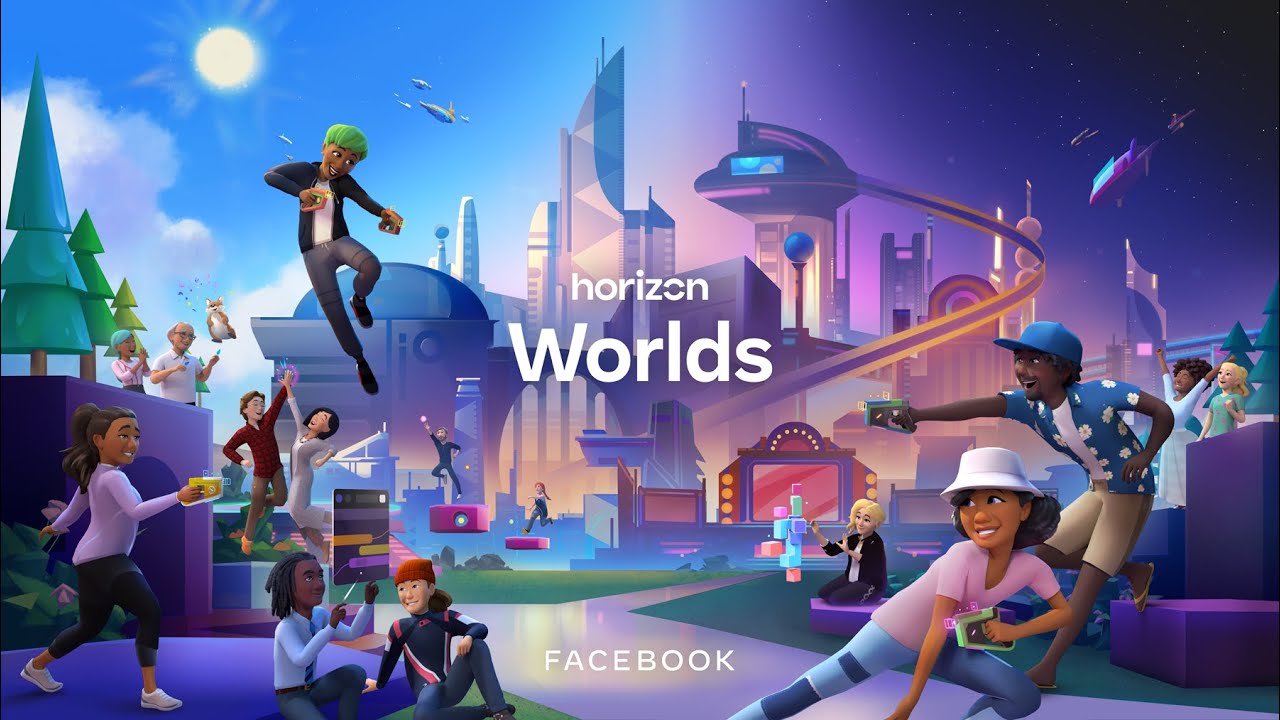
For the early adopters and digital architects who spent years building intricate worlds within Meta Horizon Worlds, the experience of logging in today is increasingly haunting. What was marketed as the vanguard of human social interaction—a sprawling, interconnected digital frontier—now frequently feels like a series of empty plazas and silent corridors. For many, the vibrant promise of the metaverse has transitioned into the unsettling atmosphere of a digital ghost town.
This sentiment reflects a broader, more systemic shift within Meta. While the company continues to maintain its hardware ecosystem, the strategic center of gravity has shifted violently away from the singular “metaverse” vision that defined the company’s 2021 rebranding. In its place, a new obsession has taken hold: generative artificial intelligence. As Meta pours billions into the development of its Llama large language models and AI-driven agents, the virtual social spaces of Horizon Worlds appear to be drifting into the periphery of the company’s priorities.
The decline of Meta Horizon Worlds is not merely a story of low user retention, but a case study in the volatility of tech industry pivots. The transition from a “social VR” focus to an “AI-first” strategy has left a dedicated but dwindling community of creators wondering if the digital homes they built are now located in a corporate cemetery. As the industry moves toward spatial computing and integrated AI wearables, the walled-garden vision of a persistent virtual world is facing a crisis of purpose.
The “Ghost Town” Effect: User Disillusionment
The frustration among remaining Horizon Worlds users stems from a stark disconnect between Meta’s public ambitions and the actual daily experience of the platform. In the early days of the rollout, the vision was one of seamless sociality—thousands of users interacting in real-time across a variety of user-generated environments. However, the reality for many has been a steady thinning of the crowd.
Users have reported an increasing difficulty in finding active communities or spontaneous social interactions. The “discovery” mechanisms within the platform often lead to empty worlds or outdated projects, creating a psychological loop where new users leave because the platform feels dead, and existing users leave because they are lonely. This cycle of attrition is particularly painful for creators who invested thousands of hours into building complex environments, only to see their foot traffic evaporate.
This decline is compounded by the technical friction that has plagued the platform since its inception. Despite updates to avatars and world-building tools, the barrier to entry—requiring expensive hardware like the Meta Quest series—remains high. While Meta has attempted to bring Horizon to mobile devices and web browsers to broaden the reach, these versions often feel like stripped-down approximations of the VR experience, failing to capture the immersion that was the platform’s primary selling point.
The AI Gravity Well: A Strategic Pivot
The perceived abandonment of the metaverse is not an accident; it is a calculated reallocation of resources. The emergence of generative AI in late 2022 and 2023 fundamentally altered the roadmap for every major tech firm. For Meta, the pivot toward AI provided a more immediate and scalable return on investment than the slow build-out of a virtual society.
Meta has integrated AI into almost every facet of its existing ecosystem, from AI-powered content recommendations on Instagram and Facebook to the deployment of Meta AI across its messaging apps. The company’s investment in the Llama family of open-weights models has positioned it as a primary competitor to OpenAI and Google, a battle that requires immense computational power and engineering talent—resources that were previously earmarked for the metaverse.
Mark Zuckerberg has frequently argued that AI and the metaverse are complementary, suggesting that AI will eventually be the primary tool used to create metaverse content. However, in practice, the “AI-first” approach has cannibalized the “Metaverse-first” momentum. The focus has shifted from building a place where people go to building tools that people use within their existing digital habits.
The Financial Toll of Reality Labs
The strategic shift is also driven by the staggering financial cost of Meta’s virtual ambitions. Reality Labs, the division responsible for VR, AR, and the metaverse, has consistently reported massive operational losses. According to Meta’s official investor relations filings, the division has lost tens of billions of dollars since the company’s rebranding, with quarterly losses often exceeding $4 billion.
These losses are a result of the immense R&D required to shrink hardware, improve optics, and build the server infrastructure necessary to support a persistent, high-fidelity virtual world. For shareholders, the appetite for these losses was high during the initial hype cycle, but as the “metaverse” became a punchline in tech circles, pressure mounted for Meta to show a clearer path to profitability.
AI offers a more direct path to monetization. By improving ad targeting through AI and offering enterprise-grade AI tools, Meta can generate revenue more efficiently than by hoping users will spend money on virtual clothing or digital real estate in a world that few people visit. The budget for Horizon Worlds’ expansion has likely been deprioritized in favor of GPU clusters and AI data centers.
From Virtual Worlds to Spatial Computing
While the specific vision of “Horizon Worlds” may be faltering, Meta is not abandoning the hardware. Instead, it is pivoting from “Virtual Reality” (VR) to “Mixed Reality” (MR) and “Spatial Computing.” This shift is evident in the design of the Meta Quest 3 and subsequent iterations, which prioritize “passthrough” technology—allowing users to see the real world with digital overlays.
The goal is no longer to transport the user entirely away from reality into a digital simulation, but to enhance the physical world with digital utility. This approach aligns more closely with the strategy seen in the Apple Vision Pro, where the focus is on productivity and media consumption rather than social simulation in a cartoonish virtual space.
This transition effectively re-frames the metaverse. It is no longer a destination (a place you visit), but a layer (a utility you wear). For the users of Horizon Worlds, this is a bittersweet victory; while the hardware is improving and the technology is evolving, the specific social experiment of a persistent, shared virtual world is being subsumed by a more utilitarian vision of augmented reality.
The Human Cost of Digital Obsolescence
The most poignant aspect of the Horizon Worlds decline is the impact on its “power users.” In any digital community, there is a core group of creators who treat the platform not as a game, but as a primary social venue and a creative outlet. For these individuals, the decline of the platform feels like the demolition of a neighborhood.
Many of these creators spent years mastering the platform’s limited building tools, creating complex games, art galleries, and social clubs. When the user base drops, these creators lose their audience, their social circles, and the sense of purpose they derived from their digital contributions. Unlike traditional social media, where a creator can easily migrate their followers to a new platform, the high friction of VR makes migration tricky.
This creates a state of “digital grief,” where users continue to log in to a decaying world, hoping for a resurgence that the company’s current financial and strategic trajectory suggests is unlikely. The “cemetery” feeling described by users is not just about the lack of people, but the presence of abandoned dreams—half-finished projects and empty forums that serve as monuments to a hype cycle that moved on.
What Happens Next?
Meta is unlikely to shut down Horizon Worlds entirely, as it serves as a vital showcase for the capabilities of the Quest hardware. However, the platform will likely continue to evolve into a secondary feature—a “demo mode” for the broader AI and MR ecosystem rather than the center of the company’s universe.
The future of social VR likely lies in smaller, more focused communities rather than a single, corporate-led “everything app” for the metaverse. Platforms like VRChat have shown that user-driven, decentralized growth is more sustainable than top-down corporate mandates. Meta’s struggle suggests that you cannot simply build a world and command people to live in it; social spaces must grow organically from the needs of the users.
As Meta continues to lean into AI, People can expect Horizon Worlds to become a testing ground for AI-generated environments. Instead of human creators spending weeks building a world, we may see users prompt an AI to “create a 1920s jazz club in Paris,” and have it appear instantly. While this solves the problem of empty spaces, it may further alienate the human creators who gave the platform its original soul.
The next major milestone for Meta’s spatial strategy will be the next Meta Connect event, where the company typically unveils its latest hardware and software roadmaps. Investors and users alike will be watching to see if there is any renewed commitment to the social metaverse, or if the transition to an AI-powered augmented reality layer is now complete.
Do you think the vision of a persistent virtual world is still possible, or has AI rendered the “metaverse” obsolete? Share your thoughts in the comments below.
Worth a look