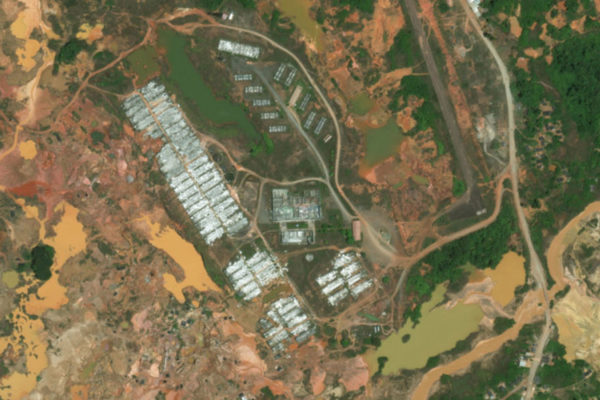
The landscape of South American extractive industries is witnessing a high-stakes gamble as Augusta Capital and Gold Reserve Inc. Move to reactivate one of the world’s most significant undeveloped gold deposits. In a strategic move that signals a potential shift in foreign investment appetite toward the region, the two entities have entered into an investment agreement aimed at reviving the Siembra Minera project in Venezuela.
This initiative involves a planned investment of up to $200 million, a figure that represents not only a financial commitment but a calculated bet on the evolving political and economic climate of Venezuela. For Gold Reserve, the move is an attempt to reclaim value from a project that has been mired in legal disputes and government expropriation for over a decade. For Augusta Capital, led by seasoned investor Richard Warke, it is an opportunity to leverage distressed assets in a resource-rich environment.
The reactivation of Siembra Minera is more than a corporate venture; it is a test case for the viability of large-scale foreign direct investment (FDI) in a nation that has historically struggled with resource nationalism and severe international sanctions. As the global demand for gold remains a hedge against macroeconomic instability, the ability to unlock Venezuelan reserves could have meaningful implications for both the local economy and the broader gold market.
From a financial perspective, the deal is structured to mitigate the inherent sovereign risk associated with operating in Venezuela. By partnering with Augusta Capital, Gold Reserve gains the necessary liquidity and strategic backing to navigate the complex regulatory hurdles required to transition the project from a state of paralysis to active production.
A Strategic Pivot in the Venezuelan Mining Sector
The partnership between Gold Reserve and Augusta Capital Corp marks a pivotal moment for the Siembra Minera project. For years, the site has remained dormant, serving as a symbol of the friction between international mining interests and the Venezuelan state. The decision to inject up to $200 million into the project suggests that the investors see a window of opportunity, likely driven by the Venezuelan government’s increasing need for hard currency and technical expertise to revitalize its mining sector.
Richard Warke, the driving force behind Augusta Capital, is known for identifying undervalued assets in the mining sector. His involvement brings a level of institutional credibility and aggressive capital management that Gold Reserve has lacked during its long period of litigation. The focus is now on transitioning the project from a legal claim into an operational reality, which requires not only capital but a stable agreement with the current administration in Caracas.
The Venezuelan mining sector has been largely dominated by the state-owned enterprises and unregulated artisanal mining, particularly within the Orinoco Mining Arc. The entry of a structured, well-funded partnership like that of Augusta Capital and Gold Reserve could introduce modern mining standards and higher production efficiencies, provided the legal framework for their operation is firmly established and respected.
Industry analysts view this move as a signal to other mining firms that the “risk-reward” calculus for Venezuela is shifting. While the risks remain substantial—including sanctions and political volatility—the sheer scale of the gold deposits makes the potential returns hard to ignore for firms with a high risk tolerance.
The Legacy of Siembra Minera: From Expropriation to Potential Recovery
To understand the significance of this investment, one must look at the history of the Siembra Minera project. Once touted as one of the largest gold deposits globally, the project became a casualty of the Venezuelan government’s wave of nationalizations. The expropriation of the site led to a protracted legal battle, with Gold Reserve pursuing compensation through international channels.
Central to this struggle was the role of the International Centre for Settlement of Investment Disputes (ICSID), the arm of the World Bank that handles disputes between foreign investors and sovereign states. Gold Reserve spent years seeking an arbitration award to recover the billions of dollars in lost value resulting from the government’s seizure of the asset. The transition from seeking damages to seeking reactivation indicates a pragmatic shift in strategy: moving from a desire for compensation to a desire for operational control.
The “paralysis” mentioned in recent reports refers to the period where neither the state nor the original investors could effectively develop the site. The state lacked the specialized technology and capital to extract the gold efficiently, while Gold Reserve lacked the legal right to access the land. The new agreement with Augusta Capital aims to break this deadlock by providing the financial muscle necessary to negotiate a workable return to the site.
The technical potential of Siembra Minera remains high. The deposit’s size and grade make it a Tier-1 asset, meaning it has the potential to produce gold at a low cost over a long period. If the $200 million investment successfully triggers reactivation, it could transform the project from a legal liability into a primary engine of gold production for the region.
Navigating the Risks of the Venezuelan Economic Landscape
Investing in Venezuela is not without extreme peril. The primary challenge for Augusta Capital and Gold Reserve is the “sovereign risk”—the possibility that the government may change the terms of the agreement, impose new taxes, or once again expropriate the assets. To counter this, investors typically seek “stability agreements” that freeze the regulatory and tax environment for a set number of years.
the overarching shadow of U.S. Sanctions continues to complicate financial transactions. Because Augusta Capital and Gold Reserve have links to Western financial systems, they must ensure that their operations comply with the Office of Foreign Assets Control (OFAC) regulations. Any breach could result in severe penalties, making the legal structuring of the investment as important as the mining engineering itself.
The internal economic environment of Venezuela also presents hurdles. Hyperinflation and a volatile currency market make it difficult to manage local operational costs. However, the gold mining industry has a natural advantage: the product is denominated in U.S. Dollars on the global market, providing a natural hedge against the collapse of the local currency.
There is also the social and environmental dimension. The Venezuelan government’s “Mining Arc” has been criticized by international observers for causing deforestation and displacing indigenous communities. For Augusta Capital and Gold Reserve to maintain their global reputation, they will likely need to implement Environmental, Social, and Governance (ESG) standards that far exceed the current local requirements.
The Broader Implications for Global Gold Markets
While a single project like Siembra Minera may not shift global gold prices, its success could trigger a wider trend of “resource repatriation” in South America. If Augusta Capital can successfully extract value from a previously expropriated asset, it provides a roadmap for other firms that lost assets during the socialist surges in the region.
From a macroeconomic perspective, this investment underscores the resilience of gold as an asset class. In an era of geopolitical fragmentation, the drive to secure physical gold reserves is intensifying. Countries and private entities are increasingly willing to venture into “frontier markets” to secure supply, even when those markets are politically unstable.
The $200 million commitment also highlights a trend in mining finance where specialized investment firms, rather than traditional diversified miners, take the lead on high-risk, high-reward projects. Augusta Capital operates more like a private equity firm for minerals, focusing on the “unlocking” of value through legal settlement and capital injection rather than long-term exploration.
If the project reaches full production, it would add a significant volume of gold to the global supply, though likely at a time when the market is already seeing increased demand from central banks. The real story, however, is not the gold itself, but the return of institutional capital to a country that had been largely abandoned by the West.
Key Takeaways for Stakeholders
- Strategic Partnership: Gold Reserve Inc. And Augusta Capital Corp have signed an agreement to reactivate the Siembra Minera gold project.
- Financial Commitment: The planned investment is up to $200 million, aimed at ending years of operational paralysis.
- Legal Evolution: The move signals a shift from pursuing ICSID arbitration awards to pursuing active operational recovery.
- Risk Profile: The project faces significant hurdles, including sovereign risk, U.S. Sanctions compliance, and environmental concerns.
- Market Signal: Success could encourage other foreign investors to return to Venezuela’s extractive sectors.
What Happens Next?
The immediate next step for Augusta Capital and Gold Reserve is the formalization of operational agreements with the Venezuelan mining authorities. This will likely involve a detailed “Work Program” and a legal framework that protects the $200 million investment from further expropriation. Investors and analysts will be watching for official filings or press releases confirming the commencement of on-site activities or the signing of a definitive stability agreement with the state.
We will continue to monitor the progress of the Siembra Minera project and its impact on the Venezuelan economy. We invite our readers to share their perspectives on the risks of investing in frontier markets in the comments below.