
In the complex intersection of public health and global finance, few sectors offer as clear a window into societal development as the hygiene and healthcare markets in emerging economies. For investors and health professionals alike, the trajectory of P&G Hygiene and Health Care Ltd in India serves as a compelling case study in how the democratization of basic health necessities can drive sustainable corporate growth.
As a physician and health journalist, I have long observed that the “consumption story” in India is not merely about luxury goods or electronics; It’s fundamentally rooted in a shift toward preventative health and personal dignity. The growth of P&G’s hygiene portfolio in the region is inextricably linked to a broader public health movement: the effort to dismantle stigmas surrounding menstrual hygiene and provide accessible, medical-grade products to millions of women.
The P&G Hygiene and Health Care stock (INE179A01014) represents more than just a financial instrument; it is a proxy for the increasing health literacy of the Indian middle class. By focusing on essential categories like feminine hygiene—led by the flagship Whisper brand—the company has positioned itself at the center of a critical healthcare transition in one of the world’s most populous nations.
The Catalyst of Consumption: Why Hygiene is a Growth Driver
The Indian Fast-Moving Consumer Goods (FMCG) sector is currently undergoing a structural transformation. While traditional consumption was once driven by urban elites, the current growth engine is the “Rurban” market—the blurring line between rural and urban centers where disposable incomes are rising and health awareness is peaking.
From a medical perspective, the shift toward branded hygiene products is a victory for public health. The use of standardized, sterile sanitary products significantly reduces the risk of reproductive tract infections (RTIs) and other complications associated with traditional, unsterilized materials. When a population begins to prioritize these health outcomes, the resulting demand creates a stable, non-cyclical revenue stream for companies like P&G.
This demand is further bolstered by government initiatives and non-governmental organization (NGO) campaigns aimed at improving menstrual hygiene management (MHM). As the social license to discuss and purchase these products expands, the addressable market for P&G Hygiene and Health Care grows exponentially, moving from a niche urban requirement to a national health standard.
Menstrual Health as a Socio-Economic Lever
It is impossible to analyze the P&G Hygiene stock without acknowledging the profound impact of the Whisper brand on the Indian landscape. In many regions, the availability of reliable feminine hygiene products is directly correlated with educational attainment for adolescent girls. When health barriers are removed, school attendance increases, which in turn elevates the long-term economic potential of the female workforce.
This creates a virtuous cycle: improved health leads to better economic opportunities, which increases the purchasing power of the consumer, further fueling the growth of the hygiene sector. For the investor, Which means the company is not just selling a product; it is integrating itself into the essential infrastructure of daily life for millions of women.
the company’s ability to maintain premium brand positioning while expanding its reach into lower-tier cities demonstrates a sophisticated understanding of the Indian consumer. By offering various price points and product tiers, P&G ensures that its health-focused products remain accessible without eroding the brand equity that signals quality and safety to the consumer.
Key Takeaways for Stakeholders
- Health-Driven Demand: Growth is fueled by a fundamental shift in public health awareness and the reduction of social stigmas surrounding hygiene.
- Market Resilience: Hygiene products are “essential” goods, making the stock less susceptible to the volatility that affects discretionary spending.
- Socio-Economic Integration: The expansion of the feminine hygiene market is closely tied to the empowerment of women and increased educational access in India.
- FMCG Synergy: P&G leverages its global R&D capabilities to introduce medical-grade innovations to the Indian market, maintaining a competitive edge over local players.
Navigating the Indian FMCG Landscape
Despite the optimistic growth trajectory, the Indian market presents unique challenges. Competition from local brands and the rise of “D2C” (direct-to-consumer) startups focusing on organic or sustainable menstrual products have forced established players to innovate. P&G has responded by emphasizing the science of its products—a strategy that resonates well in a market where consumers are increasingly skeptical of unverified health claims.
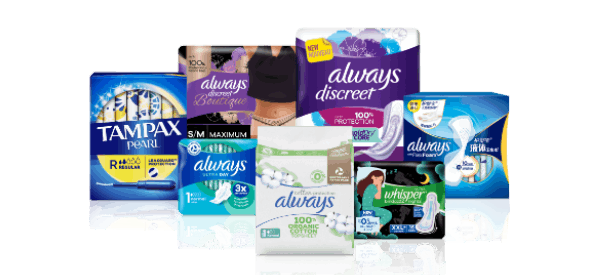
The financial health of P&G Hygiene and Health Care Ltd is often reflected in its ability to maintain strong margins despite the logistical complexities of the Indian supply chain. The company’s focus on high-margin, brand-loyal categories allows it to absorb inflationary pressures more effectively than companies selling generic commodities.
For those tracking the stock, the key metrics to watch are not just the quarterly earnings, but the penetration rates in Tier 2 and Tier 3 cities. The real growth is no longer happening in Mumbai or Delhi, but in the smaller hubs where the transition to branded hygiene products is currently accelerating.
The Medical Perspective on Market Value
As an MD, I view the valuation of healthcare-adjacent stocks through the lens of “value-based care.” A company that provides a product that prevents illness or improves systemic health outcomes possesses a form of “social capital” that is challenging for competitors to replicate. P&G’s dominance in the hygiene space is a result of establishing trust over decades—a critical currency in the healthcare sector.
The integration of hygiene into the broader “wellness” trend is the next frontier. We are seeing a convergence where feminine hygiene is no longer treated as a separate, hidden category but as a core part of a comprehensive healthcare regimen. This shift opens the door for product line extensions and deeper integration into the healthcare ecosystem, potentially providing new avenues for revenue growth.
Investors should consider the long-term demographic dividend of India. With a young population and a government increasingly focused on health infrastructure, the baseline for hygiene consumption is set to rise for the next two decades. The P&G Hygiene stock is, in many ways, a bet on the continued modernization of Indian public health.
Comparative Analysis: Branded vs. Generic Hygiene
| Feature | Generic/Traditional Methods | Branded (e.g., P&G Whisper) |
|---|---|---|
| Sterility | Variable/Unverified | Medical-grade/Controlled |
| Health Risk | Higher risk of RTIs | Significantly reduced risk |
| Consumer Trust | Based on tradition | Based on clinical efficacy |
| Market Growth | Stagnant/Declining | Rapidly expanding |
The transition from traditional methods to branded hygiene is not just a commercial shift; it is a clinical necessity. The data consistently shows that when women have access to reliable hygiene products, there is a measurable decrease in absenteeism and an increase in overall wellbeing. This clinical reality is what provides the fundamental floor for the company’s valuation.

Looking forward, the company’s ability to adapt to the “green” transition—developing biodegradable or more sustainable hygiene options—will be the next major test. As the Indian consumer becomes more environmentally conscious, the marriage of medical efficacy and ecological sustainability will likely define the next era of market leadership.
The next confirmed checkpoint for investors and analysts will be the release of the company’s next official quarterly financial filing and the accompanying annual general meeting (AGM) disclosures, where management typically outlines the expansion strategy for the coming fiscal year.
Do you believe the shift toward branded hygiene in emerging markets is the most significant driver of FMCG growth, or are other health trends more influential? Share your thoughts in the comments below.