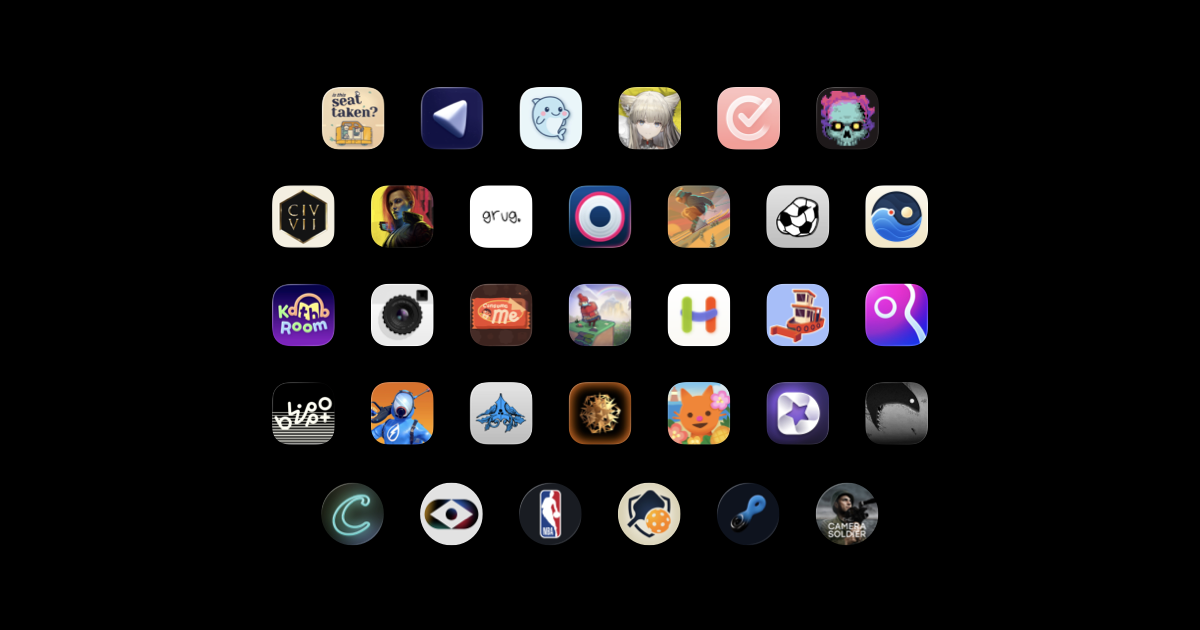
Innovation in Focus: Meet the 2026 Apple Design Award Finalists
The landscape of digital interaction is shifting once again. This week, the announcement of the 2026 Apple Design Award finalists has sent a clear signal through the global developer community: the future of software is not just about utility, but about personality, presence, and the seamless merging of the digital and physical realms.
The Apple Design Awards have long served as a barometer for excellence within the ecosystem, recognizing those who push the boundaries of what is possible on iPhone, iPad, Mac, Apple Watch, and now, the increasingly sophisticated visionOS. While the awards have always focused on innovation, ingenuity, and technical achievement, the 2026 cohort represents a particularly diverse spectrum of design philosophies—ranging from the hyper-modernity of spatial computing to a deliberate, nostalgic embrace of retro-futurism.
As we look at this year’s finalists, it becomes evident that the definition of “great design” is expanding. It’s no longer enough to create a tool that works; developers are now creating worlds that resonate. From the tactile, jelly-like physics of spatial apps to the intentional “cringe” of DIY aesthetics, the 2026 finalists are proving that the most impactful software is that which evokes a genuine emotional response.
The Spirit of Excellence: More Than Just Aesthetics
To understand the significance of this year’s finalists, one must understand the rigorous standard set by the Apple Design Awards. The selection process evaluates apps and games across several core pillars: Inclusivity, Innovation, Interaction, Social Impact, Visuals and Graphics, and the ever-popular Delight, and Fun. This multi-faceted approach ensures that the winners are not merely visually stunning, but are also technically robust and socially conscious.
For developers, being named a finalist is a career-defining achievement. It acts as a stamp of approval from one of the most discerning design organizations in the technology industry. But beyond the prestige, these awards highlight the technical hurdles that have been cleared. Whether it is the complex math required to render realistic spatial blobs in a 3D environment or the networking precision needed to synchronize a “live” broadcast across thousands of devices, the finalists represent the cutting edge of software engineering.
Spotlight on ‘Delight and Fun’: The 2026 Finalists
While the awards span many categories, the “Delight and Fun” category often provides the most immediate insight into the creative pulse of the developer community. This year, three finalists in this category stand out for their radically different approaches to user engagement.
Blippo+: A Retro-Futurist Broadcast for the Modern Age
In an era of highly polished, algorithmically driven streaming services, Panic, Inc. Has taken a sharp, intentional turn toward the idiosyncratic. Their macOS application, Blippo+, is a masterclass in world-building through design. Aimed at a demographic that craves the “DIY aesthetic” and the charm of old-school channel-surfing, Blippo+ functions as a retro-futurist TV experience.
The app features multiple channels of bizarre, ad-free programming that feel like a fever dream of the UHF dial’s golden era. Panic has spared no detail in its execution, reviving ancient graphics, fonts, and even pixelated buttons to create a cohesive, immersive atmosphere. What elevates Blippo+ from a mere novelty to a technical marvel is its synchronized “broadcast” feature. This ensures that every user is watching the same content at the exact same time, recreating the shared cultural experience of traditional television in a digital, decentralized way.
Metaballs: Redefining the Spatial Canvas
As spatial computing moves from a novelty to a core part of the Apple ecosystem, Apposite’s Metaballs has emerged as a standout example of what visionOS can achieve. Available on both iOS and visionOS, Metaballs allows users to interact with a variety of colorful, material-rich “spatial blobs” and bubbles.
The experience is deeply tactile; users can push, poke, prod, and pull these gelatinous shapes across a spatial canvas. The technical achievement lies in the way these shapes react to shifts in lighting and movement, providing a sense of physical presence that is essential for effective augmented and virtual reality. The app provides significant utility for creators by allowing users to export their creations as USDZ files, bridging the gap between playful interaction and professional 3D asset creation.
grug: Primal Wisdom in a Digital Age
In stark contrast to the high-fidelity physics of Metaballs, the iOS app grug, developed by Ocho, finds its power in extreme simplicity. Grug delivers daily wisdom through the medium of Neolithic grunts, offering a playful, low-stakes way to engage with “affirmations.”
The design is “scribbled” and intentionally unpolished, a clever departure from the hyper-minimalism that has dominated mobile UI for the last decade. By incorporating unique elements like a hand-drawn status bar, Ocho has created a “little masterpiece of clever simplicity.” In a world of constant notifications and high-intensity digital engagement, grug offers a primal, calming joy that proves sometimes, less truly is more.
Beyond Aesthetics: Technical Ingenuity and Emerging Trends
The 2026 finalists reveal several burgeoning trends that will likely define the next several years of software development. First is the maturation of spatial computing. Metaballs demonstrates that the next frontier of app design isn’t just about looking at a screen, but about interacting with digital matter within a three-dimensional space. The integration of USDZ export capabilities suggests that consumer-facing spatial apps are becoming increasingly integrated with professional creative workflows.

Second, we are seeing a “rebellion of the aesthetic.” The success of Blippo+ and grug suggests a growing fatigue with the “everything-is-smooth-and-rounded” design language. Developers are finding success by leaning into specific, even “imperfect” aesthetics—whether it is the pixelated, DIY charm of Panic’s work or the hand-drawn, primal simplicity of Ocho’s. This indicates a shift toward “personality-driven design,” where the app’s visual identity is as much a part of the product as its functionality.
Finally, the emphasis on synchronized experiences and social interaction through niche interfaces shows that developers are finding new ways to foster community. Even in solo-use apps, the sense of being part of a shared moment—whether through a synchronized broadcast or a shared “primal” ritual—is becoming a key component of user retention and engagement.
Key Takeaways for Developers and Users
- Spatiality is Permanent: The inclusion of visionOS-capable apps like Metaballs confirms that spatial computing is a primary pillar of future design.
- Nostalgia is a Tool: Retro-futurism and DIY aesthetics (as seen in Blippo+) are effective ways to differentiate products in a crowded market.
- Technical Depth Matters: The most successful apps combine high-level technical feats (like synchronized broadcasting or USDZ exporting) with strong emotional hooks.
- Simplicity as a Feature: Minimalist, low-cognitive-load apps like grug are finding a vital place in the modern digital wellness landscape.
Looking Ahead
As the industry awaits the final winners of the 2026 Apple Design Awards, the conversation has already shifted. The focus is no longer just on “how an app works,” but on “how an app makes us feel” and “how it occupies our space.” For the developers who have made it to the finalist stage, the journey is just beginning, as they set the stage for the next era of digital innovation.
The official winners will be announced during the upcoming awards ceremony, where the full impact of these technical and creative achievements will be celebrated on a global stage.
What do you think of this year’s finalists? Does the rise of spatial computing change your perspective on app design? Let us know in the comments below and share this article with your fellow tech enthusiasts.
Related reading