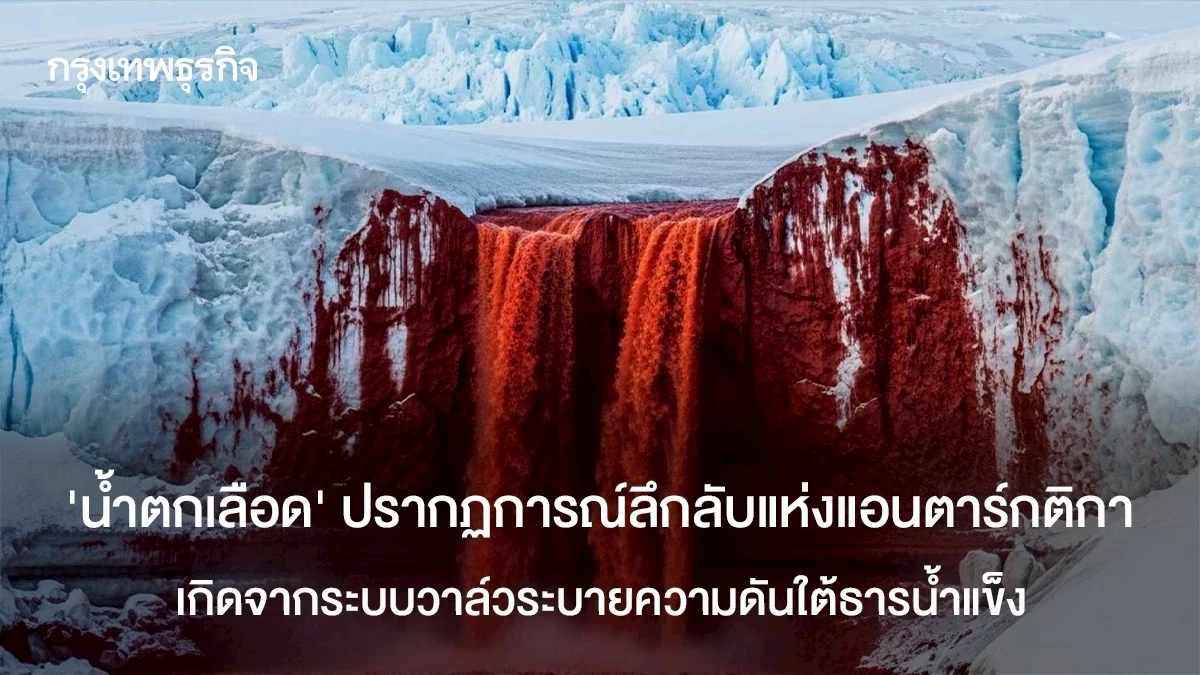
In the desolate, windswept reaches of Antarctica’s McMurdo Dry Valleys, a striking geological phenomenon has long captured the imagination of explorers and scientists alike. Known as “Blood Falls,” the feature manifests as a vivid, crimson-colored cascade spilling from the face of the Taylor Glacier. For over a century, the origin of this sanguine-looking discharge remained a subject of intense speculation, fueling myths of ancient mysteries buried beneath the ice. However, modern geochemical analysis has finally demystified the science behind this haunting Antarctic landmark.
Far from being a sign of supernatural activity, Blood Falls is a testament to the remarkable resilience of life in extreme environments. The phenomenon is the result of a subglacial brine pool that has been isolated from the atmosphere for millions of years. As this hypersaline water interacts with the surrounding environment, it creates a unique chemical reaction that produces its distinct, rust-like appearance. Understanding the mechanics of this site provides researchers with a rare window into how microbial life can survive in total darkness, extreme cold, and high pressure—conditions that may mirror those found on other icy worlds in our solar system.
The Chemistry Behind the Crimson Flow
The mystery of Blood Falls was first noted by Australian geologist Griffith Taylor during his expedition in 1911. Initially, researchers hypothesized that the red coloration was due to the presence of red algae; however, subsequent studies proved that the pigment was entirely inorganic. The true culprit is iron-rich brine. According to research published by the University of Alaska Fairbanks, the water beneath the Taylor Glacier originates from a massive, subglacial lake trapped approximately 1.5 million years ago. As the glacier advanced, it sealed off a section of the ocean, effectively freezing a piece of ancient marine history in time.

The water in this trapped reservoir is incredibly salty—about three times as salty as the ocean—which prevents it from freezing even at sub-zero temperatures. When this pressurized, iron-rich brine eventually forces its way through fissures in the glacier and encounters the oxygen-rich surface air, a rapid chemical reaction occurs. The iron in the brine oxidizes, turning the water into a deep, rust-colored liquid that stains the white ice. This process is essentially the same chemical reaction that causes iron to rust when exposed to the elements, albeit on a geological scale.
A Laboratory for Extremophiles
Beyond its visual impact, Blood Falls serves as a critical site for astrobiology. In 2017, a team of researchers led by Jill Mikucki, a microbiologist at the University of Tennessee, utilized radio-echo sounding technology to confirm the existence of a persistent brine plumbing system beneath the glacier. Their findings, detailed in the journal Nature Communications, revealed that the subglacial environment is home to a thriving, ancient community of microbes that exist entirely independent of sunlight or photosynthesis.

These microorganisms, known as extremophiles, have adapted to thrive in a high-salinity, high-pressure, and completely anaerobic environment. By metabolizing sulfate and ferric iron, these microbes sustain themselves in a cycle that has remained largely unchanged for millennia. This discovery has profound implications for our understanding of life in the universe. If life can persist in the isolated, frigid depths of the Antarctic, it significantly increases the probability that similar life forms could exist in the subsurface oceans of moons like Jupiter’s Europa or Saturn’s Enceladus, where conditions are thought to be analogous to those found under the Taylor Glacier.
Geological Significance and Preservation
The McMurdo Dry Valleys, where Blood Falls is located, are among the most extreme desert environments on Earth. Due to the katabatic winds that sweep away snow and moisture, this region is often compared to the surface of Mars. The stability of the Taylor Glacier and the surrounding permafrost allows scientists to monitor the chemical signatures of the brine over long periods. This makes the site an invaluable “natural laboratory” for observing how climate change may impact permafrost stability and the release of ancient, trapped gases or minerals.
Because of its scientific importance, the area is subject to strict environmental protections under the Antarctic Treaty System, which mandates that human impact on the pristine wilderness must be minimized. Researchers visiting the site are required to adhere to rigorous decontamination protocols to prevent the introduction of modern surface microbes into the ancient subglacial ecosystem. These measures ensure that the integrity of the data collected from the brine remains untainted by contemporary biological contaminants.
Key Takeaways: Understanding Blood Falls
- Ancient Origins: The brine was trapped beneath the Taylor Glacier approximately 1.5 million years ago when sea levels rose and flooded the area.
- Chemical Reaction: The red color is caused by the oxidation of iron when the subglacial brine makes contact with the oxygenated atmosphere.
- Microbial Life: The site supports a unique, self-sustaining ecosystem of microbes that survive without sunlight or oxygen.
- Astrobiological Relevance: The conditions at Blood Falls provide a model for potential life on icy, subsurface-ocean moons in the outer solar system.
Looking Ahead: The Future of Antarctic Research
As technology advances, our ability to probe deeper into the subglacial depths of Antarctica continues to evolve. Future missions are expected to employ autonomous underwater vehicles (AUVs) designed to navigate the narrow conduits of the glacier without disrupting the delicate chemical balance of the brine pool. Such efforts will likely yield even more data on the metabolic pathways of the extremophiles residing within, potentially revealing new insights into the evolution of life on Earth.
There are no immediate plans for commercial or tourism-led expeditions to the site, as the Antarctic Treaty System maintains strict oversight to preserve these sensitive ecosystems for future scientific inquiry. The next major updates regarding subglacial research in the McMurdo region are expected to emerge from the upcoming Scientific Committee on Antarctic Research (SCAR) conferences, where international teams share their latest findings on climate change and cryospheric biology. We will continue to monitor these developments as they shed further light on the hidden wonders of the frozen continent. If you have questions about the science behind extreme environments or want to share your thoughts on this fascinating discovery, please leave a comment below or join the conversation on our social media channels.
- Mouse: P.I. For Hire Hits 1 Million Copies Sold
- Experience the Best of Android with New Google Pixel Phones
- Detail Oriented Trust Operations Specialist Job Available in Wichita Falls Texas with Spherion Staffing (news-usa.today)
- Solving Feynman’s Reverse Sprinkler Puzzle: New Physics Insights (archyde.com)