
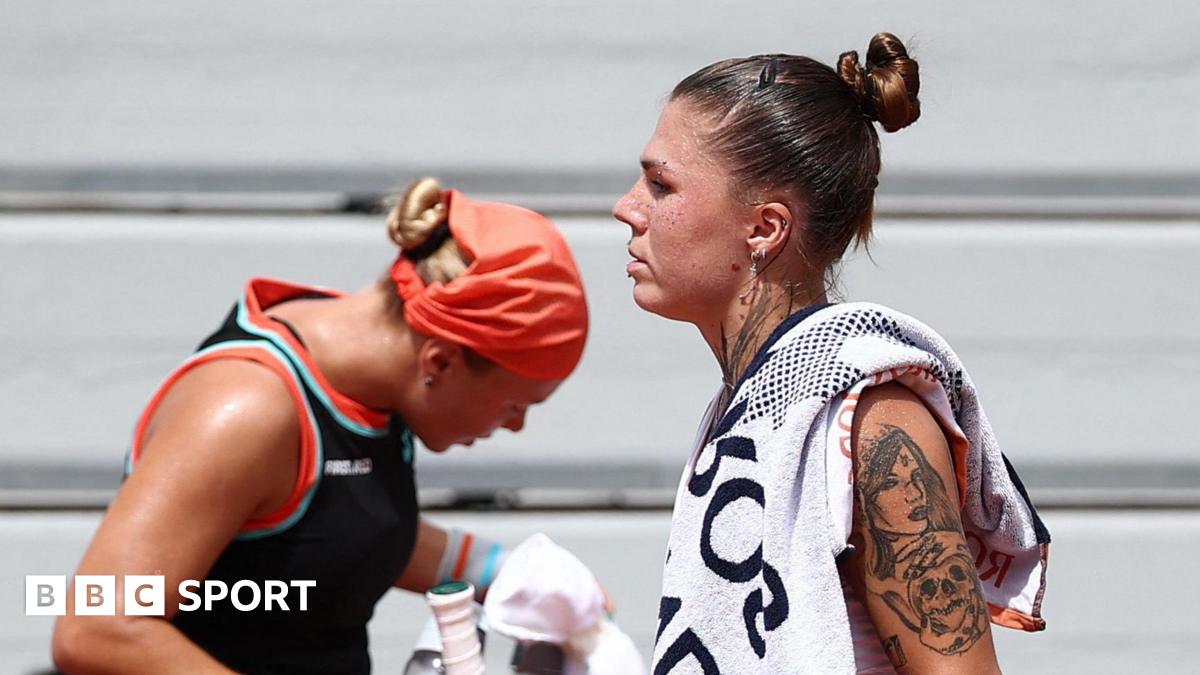
The intersection of professional sports and international geopolitics has rarely been as stark as it is today, particularly within the world of professional tennis. For Ukrainian athlete Oleksandra Oliynykova, the ongoing conflict in her home country has transformed the tennis court from a space of competition into a platform for advocacy. Following recent matches against Russian opponents, Oliynykova has emerged as a vocal critic of the silence maintained by many peers from Russia and Belarus regarding the invasion of Ukraine.
In the world of tennis, where players from across the globe often share locker rooms and travel circuits, the neutrality policy implemented by major governing bodies has become a flashpoint for tension. Since the escalation of the conflict in February 2022, the International Tennis Federation (ITF) and the major Grand Slams have permitted Russian and Belarusian players to compete only as “neutral” athletes, stripped of their national flags, and anthems. However, for many Ukrainian players, this distinction is insufficient, leading to a climate of friction that continues to play out on the global stage.
Oleksandra Oliynykova, who has been forthright about the toll the war has taken on her family and countrymen, has argued that silence is not merely a personal choice but a tacit endorsement of the status quo. Her recent comments reflect a broader, deeply felt frustration among Ukrainian athletes who feel that their international colleagues have a responsibility to use their platform to denounce the aggression. This ongoing discourse highlights the widening gap between the governing bodies’ efforts to maintain “neutrality” and the lived reality of athletes whose nations are at the center of a humanitarian crisis.
The Debate Over Neutrality in Professional Tennis
The policy of allowing Russian and Belarusian players to compete under a neutral banner has been a subject of intense scrutiny since the International Tennis Federation suspended the Russian Tennis Federation and Belarus Tennis Federation from team competitions in March 2022. While this mandate was intended to isolate the national sporting infrastructures, it has left individual players in a precarious position. The Association of Tennis Professionals (ATP) and the Women’s Tennis Association (WTA) have largely followed suit, maintaining that individual athletes should not be held accountable for the actions of their governments.

For Oliynykova, the issue is not about the individual’s nationality but about their willingness to speak out. In various interviews and social media posts, she has emphasized that the opportunity to compete on a global stage comes with a moral weight. She argues that when players choose to avoid the topic entirely, it perpetuates a sense of “business as usual” that ignores the daily realities of the conflict. This stance has resonated with other Ukrainian players, such as Elina Svitolina and Marta Kostyuk, who have frequently declined to shake hands with Russian and Belarusian opponents following matches, citing the ongoing war as the reason for their protest.
The tension has manifested in high-profile incidents, including at the French Open and Wimbledon, where spectators have occasionally booed players for refusing to engage in the traditional post-match handshake. These moments serve as a reminder that the sports world is not a vacuum, and the political climate of the 21st century inevitably bleeds into the professional arena. As the conflict persists, the pressure on international sporting bodies to address these internal fractures is likely to intensify, with athletes caught in the middle of a debate that transcends the baseline.
Understanding the Impact on Ukrainian Athletes
To understand why Oliynykova and her peers are so vocal, one must look at the impact the war has had on the Ukrainian sports community. According to the Ministry of Youth and Sports of Ukraine, hundreds of athletes and coaches have been killed as a result of the ongoing conflict. This loss of life has fundamentally altered the perspective of those who remain in the sport, turning every tournament into a potential venue for advocacy.

The psychological toll on these athletes is immense. Many are training while managing the constant anxiety of checking in on family members who remain in active war zones. When they step onto the court, they are not just representing themselves; they are carrying the weight of a nation’s trauma. For them, a match against a Russian player is never just a game—it is an encounter with a representative of a state that is actively destroying their homes and communities.
The international tennis community has attempted to navigate this by encouraging dialogue, but progress remains leisurely. While some players have privately expressed support for their Ukrainian colleagues, the lack of a collective, public statement from the Russian and Belarusian contingent has been a source of disappointment for many. As the war enters its third year, the call for more than just “neutrality” is growing louder, and athletes like Oliynykova remain at the forefront of this movement.
What Happens Next: The Path Forward
As the international tennis calendar progresses toward the next series of major tournaments, the challenge for the ATP and WTA will be to balance their commitment to non-discrimination with the legitimate concerns of players who are directly affected by the war. There is no simple solution that will satisfy all parties. Some argue for stricter requirements for players to denounce the war, while others fear that such mandates could lead to political persecution or safety risks for the athletes involved.
The next major checkpoint for this issue will be the upcoming Grand Slam events, where the spotlight on these interactions will be at its brightest. Tournament organizers are expected to continue providing security and logistical support to manage the tension, but the underlying issue—the moral obligation of athletes in times of conflict—remains unresolved. For now, players like Oleksandra Oliynykova continue to hold the line, ensuring that the war in Ukraine remains part of the conversation, regardless of the score on the scoreboard.
We invite our readers to share their thoughts on the role of professional athletes in geopolitical conflicts. Is it fair to expect players to take a stand, or should sports remain a neutral ground? Your perspective is a vital part of the ongoing dialogue. Join the conversation in the comments section below and stay tuned to World Today Journal for further developments on this evolving story.