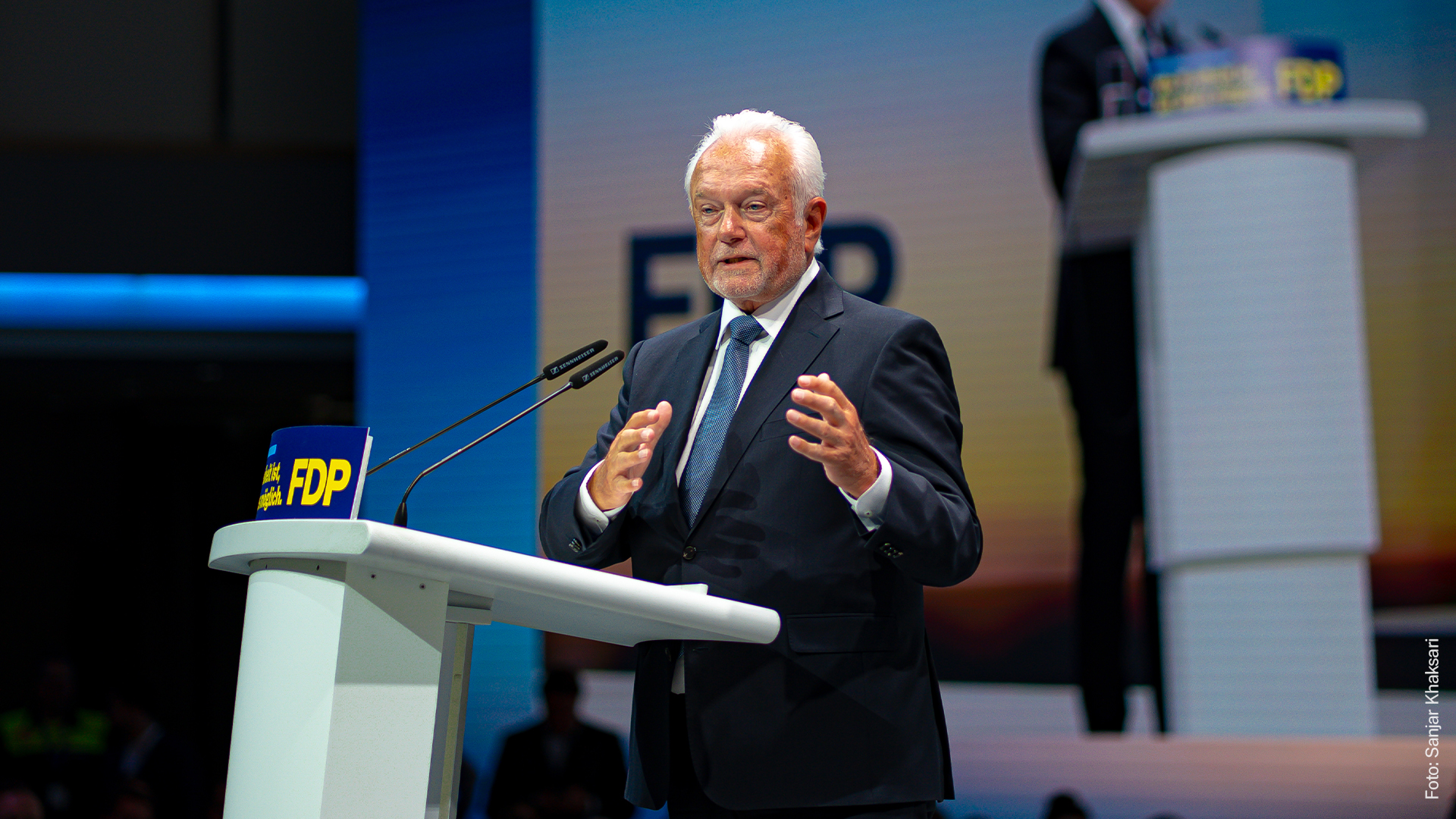
At the 77th Ordinary Federal Party Congress (Bundesparteitag) of the Free Democratic Party (FDP) in Germany, the discourse surrounding national policy reached a defining moment regarding the intersection of individual autonomy and state responsibility. Central to the proceedings was the party’s renewed focus on educational reform, framed not merely as a policy objective, but as the fundamental bedrock of a liberal society. As the party seeks to recalibrate its platform within the current German political landscape, the recurring message—that freedom begins where education is recognized as a civil right—has become a cornerstone of their legislative vision.
For observers of European economic policy, the FDP’s emphasis on educational opportunity is inextricably linked to broader debates on labor market flexibility, digital transformation and the future of the German social market economy. By positioning education as a “civil right,” the party is signaling a shift toward emphasizing early-childhood development and lifelong learning as essential tools for personal empowerment. This approach aims to address systemic hurdles that critics argue have stifled social mobility and economic innovation in recent years, as detailed in the official party program and policy statements from the 77th convention.
The Liberal Philosophy of Education as a Civil Right
The philosophical pivot observed at the 77th Bundesparteitag emphasizes that the state’s primary duty is to provide the infrastructure for self-determination. In the view of FDP leadership, education functions as the ultimate equalizer; without it, the concept of “freedom” remains theoretical rather than practical. This perspective is a direct response to what many party members describe as a “bureaucratic stagnation” in the German school system, which has struggled to adapt to the demands of a globalized, technology-driven economy.
According to the party’s official framework, the goal is to decouple educational success from socioeconomic background. This involves a push for the digital modernization of classrooms and a move toward greater autonomy for individual schools. The Free Democratic Party parliamentary group has frequently argued that centralized control has hampered the ability of local educators to innovate. By framing education as a civil right, the party asserts that the state must guarantee access to high-quality instruction regardless of a student’s zip code or financial status, viewing this as the only viable path to securing long-term economic competitiveness.
Economic Implications for the German Market
From an economic standpoint, the FDP’s policy shift is deeply rooted in human capital theory. As Germany grapples with an aging workforce and a persistent shortage of skilled labor, the emphasis on education is presented as a strategic necessity rather than a social luxury. Data from the Organisation for Economic Co-operation and Development (OECD) indicates that while Germany maintains robust vocational training systems, the integration of digital skills and tertiary education pathways remains an area of critical focus for maintaining long-term productivity growth.
The party’s rhetoric at the convention suggests a policy roadmap that prioritizes:
- Digital Infrastructure: Massive investment in high-speed connectivity for all educational institutions.
- Teacher Autonomy: Reducing administrative burdens to allow educators more freedom in curriculum delivery.
- Lifelong Learning: Introducing tax-advantaged accounts for professional retraining, recognizing that the modern career path is no longer linear.
These proposals are designed to stimulate entrepreneurship by ensuring that the next generation of workers is equipped with the adaptability required for the 21st-century labor market. By reducing the barriers to entry for advanced education, the FDP argues that they are “daring to trust people with their own freedom,” a mantra that has resonated across their recent campaign literature.
Challenges and Political Realities
Implementing these reforms within Germany’s complex federal system—where the sixteen federal states (Länder) hold constitutional authority over education—presents a significant hurdle. Critics of the FDP’s approach often point to the constitutional limitations of the federal government in influencing school policies directly. The Basic Law for the Federal Republic of Germany establishes a clear division of powers, which historically limits the federal government’s ability to impose uniform educational standards across the country.
Despite these challenges, the FDP continues to push for a “National Education Pact,” which would seek to coordinate federal funding with state-level execution. The party’s leadership maintains that if Germany is to remain a global leader in industrial technology, the constitutional barriers to educational reform must be navigated with greater urgency. Whether this political strategy will lead to tangible legislative change remains a subject of ongoing debate in the Bundestag, particularly as the party works to reconcile its ideological goals with the realities of coalition governance.
Looking Ahead: The Path to Reform
The 77th Bundesparteitag served as a platform for the FDP to define its ideological identity in a crowded political field. By centering their agenda on education as a civil right, they are attempting to capture the support of voters who prioritize individual liberty and economic mobility. As of the latest parliamentary sessions, the party is expected to continue advocating for these educational reforms through upcoming budget negotiations and legislative hearings in the Bundestag.
For those tracking the progress of these policy initiatives, the next major checkpoint will be the release of the federal government’s mid-term budget review and subsequent debates on education funding, which are expected to take place in the coming months. Stakeholders are encouraged to follow the official records of the Committee on Education, Research and Technology Assessment for the most accurate and up-to-date information on the legislative status of these proposals.
The conversation surrounding the FDP’s platform is far from over. As the party continues to refine its stance, we invite our readers to share their perspectives on the role of education in modern economic policy. How can governments best balance the need for national standards with the benefits of local autonomy? Let us know your thoughts in the comments section below.
Related reading