The 2024 Canadian Grand Prix at the Circuit Gilles Villeneuve will be remembered not just for the weather, but for the masterclass in tactical driving and strategic resilience displayed under immense pressure. In a race defined by fluctuating grip levels and a chaotic mix of wet and dry conditions, Max Verstappen secured a hard-fought victory, extending his lead in the 2024 Formula 1 World Championship standings.
For those of us covering the paddock, Montreal often provides the season’s most unpredictable narrative, and this year’s 2024 Canadian Grand Prix was no exception. As the rain swept across the Île Notre-Dame, the race became a test of patience, tire management, and split-second decision-making. The victory marks a significant moment in the season, proving that even as competitors close the technical gap, the reigning champion’s ability to navigate volatile track conditions remains unparalleled.
Strategic Mastery in Unpredictable Conditions
The race start saw a damp track that quickly evolved, forcing teams to gamble on pit stop timings. The safety car interventions—triggered by incidents such as Logan Sargeant’s spin—effectively reset the field multiple times, keeping the competition tight throughout the 70-lap contest. According to official FIA data, the race duration was significantly impacted by the intermittent rain, which kept the track temperature low and grip levels inconsistent for the majority of the afternoon.

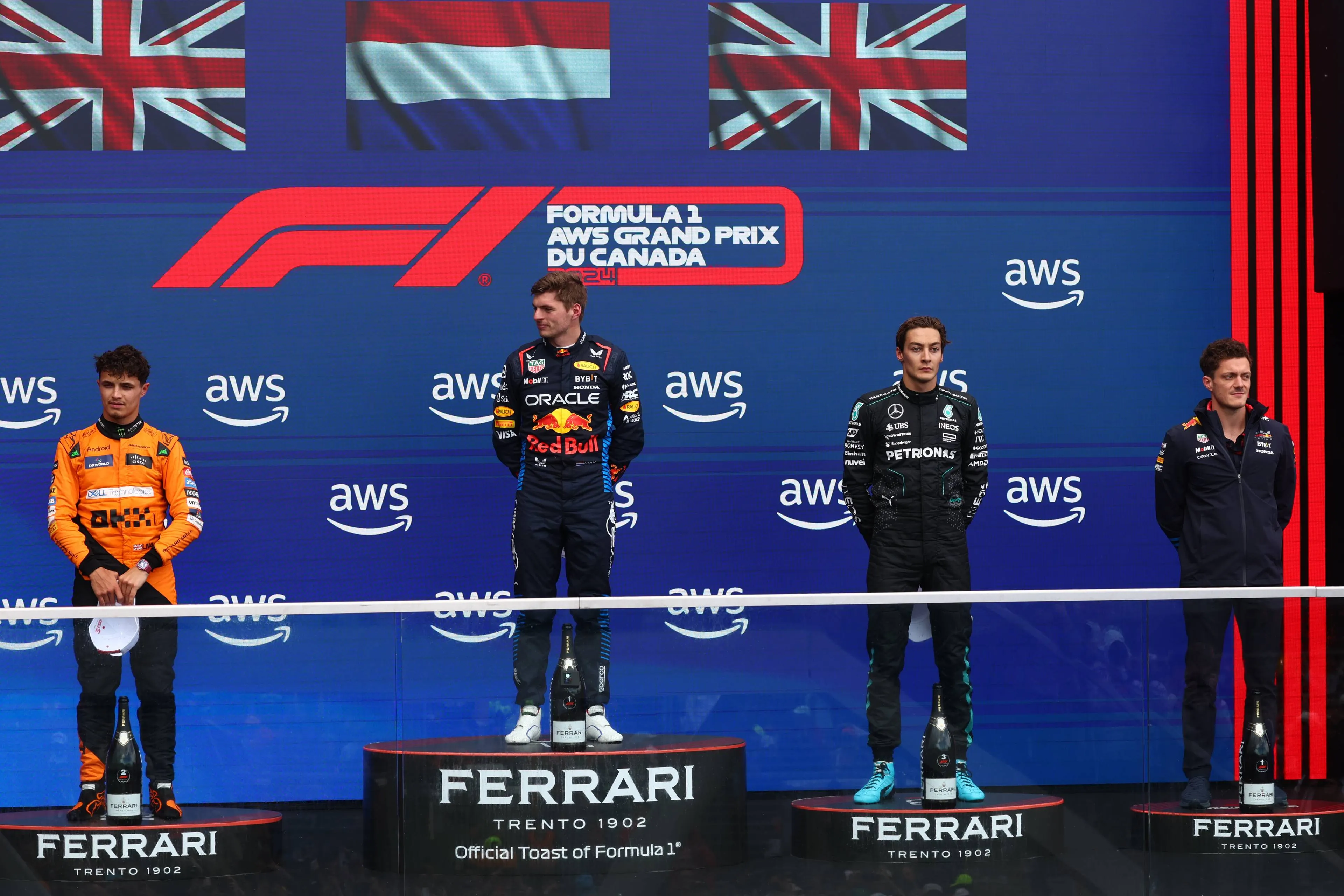
Max Verstappen’s ability to find pace when it mattered most was the deciding factor. While Lando Norris and George Russell put up a fierce challenge, the Red Bull Racing pit wall executed a flawless strategy that allowed Verstappen to reclaim the lead during the transition to slick tires. The precision required to maintain speed on a drying track while defending against the Mercedes and McLaren challengers underscored the high stakes of modern Formula 1.
George Russell, who started from pole position, managed a podium finish despite a turbulent race that saw him drop back during the mid-race exchanges. The Mercedes-AMG PETRONAS F1 Team, which has been seeking a return to consistent front-running form, showed tangible signs of progress in Montreal. The performance suggests that the recent aerodynamic upgrades brought by the team are beginning to yield results on technical circuits.
The Battle for the Podium
Lando Norris, fresh from his breakthrough win in Miami, proved once again that McLaren is a genuine threat to the status quo. His pace in the wet was arguably the most impressive of the field, though a slight miscalculation in the pit lane timing during the safety car period potentially cost him the top step of the podium. Norris ultimately secured second place, continuing a strong run of form that has seen him become the most consistent challenger to Verstappen this season.
The podium was rounded out by Russell, whose third-place finish provided a much-needed morale boost for the Mercedes camp. The intensity of the battle between the top three reflected the current state of the championship: while Red Bull retains a performance advantage, the margins are razor-thin. When asked about the race, team principals emphasized that the primary challenge was not just the car setup, but the ability of the drivers to adapt their lines lap by lap as the track surface changed.
Key Takeaways from the Montreal Weekend
- Championship Dynamics: Verstappen has solidified his lead, but the performance gap to McLaren and Mercedes has narrowed significantly compared to the 2023 season.
- Strategic Variability: The race highlighted the critical importance of tire choice, with teams often forced to choose between the safety of intermediate tires and the potential speed of slicks.
- Team Progress: Mercedes demonstrated that their car is becoming increasingly competitive, particularly in varied track conditions.
- Driver Resilience: The ability to avoid errors on a slippery, narrow track like the Circuit Gilles Villeneuve proved to be the differentiator between a podium finish and a DNF.
Looking Ahead: The Road to the European Grand Prix
As the circus leaves North America, the focus shifts to the upcoming 2024 Formula 1 calendar, which sees the teams head back to Europe. The next major test will be the Spanish Grand Prix at the Circuit de Barcelona-Catalunya, a track that serves as a traditional benchmark for aerodynamic efficiency and high-speed cornering performance.
For fans and analysts alike, the primary question remains: can the challengers sustain this level of pressure throughout the remainder of the summer? With the championship battle heating up, every race weekend now carries the weight of potential momentum shifts. The technical regulations remain stable for 2024, meaning that development races in the factories will be just as important as the performance on the tarmac.
We will continue to track the developments as teams prepare their updates for the next rounds of the season. The complexity of the 2024 championship is a testament to the health of the sport, and as an editor, I find the current level of competition to be among the most compelling in recent years. Stay tuned to our sports desk for further analysis, technical breakdowns, and exclusive insights as we move toward the mid-point of the season.
What did you make of the tactical decisions in Montreal? Did the strategy calls favor the right drivers, or was it purely down to raw pace? I invite you to share your thoughts in the comments section below as we prepare for the next chapter of the season in Spain.
Worth a look