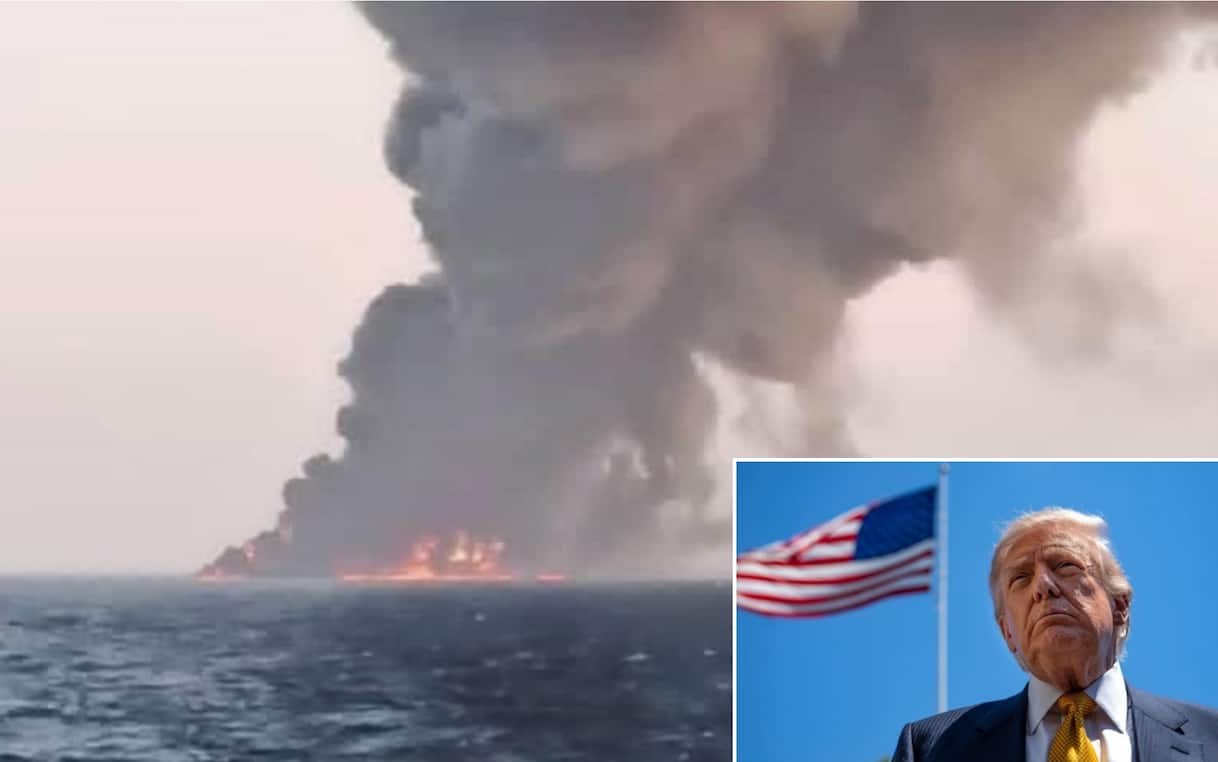
Former U.S. President Donald Trump has recently reignited debate regarding his administration’s Middle East policy, asserting that his actions toward Iran were essential for the continued existence of Israel. In recent public remarks, Trump claimed that his “maximum pressure” campaign and specific military decisions were instrumental in maintaining the regional security architecture, a perspective that continues to draw both staunch support and intense criticism from geopolitical analysts globally.
As the international community monitors the evolving dynamics between Washington and Tehran, these statements serve as a reminder of the deeply polarized views on the efficacy of the 2015 Joint Comprehensive Plan of Action (JCPOA) and the subsequent U.S. Withdrawal in 2018. The discourse surrounding these claims highlights the ongoing tension in Middle Eastern diplomacy, particularly as new administrations and regional actors navigate the complexities of nuclear non-proliferation and territorial security.
Evaluating the “Maximum Pressure” Legacy
The core of the former president’s argument rests on the premise that his administration’s aggressive posture toward Iran prevented a regional collapse. Central to this was the 2018 decision to exit the JCPOA, an agreement that had restricted Iran’s nuclear program in exchange for sanctions relief. According to the U.S. Department of State, the policy shift was designed to cut off the regime’s funding for regional proxies and force a renegotiation of Iran’s ballistic missile program and broader regional behavior.
Critics, however, point to the subsequent escalation of tensions in the Persian Gulf, including the 2019 attacks on oil tankers and the downing of a U.S. Surveillance drone, as evidence of the strategy’s instability. While supporters argue that the economic pressure severely limited Tehran’s resources, others note that Iran responded by accelerating its uranium enrichment activities beyond the limits set by the 2015 agreement. The International Atomic Energy Agency (IAEA) has consistently reported on these developments, providing the technical data that informs global concern over Iran’s current nuclear capabilities.
The Diplomatic Calculus: Sanctions and Negotiations
Discussions regarding a potential softening of sanctions remain a point of contention within current political circles. Recent reports from various international observers have touched upon the possibility of renewed diplomatic channels, yet official positions from key figures, such as Senator Marco Rubio, have often emphasized that the U.S. Maintains a firm stance on the necessity of economic leverage. As noted by the Reuters news agency, the debate over whether to engage in direct talks with Iranian leadership—or to continue the policy of isolation—remains one of the most significant hurdles for Western foreign policy.
The complexity of these negotiations is compounded by the internal political climate in Israel and the broader Middle East. While Trump has characterized his approach as a protective measure for Israeli security, the shifting alliances in the region—exemplified by the Abraham Accords—suggest a transition toward a more multilateral security framework. The U.S. Department of State maintains that these accords represent a fundamental shift in regional diplomacy, aiming to foster normalization between Israel and several Arab nations to create a united front against regional threats.
Key Perspectives on Regional Security
To understand the current discourse, it is essential to look at the three primary pillars of the debate:
- Nuclear Non-Proliferation: The primary concern remains Iran’s enrichment levels and the duration of the “breakout time” required to produce weapon-grade fissile material, a topic tracked regularly by the Institute for Science and International Security.
- Regional Proxy Networks: The influence of Tehran-backed groups across Lebanon, Syria, Iraq, and Yemen continues to be a central factor in regional instability, often cited by security experts as a primary driver of the ongoing conflict.
- The Role of U.S. Foreign Policy: Whether the U.S. Should act as a primary mediator or a direct participant in security confrontations remains a central question for the American electorate and international partners alike.
The assertion that Israel’s survival was contingent upon specific U.S. Military actions is a subjective interpretation of a multifaceted security landscape. While the U.S.-Israel military alliance remains a cornerstone of regional stability, the methods of achieving that security—ranging from kinetic strikes to deep-level intelligence cooperation—are subject to constant review by military strategists and policymakers.
Looking Ahead: The Next Phase of Policy
As we look toward upcoming international summits and potential high-level meetings, the focus will likely remain on whether a new consensus can be reached regarding Iran’s nuclear trajectory. The international community expects further updates following the next session of the IAEA Board of Governors, where member states will review the latest verification reports on Iranian nuclear facilities. For those following these developments, official updates and detailed assessments are available through the IAEA official portal.
The geopolitical landscape of the Middle East is inherently fluid. As new administrative priorities emerge in Washington and regional powers recalibrate their own strategic interests, the narrative surrounding the legacy of the “maximum pressure” campaign will continue to evolve. We invite our readers to share their perspectives on these complex issues in the comments section below, as we continue to provide balanced, evidence-based reporting on the events that shape our global community.
Maria Petrova is the World Editor at World Today Journal. With over 14 years of experience in international reporting, she specializes in the intersection of geopolitics and human rights.
Keep reading