
For years, the gaming world operated under a clear division: you either played on a dedicated, closed-ecosystem console like a PlayStation or an Xbox, or you sat at a desk with a powerful, customizable PC. Valve, the titan behind the Steam platform, attempted to bridge this gap a decade ago with an ambitious project known as the Steam Machine. The goal was to bring the vast library of Steam into the living room through a standardized, easy-to-use console experience. However, the dream of a universal Steam-powered living room console largely remained unfulfilled, leaving a void in the market for gamers who wanted a “console-like” experience without sacrificing their PC libraries.
Quick forward to today, and the landscape has shifted dramatically. The question is no longer about waiting for a perfect living room console to arrive; instead, the conversation has moved toward portability and customization. With the massive success of the Steam Deck, Valve has effectively redefined what a “Steam Machine” looks like. It is no longer a box under your television, but a handheld device in your hands. This shift has sparked a dual movement in the industry: a fierce competitive war between high-end handheld gaming PCs and a burgeoning DIY movement where enthusiasts are building their own optimized “Steam Machines” to reclaim the control that the original project promised.
As we navigate this new era of handheld gaming and modular hardware, understanding the technical nuances and the market forces at play is essential for any serious gamer. Whether you are looking to purchase a pre-built handheld or embark on a custom build, the choice between a seamless, curated experience and a raw, powerful Windows-based machine has never been more complex.
The Legacy of the Steam Machine: An Open Vision That Stalled
To understand where we are, we must look back at the original concept of the Steam Machine. Launched as an open platform, Valve’s intention was to allow various hardware manufacturers—such as Alienware, Zotac, and others—to build their own hardware running SteamOS. Unlike the walled gardens of Sony and Microsoft, the Steam Machine was intended to be an open standard, allowing for a diverse range of hardware configurations that could all communicate seamlessly with the Steam ecosystem.

However, the execution faced significant headwinds. The “openness” that was supposed to be its greatest strength became its primary weakness. Because there was no single, unified piece of hardware, the user experience was fragmented. Some machines felt like polished consoles, while others felt like clunky, poorly optimized desktop PCs. The lack of a unified controller standard and the difficulty of navigating a desktop-centric OS on a couch meant that the “plug-and-play” simplicity that console gamers crave was often missing. By the time the initial hype had cooled, the Steam Machine had become a niche product, relegated to enthusiasts rather than the mainstream consumer market.
The failure of the Steam Machine taught Valve a vital lesson: hardware and software must be designed in lockstep to achieve a console-like experience. It wasn’t enough to provide the software; Valve needed to control the hardware to ensure the optimization required for a seamless user experience. This realization eventually paved the way for their most successful hardware venture to date.
The Steam Deck and the Triumph of SteamOS
The release of the Steam Deck marked a fundamental pivot in Valve’s hardware strategy. Instead of trying to conquer the living room, Valve focused on conquering the “in-between” moments of life. By combining custom-designed AMD hardware with a heavily modified, Linux-based operating system, Valve created something that felt like a console but possessed the soul of a PC.
At the heart of this success is SteamOS. Unlike the Windows-based handhelds that preceded it, SteamOS is designed specifically for gaming on a handheld interface. It utilizes “Game Mode,” a streamlined, controller-centric UI that mimics the ease of a console. This is made possible by Valve’s incredible work on Proton, a compatibility layer that allows Windows-based games to run on Linux with minimal performance loss. Proton has effectively bridged the gap between the two most important ecosystems in PC gaming, making thousands of titles instantly playable on the Deck.
The Steam Deck’s success has proven that gamers are willing to trade raw, unbridled power for stability, battery optimization, and a cohesive software experience. While a high-end desktop PC will always outperform a handheld, the Steam Deck offers something a desktop cannot: the ability to take your entire Steam library anywhere, with a UI that stays out of your way and lets you focus on the game.
The Handheld Wars: Steam Deck vs. Windows-Based Competitors
The success of the Steam Deck has opened the floodgates for a new category of hardware: the Windows-based handheld gaming PC. Companies like ASUS and Lenovo have entered the fray, offering devices that target a different segment of the market. The primary distinction between these devices lies in their operating systems and their target performance profiles.
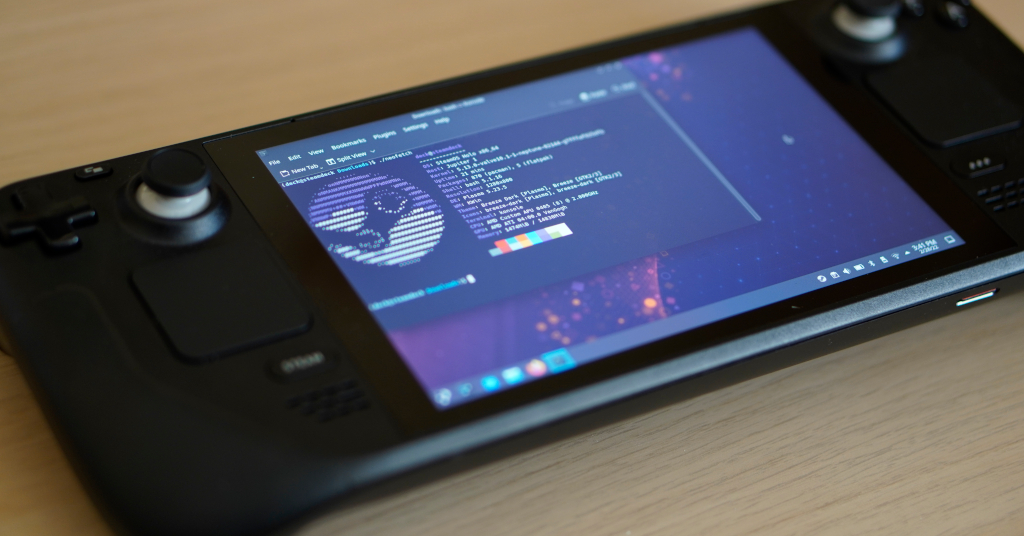
The ASUS ROG Ally and the Lenovo Legion Go are both powered by Windows 11. This provides a significant advantage for users who want access to the full breadth of the Windows ecosystem, including game passes, specialized anti-cheat software that may struggle on Linux, and the ability to use the device as a full-fledged productivity machine. These devices often feature more powerful APUs, such as the AMD Ryzen Z1 Extreme, which can push higher frame rates in demanding titles when connected to a power source.
However, this power comes with a “Windows tax.” Running a full desktop operating system on a handheld device can lead to higher power consumption, shorter battery life, and a user interface that is often cumbersome to navigate with thumbsticks and small touchscreens. While the ROG Ally offers high refresh rates and the Legion Go boasts a massive, detachable screen, both devices require more user intervention—updates, driver management, and UI navigation—than the “set it and forget it” nature of the Steam Deck.
For gamers, the choice typically boils down to a trade-off: do you want the seamless, optimized, and battery-efficient experience of SteamOS, or do you want the raw power and universal compatibility of a Windows-based machine?
The DIY Revolution: Building Your Own Steam Machine
For the enthusiasts who felt the original Steam Machine promised a level of customization that never quite materialized, a new movement has emerged: the DIY Steam-based PC. With the rise of Small Form Factor (SFF) computing and the availability of Linux-based gaming distributions, it is now easier than ever to build a dedicated, high-performance “Steam Machine” for your living room.
The DIY approach allows users to bypass the limitations of pre-built consoles and handhelds. You can select a high-end GPU, a powerful CPU, and a chassis that fits your aesthetic preferences, all while maintaining the “console feel” through software. The key to a successful DIY Steam Machine is the choice of operating system. While standard Linux distributions are available, gaming-specific projects have emerged to provide a more streamlined experience.
- Bazzite: A Fedora-based image designed to provide an experience nearly identical to the Steam Deck’s SteamOS on various hardware configurations.
- HoloISO: An attempt to bring the exact SteamOS experience to generic PC hardware, focusing on mirroring the Deck’s interface and functionality.
- ChimeraOS: Another powerful option that focuses on a console-like experience, optimized for controllers and seamless gaming.
Building your own machine allows for a level of scalability that no commercial product can match. If a new game requires more VRAM or a faster processor, you can simply upgrade the component. For the power user, the DIY path is the ultimate realization of the original Steam Machine vision: a powerful, customizable, and highly capable gaming hub that lives in the center of the home.
| Feature | Steam Deck | Windows Handhelds (Ally/Go) | DIY Steam Machine |
|---|---|---|---|
| OS Experience | Seamless, Console-like | Desktop-centric, Versatile | Customizable (Linux/Windows) |
| Ease of Use | Particularly High | Moderate | Low (Requires Setup) |
| Performance Potential | Balanced/Optimized | High (Raw Power) | Extremely High (Scalable) |
| Portability | High | High | Low (Desktop/SFF) |
Looking Ahead: The Future of the Steam Ecosystem
As we look toward the future, the boundaries between “PC gaming” and “console gaming” continue to blur. Valve’s influence on the market is profound; their success with the Steam Deck has forced competitors to rethink their hardware and software strategies, and their work with Proton has fundamentally changed how we view Linux gaming.
The next natural progression could take several forms. We may see Valve release a more powerful “Steam Deck 2” or a specialized “Steam Deck Pro” to compete with high-end Windows handhelds. Alternatively, Valve could revisit the living room with a more refined, hardware-integrated approach that learns from the lessons of the early Steam Machine era. For now, the market is in a state of healthy, rapid evolution, providing gamers with more choices than ever before.
Whether you choose the curated ease of a Steam Deck, the versatile power of an ASUS ROG Ally, or the limitless potential of a custom-built PC, the era of the Steam-powered gaming experience is here to stay. The “Steam Machine” didn’t die; it simply evolved into something much more versatile and much more personal.
What is your preferred way to play? Are you a fan of the seamless SteamOS experience, or do you prefer the raw power and flexibility of a Windows-based machine? Let us know in the comments below and share this article with your fellow gamers!
Stay tuned to World Today Journal for the latest updates on handheld hardware releases and software developments.