
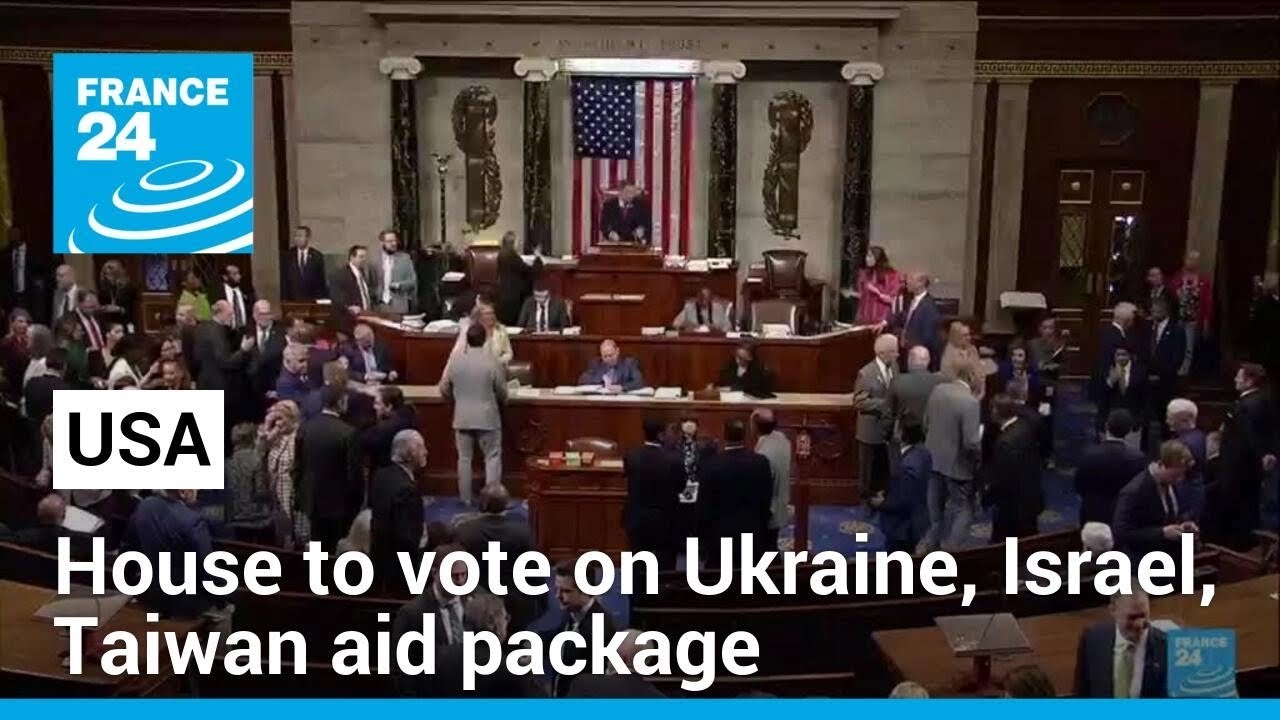
In a significant legislative maneuver that has underscored deepening fractures within the Republican Party, the United States House of Representatives has moved to approve a substantial aid package for Ukraine. This development marks a notable departure from the preferences of former President Donald Trump, who has frequently expressed skepticism regarding continued financial and military support for Kyiv amidst the ongoing conflict with Russia.
The legislative action, which also includes the implementation of new sanctions against the Russian Federation, represents a strategic pivot by a bipartisan coalition within the House. By advancing this measure, lawmakers have challenged the influence of party leadership and the former president’s vocal opposition to such foreign assistance. As the Ukraine Security Supplemental Appropriations Act moved through the chamber, it highlighted the tension between traditional foreign policy alliances and the “America First” platform that has reshaped the GOP in recent years.
Legislative Context and the Scope of Aid
The approved funding package is part of a broader national security supplemental request, which has been the subject of intense debate on Capitol Hill for several months. The legislation provides roughly $60.8 billion in total aid, specifically earmarked for Ukraine and regional partners to assist in the defense against Russian aggression. This funding is designed to replenish U.S. Military stockpiles, provide direct economic support to the Ukrainian government, and bolster humanitarian efforts in the region, according to the House Appropriations Committee.

Beyond the financial provisions, the bill mandates that the executive branch develop a clear, long-term strategy for the conflict. It also requires the administration to report to Congress on the oversight mechanisms in place to ensure that the transferred funds and weaponry are used appropriately. This emphasis on accountability has been a primary demand of House Republicans who were initially hesitant to support the bill without rigorous financial tracking.
Defying Political Currents
The decision to move forward with the aid package is being viewed by political analysts as a rare instance of House lawmakers asserting their independence from the former president’s legislative agenda. For many members of the House, the imperative to support a strategic partner in Eastern Europe outweighed the political risks of defying the party’s most influential figure. What we have is the second time in a single week that a significant legislative hurdle was cleared despite opposition from the former president’s inner circle, signaling a potential shift in the balance of power within the House GOP conference.
The legislative process was complex, requiring a unique procedural maneuver to bypass the Rules Committee, where the bill had faced significant obstruction. By utilizing a “discharge petition” or similar procedural workarounds, proponents of the aid were able to secure a floor vote, effectively forcing the measure through despite the reluctance of high-ranking party officials who generally align with the former president’s isolationist leanings.
What Comes Next for the Ukraine Aid Package
With the House having passed the legislation, the focus now shifts to the executive branch and the implementation phase. The next confirmed checkpoint for this initiative involves the final signature from the President, followed by the Department of Defense’s announcement of specific tranches of equipment to be shipped to the front lines. The Department of Defense has previously stated that it maintains a list of ready-to-deploy assets that can be mobilized immediately upon the signing of such legislation.
For those tracking the impact of these funds, official updates will be provided through the U.S. Department of State’s briefings on foreign assistance. As the situation evolves, the global community remains focused on how this influx of aid will influence the tactical landscape on the ground in Ukraine. Readers are encouraged to share their thoughts on these developments in the comments section below as we continue to monitor the progress of this historic legislative effort.
Keep reading
- Canadian Citizen of Chinese Origin Arrested for Spying at NATO Headquarters in Belgium
- Il grande chef francese Guy Savoy sulla terrazza dell’Hotel Santa Caterina – Il Vescovado
- US Crypto Ownership Drops Despite Trump Push and ETFs (archyworldys.com)
- Trump Ordina Pausa Negli Attacchi Stati Unitesi contro l’Iran (archynewsy.com)