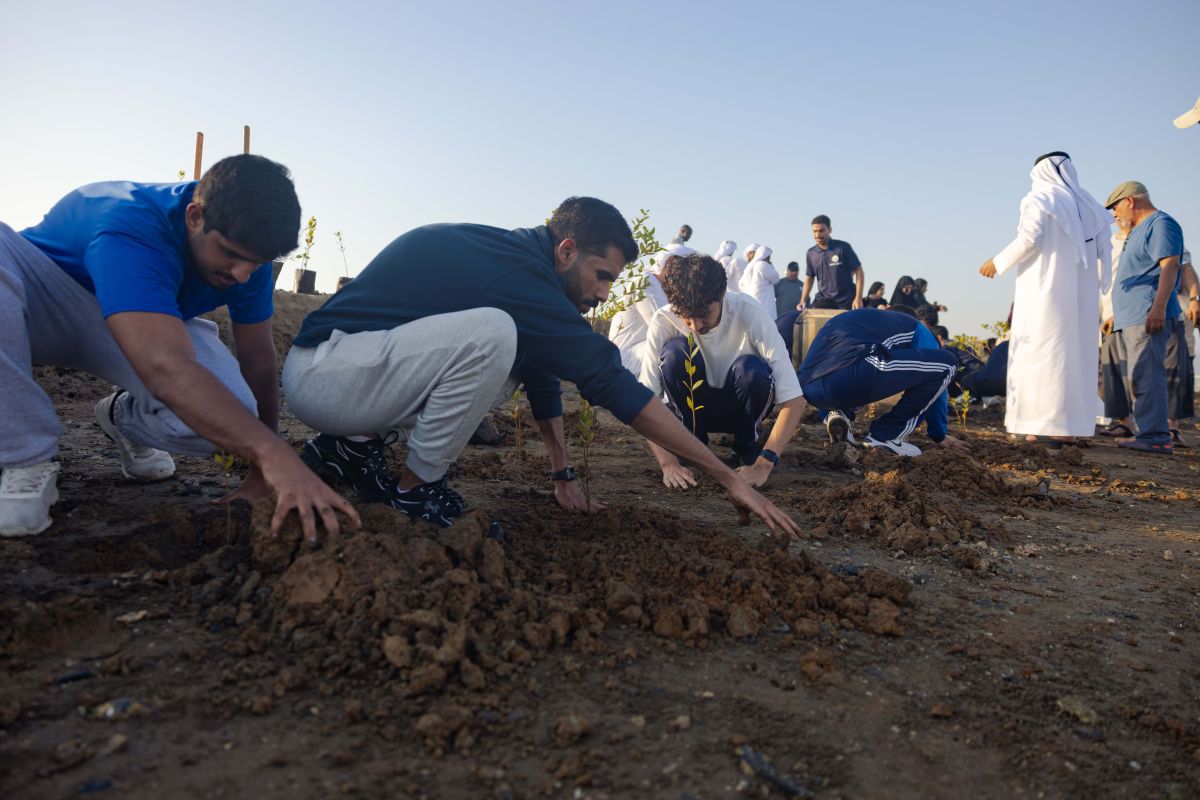
As the global community observes World Environment Day, the United Arab Emirates is reinforcing its position as a central player in the international fight against climate change. Through a coordinated series of national initiatives and significant milestones in utility-scale decarbonization, the nation is transitioning from a traditional energy producer to a global leader in environmental sustainability. These developments, announced as part of a broader package of national environmental events, signal a deepening commitment to the UAE’s Net Zero by 2050 strategic initiative.
The latest wave of environmental measures focuses on the critical intersection of energy production, water security, and carbon management. By integrating advanced renewable technologies with aggressive reduction targets, the UAE is not merely reacting to the climate crisis but is actively engineering the infrastructure required for a post-carbon economy. This strategic pivot is being driven by both high-level political mandates and the operational evolution of the country’s major utility providers.
Central to this transformation is the rapid expansion of the renewable energy mix within the national power grid. The shift is characterized by a move away from heavy reliance on natural gas toward a diversified portfolio that prioritizes solar and other clean energy sources. This transition is essential for meeting the growing electricity demands of a modernizing economy while simultaneously lowering the national carbon footprint.
Scaling Clean Energy: The DEWA Milestone
In Dubai, the Dubai Electricity and Water Authority (DEWA) has emerged as a primary driver of this energy transition. Recent data highlights a significant upward trajectory in the integration of renewable resources into the city’s power supply. Notably, DEWA has successfully increased its clean energy production to reach a share of 21.5% of its total capacity. This milestone represents a critical step in the authority’s long-term strategy to decarbonize the Dubai energy sector.
The increase is largely attributed to the continued expansion of the Mohammed bin Rashid Al Maktoum Solar Park, which remains one of the largest single-site solar parks in the world. By leveraging massive photovoltaic (PV) arrays and concentrated solar power (CSP) technologies, DEWA is able to provide more consistent energy even during non-peak sunlight hours. This scaling of clean energy is not just an environmental necessity but an economic one, as it reduces the long-term costs associated with fossil fuel volatility and carbon pricing.
The 21.5% figure serves as a benchmark for the utility’s ability to manage grid stability while incorporating intermittent renewable sources. As DEWA continues to implement smart grid technologies and energy storage solutions, the goal is to further decouple the region’s economic growth from carbon-intensive power generation. This progress aligns with Dubai’s broader Clean Energy Strategy 2050, which aims to make the emirate a global leader in clean energy production.
Decarbonizing the National Grid: EWEC’s 46% Target
While Dubai focuses on its specific energy mix, the broader national landscape is being shaped by the Emirates Water and Electricity Company (EWEC). Based in Abu Dhabi, EWEC plays a pivotal role in the procurement and management of water and electricity across the emirates. The company has set an ambitious roadmap for decarbonization, targeting a 46% reduction in carbon emissions as part of its operational evolution.
Achieving a 46% reduction requires a fundamental restructuring of how electricity is sourced, and distributed. EWEC’s strategy involves several key pillars:

- Increased Renewable Procurement: Moving toward large-scale solar auctions to ensure that a significant portion of the national demand is met by zero-emission sources.
- Grid Modernization: Enhancing the ability of the national grid to absorb high volumes of renewable energy without compromising reliability.
- Water-Energy Nexus Optimization: Addressing the carbon intensity of desalination—a critical process in the UAE—by transitioning to solar-powered desalination technologies.
The implications of EWEC’s target extend far beyond the utility sector. By aggressively lowering the carbon intensity of the power sector, the UAE can significantly reduce its industrial carbon footprint, making its manufacturing and heavy industries more competitive in a global market that increasingly demands low-carbon products. This decarbonization effort is a cornerstone of the UAE’s broader commitment to international climate agreements and its own domestic environmental goals.
Leadership Vision: Building a Sustainable Future
The momentum behind these environmental initiatives is underpinned by strong political leadership. Mansour bin Zayed Al Nahyan, Vice President, Deputy Prime Minister, and Chairman of the Presidential Court, has been a vocal proponent of the nation’s sustainable development path. On the occasion of World Environment Day, his messaging has emphasized that the UAE’s environmental efforts are not merely about preservation, but about the proactive construction of a sustainable future for subsequent generations.
This leadership vision frames environmental stewardship as a pillar of national security and economic resilience. By investing in green technology and sustainable infrastructure today, the UAE is positioning itself to lead the Middle East in the emerging green economy. The emphasis is on creating a “circular” approach to resource management, where waste is minimized, and natural capital is protected through rigorous policy and innovation.
The government’s approach integrates various stakeholders, from federal ministries to local municipalities and private sector innovators. This unified front is essential for implementing the complex regulatory frameworks required to manage climate risks and transition to a low-carbon economy.
The UAE as a Global Laboratory for Climate Solutions
One of the most significant outcomes of the UAE’s recent environmental focus is its emergence as a “global laboratory” for climate solutions. Because of its unique geographic and climatic challenges—including extreme heat, water scarcity, and rapid urbanization—the solutions developed in the UAE are highly scalable and applicable to other arid and semi-arid regions across the globe.
The UAE is currently testing and deploying a wide array of cutting-edge technologies that could define the next century of climate mitigation:

- Advanced Solar Integration: Developing ways to maximize solar efficiency in high-temperature environments.
- Carbon Capture, Utilization, and Storage (CCUS): Exploring methods to capture CO2 from industrial processes and repurpose it for enhanced oil recovery or carbon mineralization.
- Green Hydrogen: Investing in the production of hydrogen using renewable energy to decarbonize sectors that are difficult to electrify, such as shipping and heavy industry.
- Sustainable Desalination: Moving away from thermal desalination toward high-efficiency reverse osmosis powered entirely by renewable energy.
By serving as a testing ground, the UAE provides a blueprint for how rapidly developing nations can bypass the high-carbon stages of industrialization and jump directly into a sustainable energy model. This “leapfrogging” capability is a vital component of the global effort to meet the targets set by the Paris Agreement.
Key Takeaways: UAE Environmental Progress
| Entity / Initiative | Primary Objective | Key Metric / Target |
|---|---|---|
| DEWA | Expansion of clean energy mix | 21.5% clean energy production |
| EWEC | Decarbonization of water and power | 46% reduction in carbon emissions |
| National Policy | Long-term climate stability | Net Zero by 2050 |
| Climate Strategy | Global solution leadership | “Global Laboratory” for green tech |
The convergence of these initiatives—the technical achievements of DEWA, the strategic targets of EWEC, and the overarching policy vision of the UAE leadership—creates a powerful engine for environmental change. As the nation continues to implement these national initiatives, the focus will likely shift toward the integration of artificial intelligence in energy management and the further scaling of the green hydrogen economy.
The next major checkpoint for these initiatives will be the upcoming progress reports from the UAE Ministry of Climate Change and Environment, which will provide updated data on the national carbon inventory and the status of the Net Zero 2050 roadmap. Stakeholders and international observers will be watching closely to see how these early milestones translate into long-term, systemic change.
What are your thoughts on the UAE’s rapid transition to renewable energy? Do you believe these models can be successfully exported to other regions? Let us know in the comments below and share this article with your network.
Worth a look