
In the evolving landscape of global justice, the application of universal jurisdiction has emerged as a critical tool for addressing atrocities that transcend national borders. Mark Ellis, Executive Director of the International Bar Association (IBA), recently highlighted the growing importance of this legal mechanism, particularly in the context of holding perpetrators of war crimes, genocide, and crimes against humanity accountable when domestic or traditional international avenues are blocked.
The concept of universal jurisdiction is rooted in the principle that certain crimes are so egregious that they constitute an affront to the entire international community. Individual states may prosecute these offenders regardless of where the acts occurred or the nationality of the parties involved. As legal frameworks shift to accommodate this approach, the work of international bodies like the IBA becomes increasingly central to the pursuit of global accountability.
The Rising Role of Universal Jurisdiction
Universal jurisdiction has gained significant momentum as a practical instrument for international justice. According to data regarding current legal efforts, there are now over 50 active cases across 14 countries utilizing absolute universal jurisdiction, with an additional 100 cases spanning six countries employing active or passive personality principles. This represents a substantial shift in how nations approach the prosecution of international crimes, moving beyond traditional jurisdictional limitations based on territoriality or nationality. Recent developments in international law underscore this trend, as states increasingly assert their authority to address grave human rights violations that might otherwise go unpunished.
The practical application of these legal principles has seen notable successes in recent years. For instance, Finnish authorities have successfully convicted a Russian paramilitary leader for his actions in Ukraine dating back to 2014. Similarly, courts in Germany, the Netherlands, and the United States have initiated proceedings against various former Syrian officials, demonstrating that the reach of international law is expanding to address complex, multi-jurisdictional conflicts.
Advocacy and Institutional Support
Mark Ellis has been a long-standing figure in the development of international legal standards. His career includes significant roles as a Legal Advisor to the Kosovo Commission and as an advisor to the OSCE during the creation of Serbia’s War Crimes Tribunal. His experience extends to collaborations with the International Criminal Tribunal for the former Yugoslavia (ICTY), the Iraqi High Tribunal, and the Cambodia Tribunal. Currently, he continues this work through his engagement with the International Criminal Court (ICC).

Beyond his institutional roles, Ellis has been instrumental in creating tools for modern justice. In 2015, he launched eyeWitness to Atrocities, a mobile application designed to assist in the documentation of war crimes, ensuring that evidence is preserved in a format suitable for legal proceedings. His dedication to these efforts has been recognized internationally; he was awarded Ukraine’s Order of Merit, a distinguished state honor bestowed by the President of Ukraine.
Ellis’s commitment to the rule of law has not been without personal consequence. Due to his leadership in the International Bar Association’s support efforts for Ukraine following the Russian invasion, he has been sanctioned by the Russian government. Despite these challenges, his work remains focused on the five pillars of the UN Charter, a subject he explored in his 2025 book, The UN Charter: Five Pillars for Humankind, co-authored with Ambassador David J. Scheffer.
Challenges in the Modern Legal Era
Despite the progress in universal jurisdiction, the path toward global justice remains fraught with structural and political hurdles. The tension between the rule of law and the “law of force” remains a central theme in contemporary international discourse. As practitioners navigate these complexities, the focus remains on ensuring that legal institutions are sufficiently robust to handle the high volume and sensitive nature of atrocity crime investigations.
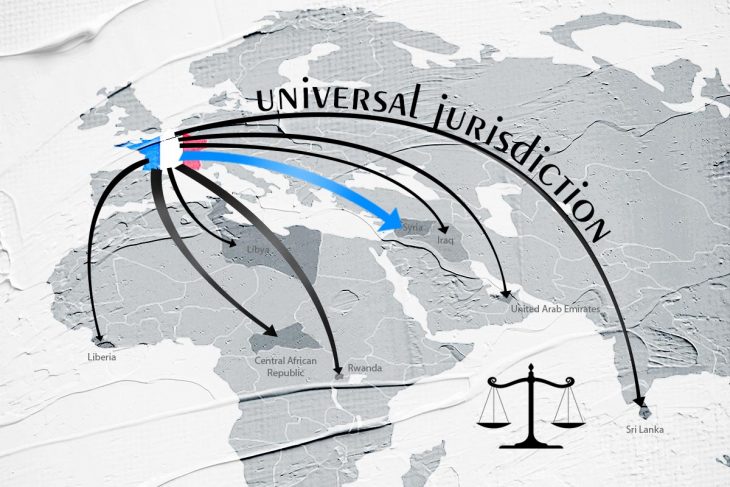
The use of universal jurisdiction serves as a necessary, albeit complex, safeguard. By allowing states to act as agents of the international community, this mechanism helps to close the “impunity gap” that often follows large-scale conflicts. However, the successful implementation of such cases requires meticulous evidence gathering, international cooperation, and a consistent political will to prioritize justice over diplomatic convenience.
Key Insights on International Justice
- Universal Reach: Over 50 cases are currently open in 14 countries using absolute universal jurisdiction, signaling a shift toward more aggressive prosecution of international crimes.
- Evidence Collection: Digital documentation tools, such as the eyeWitness to Atrocities app, are becoming vital in securing admissible evidence for war crimes trials.
- Accountability Trends: Recent convictions in Finland and ongoing cases in Germany and the Netherlands demonstrate the viability of prosecuting foreign nationals for crimes committed in distant conflict zones.
- Institutional Resilience: The role of international legal advisors remains essential in navigating the intersection of national laws and international human rights obligations.
As the international community continues to grapple with the fallout of ongoing conflicts, the discourse surrounding the role of organizations like the IBA will likely intensify. The commitment to documented, transparent, and legally sound prosecutions remains the bedrock of future efforts to maintain the rule of law. Readers interested in following these developments can monitor updates through official International Criminal Court filings and International Bar Association reports as new cases and legal precedents emerge.
We invite our readers to share their perspectives on the role of universal jurisdiction in the comments section below. Your engagement helps us maintain a vibrant, informed dialogue on the issues shaping our world.
Related reading