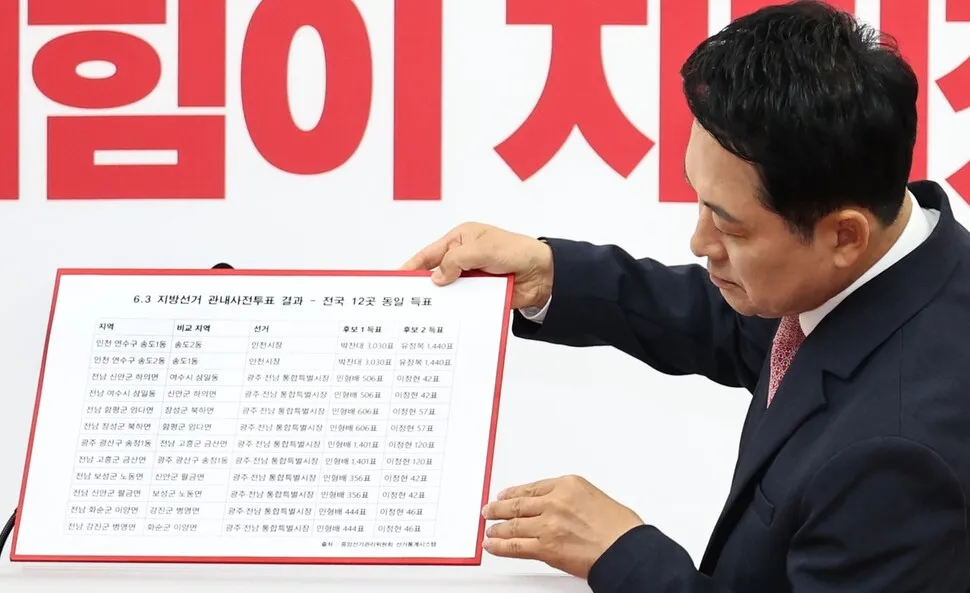
South Korea’s National Election Commission (NEC) has officially refuted allegations of systemic irregularities in the recent general election, dismissing claims that identical vote tallies across different polling stations indicate electoral fraud. The controversy centers on social media-driven theories suggesting that the statistical coincidence of matching vote counts in certain districts points to a coordinated manipulation of the ballot-counting process.
The NEC issued a formal statement clarifying that identical vote counts in geographically separate areas are a mathematical possibility in large-scale elections, attributing these occurrences to chance rather than technical interference. Despite these assurances, senior political figures, including Representative Jang Dong-hyuk of the People Power Party, have publicly questioned the statistical anomalies, prompting a broader debate regarding the integrity of the nation’s electronic counting systems and the influence of online speculation on democratic processes.
Understanding the Statistical Debate
The allegations gained traction after observers noted that several polling stations reported identical vote tallies for candidates in the April 2024 general election. Specifically, data circulating online highlighted instances where candidates received the exact same number of votes in different administrative districts, such as the Songdo 1-dong and 2-dong regions. According to the National Election Commission of South Korea, these occurrences are purely coincidental results of independent voting patterns within local districts.
The NEC emphasized that the counting process involves multiple layers of verification, including manual oversight by bipartisan observers. In its public response, the commission requested that political actors and the public exercise restraint regarding unsubstantiated claims that could undermine trust in the democratic system. The commission noted that when thousands of polling stations process millions of ballots, the probability of overlapping figures—while low—is statistically inevitable, not evidence of a breach in the digital infrastructure.
Political Reactions and the Role of Online Discourse
The political response to these claims has been polarized. Representative Jang Dong-hyuk has emerged as a key voice in raising concerns about the identical vote counts, suggesting that the frequency of these occurrences warrants a thorough investigation. His comments have been echoed by various online platforms, where commentators have scrutinized the official election data published by the NEC. This scrutiny has led to concerns from other leaders, such as Seoul Mayor Oh Se-hoon, who recently warned against the growing influence of “YouTube-driven” political narratives that may prioritize viral misinformation over verified facts.
The tension underscores a growing challenge for election authorities globally: the difficulty of maintaining public confidence in the face of rapid, algorithmically amplified misinformation. While the NEC maintains that its procedures for the 2024 general election were secure and transparent, the persistence of these claims highlights the gap between statistical probability and public perception. By framing these anomalies as “coincidental,” the NEC is attempting to address the technical reality of the situation, yet the political discourse suggests that the demand for further transparency remains high among opposition members and their supporters.
Next Steps for Electoral Integrity
The National Election Commission has indicated it will continue to provide data transparency to address ongoing inquiries. No official legal proceedings or formal audits have been initiated to challenge the results based on these specific claims. The next scheduled interaction between the commission and the public will involve the release of standard post-election reports and ongoing monitoring of electoral administrative updates. For voters seeking definitive information, the commission maintains an official online portal where all constituency-level results and administrative procedures are documented.
The debate remains active, with further discussions expected as political parties prepare for upcoming legislative sessions. Observers suggest that the focus may shift toward legislative proposals aimed at modernizing or further securing the ballot-counting process to preempt future concerns. Readers are encouraged to monitor official NEC announcements for updates on election audits or policy changes regarding data publication.
What are your thoughts on the balance between digital electoral speed and manual verification? Share your perspectives in the comments section below.
Keep reading