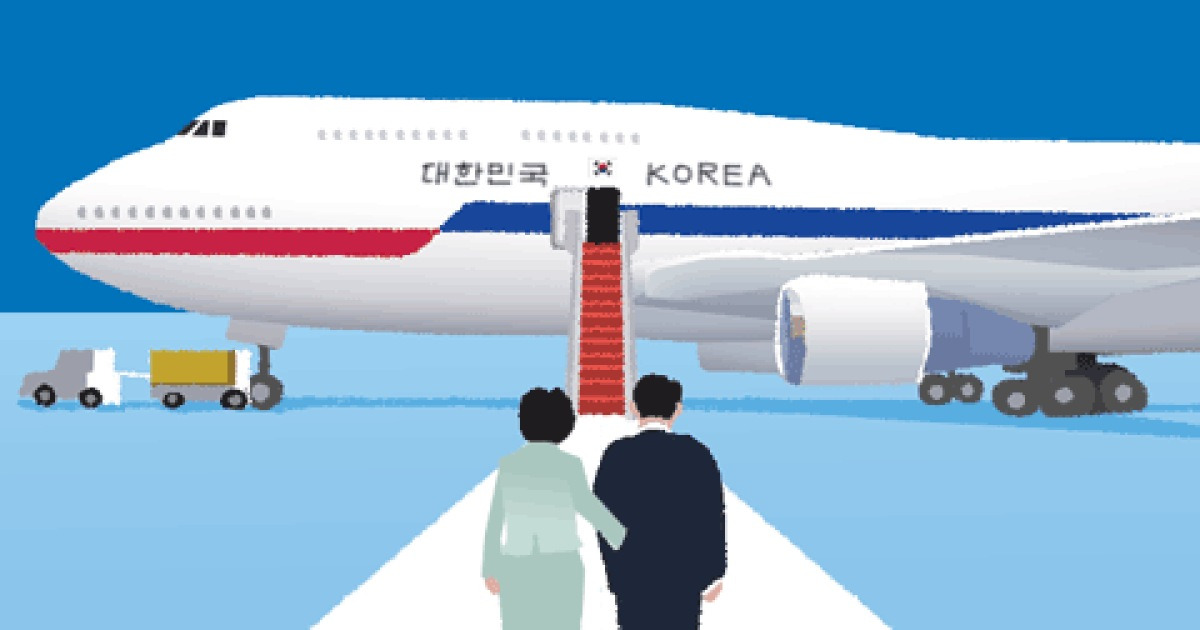
The operational procedures for South Korean presidential departures at Seoul Air Base in Seongnam are facing renewed scrutiny regarding the necessity of elaborate send-off and welcoming ceremonies. While the facility serves as the primary hub for presidential state travel, established protocols requiring staff and media to gather hours before departure have prompted discussions about administrative efficiency and the modernization of official customs.
According to historical records of presidential protocol, the Seoul Air Base—officially designated as K-16—functions as a military installation that serves dual roles as a strategic defense asset and a point of embarkation for the head of state. The current logistical framework often involves a structured assembly of government staff, security details, and members of the press corps. These procedures are governed by the Presidential Security Service (PSS) and the Ministry of National Defense, which manage the security perimeter and movement of personnel within the restricted airfield environment, as outlined in the Presidential Security Service official guidelines.
Historical Context of Presidential Protocol
The practice of formal send-offs and arrivals has long been a staple of South Korean political culture, intended to project stability and respect for the office of the President. These ceremonies typically involve high-ranking officials from the ruling party, cabinet members, and military leadership. However, the logistical burden of these events—which often require significant coordination between the Ministry of Foreign Affairs and the Blue House (or the current Office of the President)—has led to periodic calls for reform.
Critics of the traditional “send-off culture” argue that the time spent by administrative staff and journalists at the airport could be better utilized, particularly during periods of intense domestic policy challenges. The Korean Culture and Information Service has previously documented the evolution of these ceremonies, noting that while they serve as a symbol of diplomatic engagement, the scale of such events has fluctuated depending on the administration’s policy toward austerity and public perception of government spending.
Logistical Challenges and Security Requirements
The security requirements at Seoul Air Base are stringent, necessitating that all individuals with access to the tarmac undergo rigorous vetting. The “one-hour rule”—where staff and media are expected to arrive well in advance of the presidential flight—is primarily a byproduct of these security mandates. As detailed in the Ministry of National Defense operational directives, the airfield is an active military base, and the movement of the President requires the temporary suspension or rerouting of standard military flight paths.

For the media, the process involves a pool system where journalists are transported to the base under strict supervision. This logistical tail, while traditional, is increasingly viewed by some analysts as an artifact of a pre-digital era. In an age where real-time reporting is the standard, the physical presence of a large press contingent at the airport for hours before a departure is often weighed against the cost of security and the efficiency of the administrative staff involved.
Modernization Efforts and Future Outlook
There is no current legislative mandate that dictates the exact scale of a presidential send-off, leaving the decision to the discretion of the Office of the President and the protocol office. Past administrations have occasionally experimented with streamlined departures, reducing the number of officials present to prioritize the President’s schedule. Such shifts are usually announced via the Office of the President website, which serves as the primary repository for official press releases regarding state affairs.
As the administration continues to evaluate its internal workflows, the conversation surrounding the necessity of these ceremonies is expected to persist. Future updates regarding changes to departure protocols will be issued through official government briefings. Readers interested in the latest developments regarding administrative reform and state protocol are encouraged to monitor the Government of Korea portal for official notices and public disclosures.
The balance between maintaining the dignity of the presidency and ensuring the efficient use of public resources remains a subject of ongoing public discourse. We welcome your thoughts on how modern political communication might further reshape these long-standing traditions. Please feel free to share your perspectives in the comments section below.
Keep reading