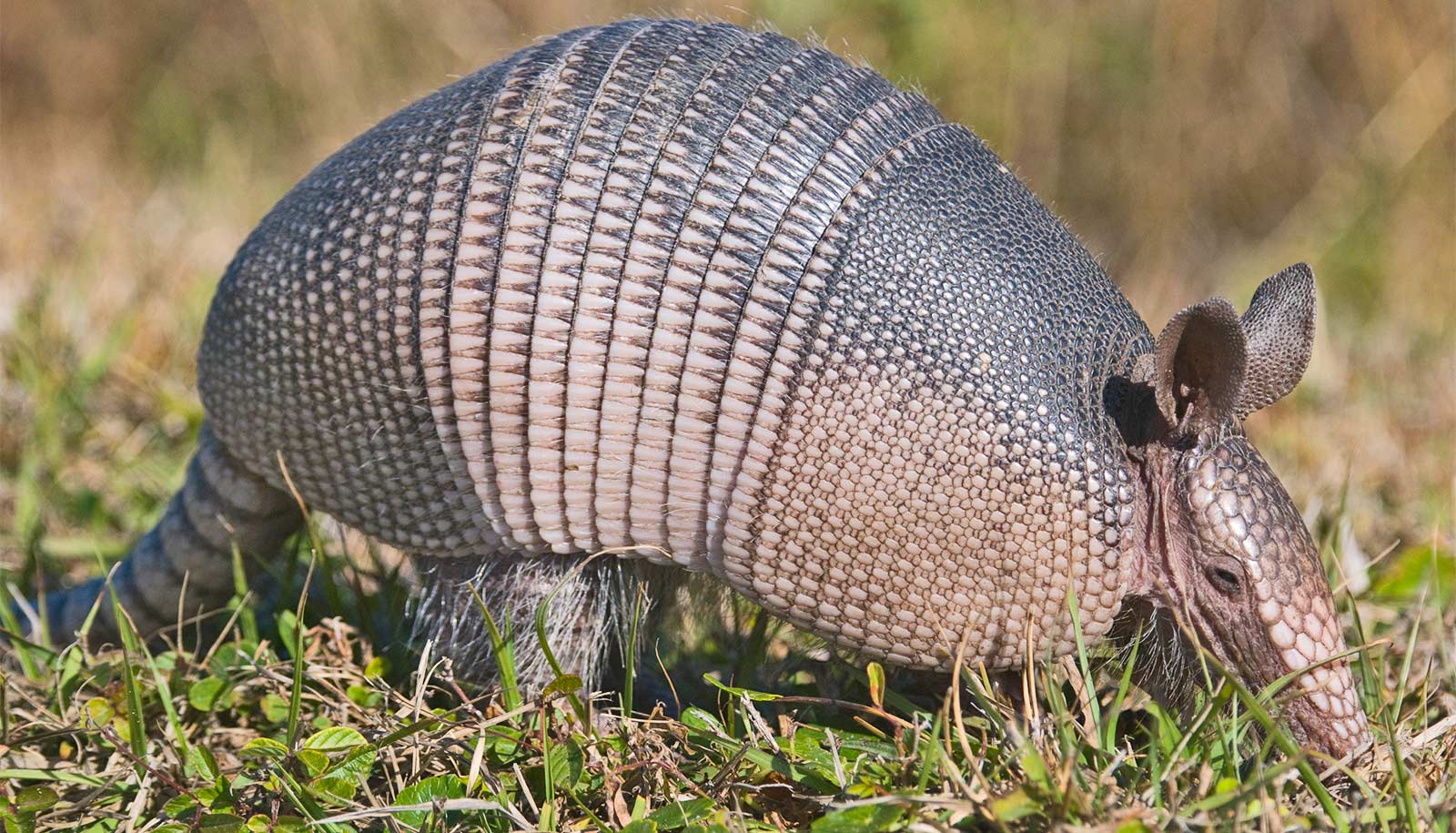
Researchers at North Carolina State University have developed a novel protective technology inspired by the biology of an armadillo, capable of shielding fragile soft robotics and electronics from physical impact. The device, described in the journal Science Advances, utilizes a morpho-interlocking protective module (MIPM) that detects external strain and automatically curls into a rigid, protective sphere.
This development addresses a persistent challenge in the field of soft robotics: the vulnerability of flexible, lightweight components to damage. By mimicking the defensive behavior of an armadillo, the researchers have created a structure that balances flexibility with high-impact resistance. This work, which received funding from the National Science Foundation and the Department of Defense, offers a potential path for protecting sensitive electronic payloads in unpredictable environments.
How the Bio-Inspired Protective Module Functions
The MIPM functions through a sophisticated three-layer architecture that allows it to transition from a flexible state to a rigid, defensive shell upon demand. According to the research team, the system is designed to respond automatically when its integrated sensors detect mechanical strain, such as a touch or a sudden impact.
The middle “sensing and actuation” layer is the engine of this transformation. It consists of a liquid-crystal elastomer (LCE) that contracts when exposed to heat, a strain sensor constructed from elastic polymer embedded with silver nanowires, a layer of kapton tape that expands under thermal influence, and a conductive fabric layer that functions as a heater. When the strain sensor identifies a threat, it triggers a control unit to power the heater. The resulting thermal reaction causes the LCE to contract and the tape to expand, forcing the structure to curve into a circle.
Engineering a Rigid Internal Skeleton
A critical component of the module’s strength is its endoskeleton, which provides structural integrity once the device has curled. The endoskeleton is composed of heavy-duty paper folded into ridges that support a row of rigid polymer “segmental scales.”
“As the layers curve into a circle, the segmental scales in the MIPM’s endoskeleton lock into each other—creating a robust internal ‘skeleton’ that contributes to the sturdiness of the structure,” explained Jianyu Zhou, a postdoctoral researcher at NC State and the study’s first author. This interlocking mechanism ensures that the device remains rigid even under external pressure, effectively shielding whatever object is housed within its center.
Balancing Flexibility and Mechanical Protection
The research team focused on optimizing the trade-off between the weight of the structure and its protective capabilities. By adjusting the number of segmental scales within the endoskeleton, the researchers found they could tune the module’s strength to meet specific requirements. In proof-of-concept testing, a configuration featuring 10 segmental scales demonstrated the ability to withstand approximately 10 newtons of force.
“Through mechanics-guided design, we established a trade-off between endoskeleton segmentation and structural lightweighting,” said Yong Zhu, a professor of mechanical and aerospace engineering at North Carolina State University and the corresponding author of the study. The ability to calibrate this response makes the technology versatile, potentially applicable to anything that can be enveloped by the module.
Future Applications for Soft Robotics
The integration of nature-inspired design into synthetic systems marks a significant step forward for flexible electronics. While current soft robots are often limited by their fragility, the MIPM provides a pathway for these devices to operate in more demanding settings without the risk of immediate failure. As the research team continues to explore the potential of this technology, they have indicated an interest in future collaborations to apply these modules to real-world hardware.

The researchers intend to continue their work on flexible yet protective technologies, drawing further inspiration from biological systems. Those interested in following the development of this project or reviewing the full technical specifications can consult the publication in Science Advances. As this technology moves from laboratory testing to potential field applications, further updates will depend on future engineering trials and performance evaluations in real-world conditions.
Keep reading