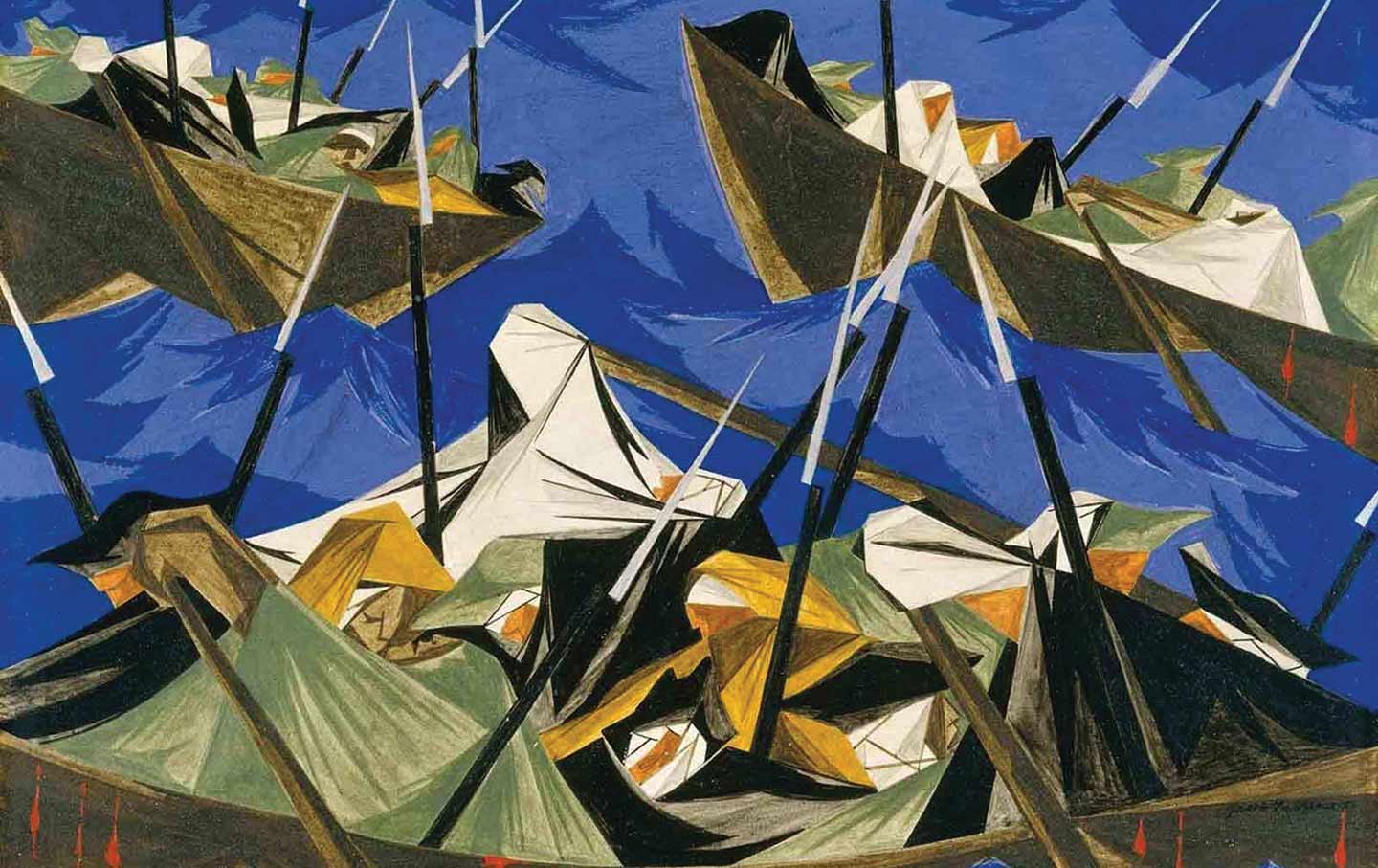
The visual representation of the American Revolution has shifted significantly over the past two centuries, evolving from idealized portrayals of heroic leadership to contemporary critiques that address the complexities of race, power, and national identity. While early 19th-century works like Emanuel Leutze’s Washington Crossing the Delaware sought to codify a singular national myth, modern artists such as Jacob Lawrence, Kara Walker, and Kent Monkman have utilized the revolutionary aesthetic to challenge historical erasures and highlight the experiences of marginalized groups during the founding era.
This evolution in artistic expression reflects broader changes in how the United States interprets its own history. According to the Metropolitan Museum of Art, Leutze’s 1851 painting was not intended as a strict documentary record but as a symbolic rallying cry for democratic ideals during a period of intense political division. In contrast, the later works of artists like Jacob Lawrence—specifically his Struggle…From the History of the American People series—reinserted the contributions of Black soldiers and laborers into the narrative, shifting the focus from individual generals to the collective, often overlooked, participants in the conflict.
From Romanticism to Historical Re-evaluation
The 19th-century approach to revolutionary art was heavily influenced by Romanticism, a movement that emphasized emotional grandeur and nationalistic pride. Artists were often commissioned or motivated to create images that solidified the legitimacy of the young republic. Leutze’s work, which depicts George Washington standing stoically in a boat amidst icy waters, remains the most recognizable image of this period. However, historians note that the painting contains numerous historical inaccuracies, including the type of boat used and the weather conditions at the time, as verified by the Mount Vernon Ladies’ Association.
As the 20th century progressed, the artistic lens widened. Jacob Lawrence, a central figure of the Harlem Renaissance, began his series on the American Revolution in the 1950s. His work avoided the grandiosity of previous generations, opting for a flattened, angular style that gave equal visual weight to the various figures—Black and white, enslaved and free—who populated the revolutionary landscape. By doing so, Lawrence prompted viewers to consider the paradox of a revolution fought for liberty that simultaneously maintained the institution of chattel slavery.
Contemporary Critiques of the Revolutionary Narrative
Modern artists have further dismantled the traditional hero-centric narrative by focusing on the traumatic consequences of the founding of the United States, particularly for Indigenous peoples and enslaved populations. Kara Walker, known for her stark, large-scale paper silhouettes, often explores the brutal realities of power dynamics and violence. Her work suggests that the “founding moment” is not a static point in time but a continuous process of reckoning with the nation’s unresolved contradictions.

Similarly, the Cree artist Kent Monkman has used his alter ego, Miss Chief Eagle Testickle, to intervene in historical paintings. By inserting this figure into scenes that mimic 19th-century landscape and history painting, Monkman highlights the absence of Indigenous perspectives in the colonial record. According to the Metropolitan Museum of Art, Monkman’s practice serves to decolonize the museum space, forcing audiences to confront the physical and cultural displacement that accompanied the expansion of the American colonies and the eventual formation of the United States.
Why the Artistic Shift Matters
The transition from celebratory art to critical inquiry reflects a deeper societal shift regarding who is considered a valid participant in the American story. By comparing the works of the 19th century to those of the 21st, it becomes clear that the “Art of the American Revolution” is no longer a fixed category. Instead, it has become a site of ongoing debate.
- 19th-Century Focus: Emphasized national unity, military heroism, and the “Great Man” theory of history.
- 20th-Century Focus: Introduced the contributions of marginalized groups and challenged the moral consistency of the revolution.
- 21st-Century Focus: Explores systemic power, the persistence of colonial structures, and the intersectional realities of the founding era.
This scholarly and artistic trajectory indicates that the American Revolution continues to function as a living argument rather than a settled chapter of history. As current exhibitions at institutions like the Museum of the American Revolution continue to integrate diverse perspectives, the public is increasingly presented with a multifaceted view of the past. This approach does not necessarily replace the older narratives but rather adds layers of complexity, allowing for a more comprehensive understanding of the sacrifices and injustices that defined the birth of the nation.
The next major public engagement with these themes is expected during the upcoming 250th anniversary of the United States in 2026, which will feature various academic symposia and museum retrospectives across the country. Readers interested in the latest scholarly updates regarding these artistic movements may consult the Smithsonian Institution, which frequently publishes research on the intersection of American history and visual culture. Please share your thoughts on how these shifts in artistic perspective have changed your own understanding of the revolutionary era in the comments section below.
Worth a look
- UAE and Serbia Discuss Strengthening Comprehensive Strategic Partnership
- Catalan Gypsy Rumba: UNESCO Bid Highlights French Paradox
- Russian Missile Strikes Kill at Least 8 Across Ukraine Including Kyiv, Lviv and Kryvyi Rih (time.news)
- Russian Missile Strikes Across Ukraine Kill 13 and Prompt Polish Jets (archyworldys.com)