
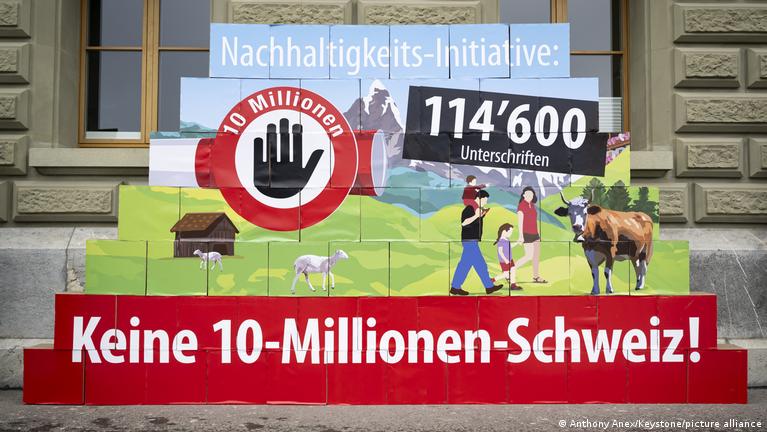
Swiss voters will head to the polls to decide on a constitutional amendment that would cap the country’s permanent resident population at 10 million, a proposal currently under the formal review process by the Swiss Federal Chancellery. The initiative, brought forward by the Swiss People’s Party (SVP), seeks to limit immigration as a mechanism to manage infrastructure strain, housing shortages, and the long-term sustainability of public services. If the proponents successfully collect 100,000 certified signatures within the required 18-month window, the measure will proceed to a nationwide popular vote under Switzerland’s system of direct democracy.
According to the Swiss Federal Statistical Office, the nation’s permanent resident population surpassed 9 million in 2023. The proposal, officially titled the “Sustainability Initiative,” mandates that if the population exceeds 9.5 million, the federal government must take immediate measures to restrict immigration, including the suspension of certain international agreements if necessary. Should the population reach the 10 million threshold, the initiative requires a comprehensive overhaul of immigration policy to prioritize natural population replacement and limit foreign arrivals.
The Mechanics of the Sustainability Initiative
The core of the proposal focuses on the legal definition of “sustainable” population growth. The Swiss Federal Chancellery confirms that once an initiative qualifies for the ballot, it undergoes a rigorous legal review to ensure it does not violate mandatory international law. The SVP argues that current migration levels place unsustainable pressure on the Swiss electrical grid, the healthcare system, and the housing market, which has seen rental prices climb in major urban centers like Zurich and Geneva.

Opponents of the initiative, including various business associations and political parties, contend that such a cap would severely damage the Swiss economy. Switzerland relies heavily on foreign labor to sustain its key sectors, including pharmaceuticals, precision manufacturing, and hospitality. Data from the State Secretariat for Economic Affairs (SECO) suggests that a rigid cap on the workforce could lead to significant labor shortages, potentially stifling innovation and reducing the country’s gross domestic product growth.
Historical Precedents and Direct Democracy
Switzerland’s history of referendums on immigration is extensive. In 2014, voters narrowly approved the “Against Mass Immigration” initiative, which aimed to reintroduce quotas for European Union citizens. The subsequent implementation of that vote caused years of diplomatic friction with Brussels, as it threatened the bilateral agreements that govern access to the EU single market. The current 10-million cap initiative is viewed by political analysts as a more aggressive iteration of previous attempts to decouple Swiss domestic policy from international labor market requirements.

The Swiss Federal Parliament maintains that any constitutional change must be compatible with the Agreement on the Free Movement of Persons (AFMP) signed with the EU. If a new initiative forces the government to violate this treaty, it would trigger a formal dispute process. The legal scholars at the University of Bern have noted that such a conflict would place the federal council in a position where it must choose between upholding the popular will and maintaining the legal framework of the country’s most important trade relationship.
Economic and Social Implications
The debate surrounding the 10-million cap reflects a broader tension in European politics regarding the balance between national sovereignty and global economic integration. Proponents of the cap emphasize that the “warm tones” of the campaign—focusing on quality of life, environmental preservation, and the protection of Swiss traditions—resonate with voters concerned about the rapid pace of demographic change. Conversely, the economiesuisse business federation has warned that limiting the population would likely lead to an aging society, increasing the fiscal burden on the pension system and reducing the tax base needed to fund social welfare programs.
Current polling trends indicate a polarized electorate. While some citizens express frustration with the rising cost of living and urban congestion, others fear that isolationist policies will lead to economic stagnation. The outcome of the potential vote will depend on the government’s ability to communicate the practical consequences of a hard population limit versus the status quo of managed growth.

The next official checkpoint for this proposal is the certification of signatures by the Federal Chancellery. Once the signature threshold is confirmed, the Federal Council will set a date for the nationwide referendum, which is typically scheduled for one of the four annual voting weekends in Switzerland. Interested citizens and observers can track the official progress of the initiative through the Federal Chancellery’s portal, which provides real-time updates on active popular initiatives and upcoming legislative ballots.
We welcome your perspectives on this development. Please share your thoughts in the comments section below or join the conversation on our social media channels.