
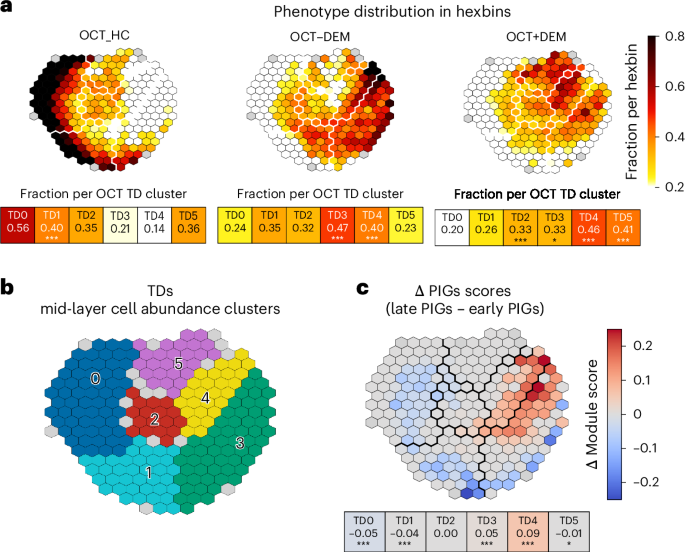
Microglia, the primary immune cells of the central nervous system, appear to reach a critical inflection point in Alzheimer’s disease, where their functional state determines whether a brain remains cognitively resilient or succumbs to dementia. Recent research utilizing spatial transcriptomics indicates that gene expression changes in specific tissue domains surrounding amyloid plaques and tau pathology serve as a biological divider between clinically silent early-stage disease and the later stages characterized by cognitive decline, according to investigations published in Nature Medicine.
As a physician, I have observed that the distinction between pathology and clinical symptoms has long remained one of the most challenging aspects of neurology. While many individuals accumulate significant amyloid and tau deposits—the classic hallmarks of Alzheimer’s—they do not always exhibit memory loss or executive dysfunction. This new evidence suggests that the microglial response within the immediate vicinity of these protein aggregates may explain why some patients remain cognitively intact well into their centenarian years.
The Role of Microglia in Neurodegeneration
Microglia act as the brain’s “first responders,” constantly surveying the environment for damage or infection. In the context of neurodegenerative diseases, these cells can shift from a homeostatic state to a reactive, disease-associated state. According to the National Institute on Aging (NIA), while these cells initially attempt to clear toxic proteins, chronic activation may eventually contribute to neuroinflammation, damaging healthy neurons in the process.

The recent findings highlight that it is not merely the presence of plaques that dictates the clinical course, but the specific molecular “neighborhood” created by these immune cells. By mapping gene expression patterns at a high resolution, researchers identified that resilient brains maintain a different microglial signature compared to those undergoing rapid cognitive decline. This suggests that there is a window of opportunity where microglial function might be modulated to preserve cognitive health, even in the presence of underlying protein accumulation.
Spatial Transcriptomics and Brain Resilience
Spatial transcriptomics represents a significant leap forward in our ability to study the brain. Unlike traditional bulk sequencing, which averages gene expression across large tissue samples, this technique allows scientists to observe exactly where specific genes are turned on or off in relation to histological features like amyloid plaques. This is essential because the microenvironment of a plaque is distinct from the surrounding healthy tissue.

According to the Alzheimer’s Association, current diagnostic criteria rely heavily on clinical symptoms and biomarkers, but these tools often fail to capture the underlying biological variability that leads to “cognitive resilience.” The ability to distinguish between early, silent pathology and advanced disease stages at the molecular level provides a new framework for clinical trials. By targeting the specific gene pathways identified in these resilient domains, future therapies may be able to prolong the asymptomatic phase of the disease.
Clinical Implications for Future Treatment
The shift in understanding microglial activity has profound implications for how we approach drug development. If the goal is to maintain cognitive function rather than just clearing plaques, researchers must prioritize therapies that support the homeostatic, protective functions of microglia. The World Health Organization (WHO) reports that as global populations age, the number of people living with dementia is expected to rise significantly, making the discovery of these “resilience factors” a public health priority of the highest order.
However, translating these findings into clinical practice remains a complex task. While spatial transcriptomics provides a map of the landscape, we still require longitudinal studies to determine if these gene expression changes are a cause of resilience or a consequence of it. Understanding the timeline of these microglial transitions is essential before we can design interventions that safely influence these immune pathways.
Understanding the Stages of Disease
The progression of Alzheimer’s is rarely linear, and the interaction between immune cells and protein pathology is highly dynamic. For many patients, the transition from preclinical, asymptomatic disease to symptomatic dementia occurs over decades. The current research underscores that the “inflection point” where microglia transition from protectors to contributors to pathology is likely the most critical juncture for therapeutic intervention.
Readers should look for forthcoming updates from the Alzheimer’s Research UK and other major international research bodies regarding the next phase of clinical trials targeting neuro-immune pathways. These organizations provide regular updates on how laboratory findings are being translated into human clinical studies. We will continue to monitor these developments as they emerge in peer-reviewed literature. If you have questions about current research or wish to discuss how these findings might impact your own health, I encourage you to share your thoughts in the comments section below.