
The Atlantic Meridional Overturning Circulation (AMOC)—the massive system of ocean currents that regulates climate across Europe and North America—is displaying signs of both localized weakening and surprising resilience in the face of climate change. While long-term climate models have frequently warned of a potential “tipping point” that could lead to the system’s collapse, recent observational data indicates that the currents are fluctuating with a complexity that challenges singular predictions of decline. According to the Intergovernmental Panel on Climate Change (IPCC), while the AMOC is projected to weaken over the 21st century, a complete shutdown before 2100 remains considered unlikely by the scientific community.
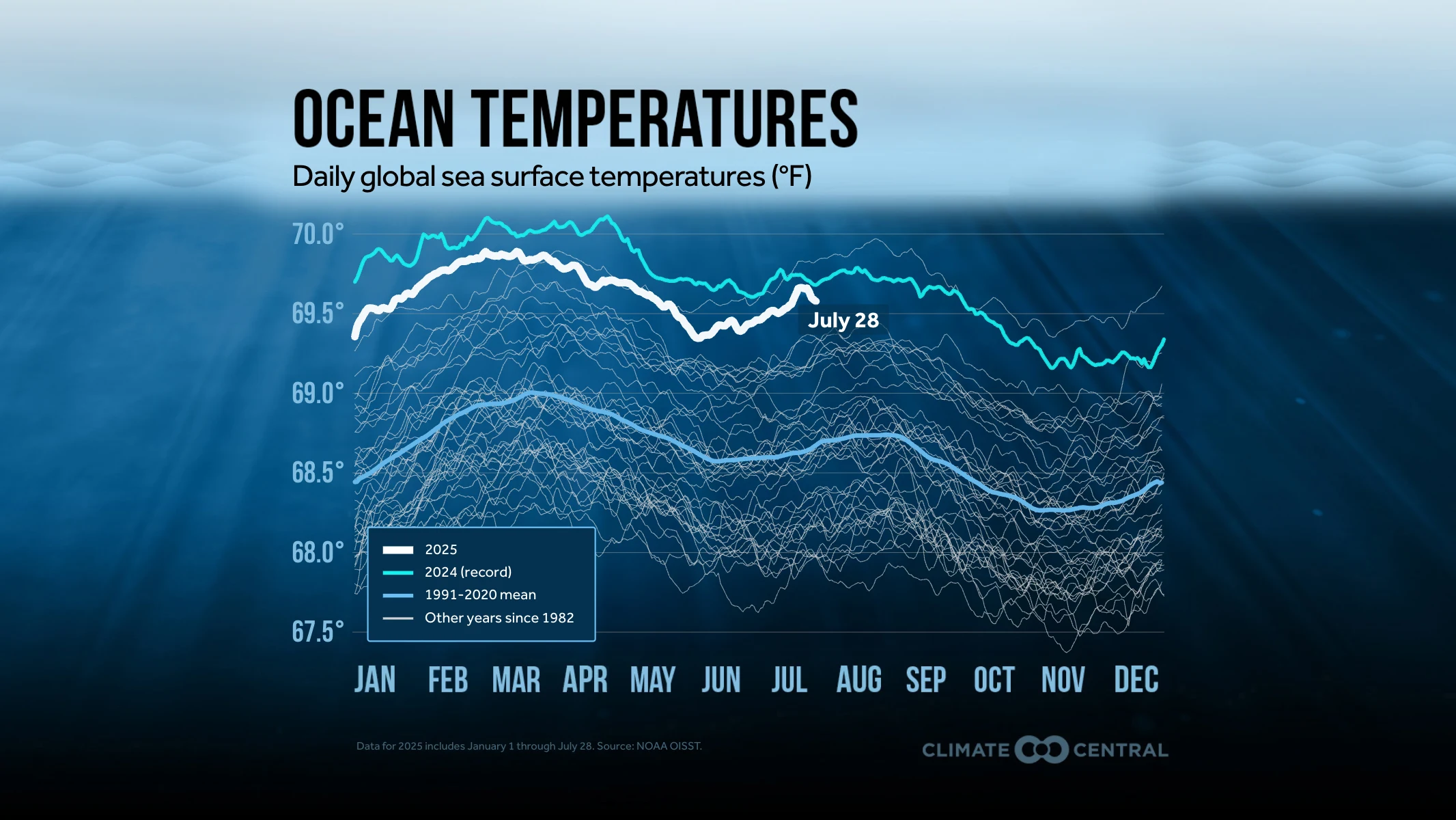
As a physician and health journalist, I often view climate stability through the lens of public health; the AMOC acts essentially as a circulatory system for the planet, transporting warm tropical waters toward the North Atlantic. Disruptions to this flow have massive implications for weather patterns, sea-level rise, and agricultural stability. Yet, the current data suggests that the “oceanic heartbeat” is not as fragile as some early, simplified models suggested, even as global sea surface temperatures continue to reach record highs reported by the Copernicus Climate Change Service.
Understanding the AMOC’s Role in Global Climate
The AMOC is a critical component of the global thermohaline circulation. By moving warm, salty water from the tropics to the North Atlantic, it releases heat into the atmosphere, which significantly warms Western and Northern Europe. This process is driven by density gradients; as water cools and becomes saltier in the North, it sinks, creating a “conveyor belt” effect that pulls more warm water northward. When this system functions effectively, it maintains a temperate climate in regions that would otherwise be significantly colder at such high latitudes.

Concerns regarding the system’s stability largely stem from the influx of freshwater—primarily from melting ice sheets in Greenland—which dilutes the salt content of the surface water. This dilution reduces the density of the water, potentially preventing it from sinking and effectively slowing the conveyor belt. However, research published in journals such as Nature indicates that internal variability—the natural “noise” of ocean currents—often masks long-term trends, making it difficult to distinguish between temporary fluctuations and a genuine, irreversible decline in circulation strength.
Conflicting Data: Weakening vs. Stability
The scientific discourse surrounding the AMOC is currently characterized by a divide between climate modeling and direct observational measurements. Since 2004, the RAPID-MOCHA array, a series of moorings across the Atlantic, has provided continuous data on the circulation’s strength. These observations have captured significant short-term variations that have at times been misinterpreted as long-term trends. According to an analysis by the National Oceanic and Atmospheric Administration (NOAA), the data collected over the past two decades shows that while the AMOC is highly dynamic, it has not yet exhibited the sustained, precipitous drop that would signal an imminent collapse.
Conversely, some proxy-based studies looking at sea surface temperature gradients and deep-sea sediment cores suggest a weakening trend that may date back to the end of the Little Ice Age. Researchers emphasizing this perspective argue that the current state of the AMOC is at its weakest in at least 1,000 years. This discrepancy highlights a fundamental challenge in climate science: reconciling high-resolution, short-term instrumental data with long-term, lower-resolution paleoclimate records. Both sets of data are essential, yet they frequently provide different narratives regarding the current state of ocean health.
Why the “Tipping Point” Narrative Remains Complex
The concept of a “tipping point” for the AMOC—a threshold beyond which the circulation would collapse regardless of further climate intervention—has been a subject of intense debate. If such a collapse were to occur, the consequences would be severe, including a dramatic cooling in Europe, shifts in tropical rainfall belts, and accelerated sea-level rise along the North American East Coast. However, many contemporary climate models utilized in the IPCC Sixth Assessment Report suggest that the AMOC is more robust than older, coarser models previously indicated.
The resilience of the system is thought to be tied to the way ocean eddies and small-scale currents redistribute heat and salt. While older models often failed to capture these fine-scale processes, newer high-resolution simulations are beginning to show that the ocean’s internal feedback loops may provide a buffer against the freshwater influx from melting glaciers. This does not mean the AMOC is immune to climate change, but it suggests that the timeline for any major disruption may be longer and more nuanced than previously feared by the public.
What Happens Next for Ocean Monitoring
The scientific community remains focused on improving the resolution of ocean observations. The next major checkpoint for climate research involves the continued deployment of autonomous sensors and satellite altimetry, which provide a more comprehensive picture of sea surface height and heat content. These tools are critical for detecting subtle changes in density that could precede a shift in current patterns. The World Meteorological Organization continues to coordinate international efforts to ensure that ocean monitoring networks are expanded, particularly in the subpolar North Atlantic where the sinking process is most active.

For readers concerned about the climate outlook, the best source for verified, non-sensationalized data remains the periodic reports issued by the IPCC and national meteorological services. These organizations provide the most rigorous peer-reviewed assessments of the ocean’s state. As we continue to monitor the AMOC, it is clear that while caution is warranted, the narrative of an immediate, catastrophic collapse is not supported by current observational evidence. We invite our readers to follow these developments through official climate monitoring channels and participate in the ongoing conversation regarding global environmental policy.
Keep reading