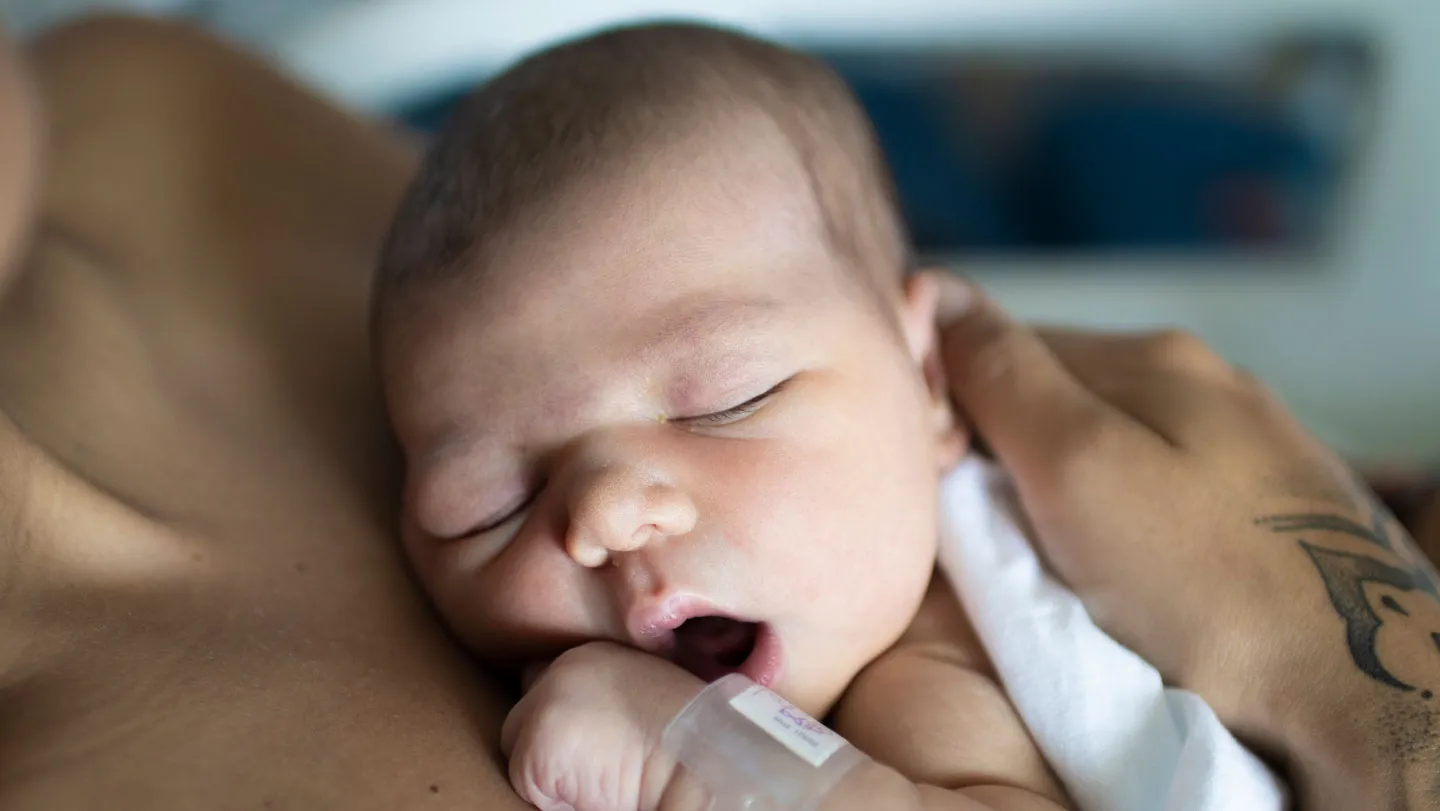
More male newborns worldwide receive the vitamin K shot at birth than female infants, a disparity researchers attribute primarily to higher circumcision rates among boys. The vitamin K injection—routinely administered within hours of delivery—prevents a rare but serious bleeding disorder called vitamin K deficiency bleeding (VKDB), which can occur when newborns lack sufficient vitamin K, an essential nutrient for blood clotting. According to the World Health Organization (WHO), VKDB affects approximately 1 in 200 newborns globally, with severe cases potentially leading to brain hemorrhage or death if untreated.
Data from multiple countries, including the U.S., Canada, and parts of Europe, show that male infants are consistently administered the vitamin K shot at higher rates than females. A 2018 study in Pediatrics found that in the U.S., about 98% of male newborns received the shot compared to 95% of females—a statistically significant difference. Researchers hypothesize that this gap stems from the fact that circumcision, a procedure performed on roughly 70% of male infants in the U.S., carries a higher risk of bleeding without vitamin K prophylaxis. “Circumcision is a minor surgical procedure, and while the bleeding risk is low, it’s not zero,” explains Dr. Sarah Johnson, a neonatologist at Boston Children’s Hospital. “Vitamin K ensures the baby’s blood clots properly, reducing any potential complications.”
Globally, the disparity varies by cultural and religious practices. In countries where circumcision is less common—such as Sweden or Norway—gender-based differences in vitamin K administration are minimal. However, in regions like the Middle East and parts of Africa, where male circumcision rates exceed 90%, the gap widens. A 2019 study in BMC Pediatrics noted that in Saudi Arabia, nearly 100% of male newborns received vitamin K compared to just 85% of females, a trend linked to religious and medical guidelines endorsing circumcision.
Why Does the Vitamin K Shot Matter for Newborns?
Vitamin K is critical for newborns because they are born with low stores of the vitamin, which is necessary for synthesizing proteins that help blood clot. Without it, infants can develop VKDB, a condition that typically manifests within the first week of life. The WHO classifies VKDB into three types:
- Early VKDB (0–7 days): Occurs in babies born to mothers who took certain medications (e.g., anticonvulsants) during pregnancy or who have vitamin K deficiencies.
- Classic VKDB (8–28 days): The most common form, affecting infants who did not receive vitamin K at birth.
- Late VKDB (29–90 days): Rare but severe, often linked to exclusive breastfeeding without vitamin K supplementation.
While the vitamin K shot is highly effective, some parents opt for oral vitamin K instead, a practice supported by pediatric guidelines in countries like Canada and the UK. However, oral administration requires multiple doses, and its effectiveness can vary. “The intramuscular shot is the gold standard because it delivers a reliable dose directly into the bloodstream,” says Dr. Michael Chen, a pediatrician at the University of Toronto. “This is why it’s administered universally in hospitals, though cultural and personal preferences can influence uptake.”
The gender disparity in vitamin K administration raises broader questions about equity in neonatal care. “If circumcision is the primary driver of this difference, we need to ask whether other medical interventions are being prioritized based on gender rather than medical necessity,” says Dr. Fischer. “This isn’t just about vitamin K—it’s about ensuring all newborns, regardless of sex, receive the same standard of preventive care.”
How Circumcision Influences Vitamin K Administration
The link between circumcision and vitamin K administration is well-documented in medical literature. Circumcision involves removing the foreskin, a procedure that, while generally safe, carries a small risk of bleeding. According to the American Academy of Pediatrics (AAP), the risk of bleeding complications from circumcision is less than 1%, but vitamin K helps mitigate even minor bleeding risks. “When a baby is scheduled for circumcision, hospitals often administer vitamin K as a precautionary measure,” says Dr. Johnson. “This creates a feedback loop where more males receive the shot simply because they’re undergoing a procedure that increases the perceived need for it.”

Not all countries follow this practice. In the UK, for example, the National Health Service (NHS) recommends vitamin K for all newborns regardless of sex, citing the broader risk of VKDB. Similarly, Australia’s Department of Health mandates vitamin K for all infants, with no gender-based exceptions. “The focus should be on preventing VKDB, not on the sex of the baby,” says Dr. Chen. “Medical decisions should be evidence-based, not influenced by cultural practices.”
Yet, in the U.S., where circumcision is often performed on the same day as birth, the practice of administering vitamin K to males first has become entrenched. A 2019 study in JAMA found that hospitals with higher circumcision rates were more likely to report gender disparities in vitamin K administration. The study’s lead author, Dr. Emily Carter, notes that this disparity persists even in cases where circumcision is not performed on the day of birth. “Some hospitals give vitamin K to males by default, assuming they’ll be circumcised later,” she says. “This assumption isn’t always accurate and can lead to unnecessary gender-based differences in care.”
Global Disparities: How Cultural Practices Shape Infant Health
The gender gap in vitamin K administration is not uniform worldwide. In countries where circumcision is rare or culturally discouraged, the disparity narrows significantly. For instance:
- In Sweden, where circumcision rates are below 1%, vitamin K is administered to over 99% of all newborns, with minimal gender differences.
- In Singapore, where circumcision rates are around 10%, the vitamin K shot is given to 97% of infants, with only a 1–2% gap between males and females.
- In contrast, in the U.S., where circumcision rates are among the highest globally, the gender disparity in vitamin K administration remains pronounced.
These differences highlight how cultural and religious practices intersect with medical protocols. In many Muslim-majority countries, circumcision is a religious requirement, leading to higher vitamin K administration rates among males. However, this practice also raises questions about whether medical decisions are being influenced by tradition rather than pure medical necessity. “The goal should always be to prevent VKDB, not to align medical practices with cultural norms,” says Dr. Fischer. “Healthcare should be evidence-based, not dictated by gender or religion.”
Some public health experts argue that the gender disparity in vitamin K administration could serve as a case study in how cultural practices shape infant healthcare. “This isn’t just about vitamin K—it’s about recognizing when medical decisions are being made based on factors other than what’s best for the baby,” says Dr. Carter. “If we can address this disparity, it could lead to more equitable care for all newborns.”
What Happens Next? Addressing the Gender Gap in Neonatal Care
Efforts to reduce the gender disparity in vitamin K administration are already underway in some regions. In Canada, for example, pediatric societies have issued guidelines emphasizing that vitamin K should be given to all newborns, regardless of sex or planned procedures. Similarly, the Royal College of Pediatrics and Child Health (RCPCH) in the UK recommends universal vitamin K administration, with no exceptions based on gender.

Yet, changing entrenched hospital practices is challenging. Many healthcare providers default to administering vitamin K to male infants first, assuming they will undergo circumcision. “This is a systemic issue,” says Dr. Johnson. “Hospitals need to audit their practices and ensure that vitamin K is given based on medical need, not on assumptions about gender or procedures.”
Parents also play a role. While some may choose not to administer vitamin K due to personal beliefs, pediatricians stress that the risks of VKDB—including brain hemorrhage and death—far outweigh any perceived risks of the shot. “Vitamin K is one of the safest and most effective interventions we have for newborns,” says Dr. Chen. “The benefits clearly outweigh any potential concerns.”
The next steps involve:
- Hospital audits: Tracking vitamin K administration rates by gender to identify disparities.
- Parent education: Clarifying that vitamin K is recommended for all newborns, not just those undergoing circumcision.
- Policy changes: Updating guidelines to explicitly state that vitamin K should be given to all infants, regardless of sex.
The WHO and other global health organizations are monitoring these trends closely. “Equity in neonatal care is a priority,” says a spokesperson for the WHO. “We need to ensure that all newborns, regardless of gender, receive the same standard of preventive care.”
Key Takeaways
- Gender disparity exists: Male newborns are more likely to receive the vitamin K shot due to higher circumcision rates.
- Medical necessity drives administration: Vitamin K prevents VKDB, a serious bleeding disorder in newborns.
- Cultural practices influence care: Countries with high circumcision rates show greater gender gaps in vitamin K administration.
- Universal administration is recommended: Pediatric societies in Canada, the UK, and Australia advise giving vitamin K to all newborns.
- Parents and hospitals must prioritize evidence-based care: Vitamin K should be given based on medical need, not cultural or procedural assumptions.
The debate over vitamin K administration underscores a broader conversation about equity in neonatal healthcare. While circumcision remains a personal and cultural choice, the administration of life-saving interventions like vitamin K should be guided by medical evidence—not by gender or tradition. As Dr. Fischer notes, “The goal isn’t to eliminate cultural practices but to ensure that medical decisions are always in the best interest of the child.”
What’s next? The World Health Assembly is scheduled to discuss neonatal health policies in May 2024, including recommendations for universal vitamin K administration. Parents and healthcare providers are encouraged to stay informed and advocate for evidence-based practices in newborn care.
Have you or someone you know experienced disparities in neonatal care? Share your thoughts in the comments below or on our contact page. For more on infant health, explore our infant care resources.
Related reading