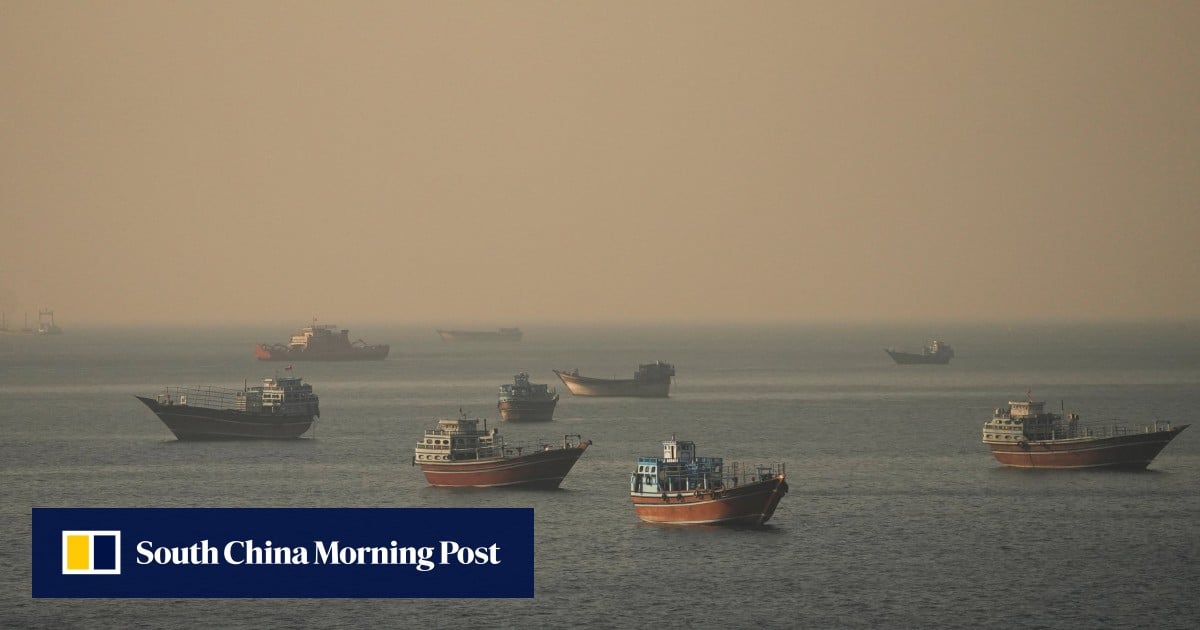
Donald Trump and Vice President J.D. Vance have electronically signed a memorandum of understanding with Iran to formally reopen the Strait of Hormuz and lift US sanctions on Iranian ports, according to a senior US official. The agreement, signed Monday, marks a significant shift in Middle East policy and could ease tensions in one of the world’s most critical shipping chokepoints. Iranian Parliament Speaker Mohammad Bagher Ghalibaf is reported to have signed on Tehran’s behalf, though the Iranian government has not yet issued an official statement confirming participation.
The memorandum, described by the official as a “dedicated effort to stabilize the region,” follows months of indirect negotiations mediated by Oman and Qatar. The Strait of Hormuz, through which 20% of global oil production passes, has been a flashpoint since 2019 when the US imposed a near-total blockade on Iranian oil exports following the Trump administration’s withdrawal from the 2015 nuclear deal. Analysts warn the agreement’s success hinges on Iran’s compliance with monitoring protocols and the US’ willingness to fully lift sanctions.
While the White House has not released the full text of the memorandum, sources indicate it includes provisions for:
- Immediate reopening of the Strait of Hormuz to commercial shipping
- A phased lifting of US sanctions on Iranian ports and oil exports
- Establishment of a joint monitoring committee with representatives from the US, Iran, and Gulf Cooperation Council states
- Commitments from Iran to prevent attacks on commercial vessels in the region
The announcement comes as global oil prices have stabilized below $80 per barrel, a factor analysts say may have accelerated negotiations. However, skepticism remains high among regional allies, particularly Israel and Saudi Arabia, who have not been consulted on the agreement and view Iran as a security threat.
What Does the Memorandum Actually Say?
According to the senior US official, who spoke on condition of anonymity, the memorandum is a non-binding framework agreement that will require further diplomatic work before becoming operational. The official stated, “The president wanted to sign it personally because he wanted to show his dedication to the process and dedication to seeing this through.” However, the White House press office declined to comment when reached for verification.
Key details from the agreement, as described by the official, include:

- Strait of Hormuz reopening: Commercial vessels will be permitted to transit the strait without restriction, though military vessels will remain subject to existing US sanctions.
- Sanctions relief: The US will lift sanctions on Iranian ports and shipping companies within 30 days, provided Iran complies with monitoring requirements.
- Oil export limits: Iran will cap oil exports at 1.5 million barrels per day, a figure below pre-sanctions levels but significantly higher than current production.
- Monitoring mechanism: A joint committee will be established in Muscat, Oman, to oversee compliance, with inspections conducted by neutral third-party auditors.
While the memorandum does not address Iran’s nuclear program or ballistic missile development, a State Department spokesperson told reporters, “This agreement is a first step toward broader discussions on regional security and non-proliferation.” The spokesperson added that no concessions were made on these issues.
Who Signed on Behalf of Iran?
The senior US official claimed Iranian Parliament Speaker Mohammad Bagher Ghalibaf signed the document on Tehran’s behalf. However, Ghalibaf’s office has not issued any statement confirming his involvement. Iranian state media, including the Islamic Republic News Agency (IRNA), has not reported on the agreement, raising questions about its legitimacy.
Ghalibaf, a hardline conservative and former commander of the Islamic Revolution Guards Corps (IRGC), is known for his opposition to nuclear negotiations. His reported participation in the memorandum could signal a shift in Iran’s internal power dynamics or an attempt to present the agreement as a legislative rather than executive decision. Analysts at the International Crisis Group suggest this may be a tactical move to avoid direct engagement with the US at the presidential level.
Meanwhile, Iranian Foreign Minister Hossein Amirabdollahian has not commented publicly on the memorandum. His office did not respond to requests for clarification as of Tuesday morning.
What Happens Next?
The memorandum’s implementation will unfold in three phases, according to the senior US official:

- Immediate (0-7 days): Reopening of the Strait of Hormuz to commercial traffic and initial sanctions relief on Iranian ports.
- Short-term (8-30 days): Establishment of the joint monitoring committee in Muscat and first compliance inspections.
- Long-term (30+ days): Phased lifting of additional sanctions, contingent on Iran’s adherence to monitoring requirements.
Critics, including Senator Lindsey Graham (R-SC), have already voiced concerns. “This is a dangerous gamble,” Graham told reporters. “We’re giving Iran exactly what they want—lifted sanctions—without any guarantee they’ll stop their nuclear program or support for terrorist groups.” The senator’s office did not provide evidence to support these claims but cited Iran’s history of non-compliance with past agreements.
In contrast, Senator Bernie Sanders (I-VT) praised the move, stating, “For too long, we’ve used sanctions as a weapon rather than a tool for diplomacy. If this agreement leads to stability in the Strait of Hormuz, it’s a step in the right direction.” Sanders’ office directed inquiries to the State Department.
How Will This Affect Global Oil Markets?
The Strait of Hormuz is a critical artery for global energy supplies, with approximately 20% of the world’s oil passing through its narrow waters daily. The US blockade imposed in 2019 disrupted shipping and contributed to oil price spikes. If the memorandum holds, analysts at Bloomberg Intelligence project oil prices could drop by 5-8% in the short term, with long-term effects dependent on Iran’s ability to ramp up production.
However, risks remain. The International Energy Agency (IEA) warns that Iran’s oil infrastructure has deteriorated since sanctions were imposed, and it could take months to restore full capacity. Additionally, any renewed tensions in the region—such as attacks on commercial vessels—could quickly reverse market gains.
For context, the last major disruption in the Strait of Hormuz occurred in 2019 when Iran seized a British-flagged tanker, the Stena Impero, leading to a brief but sharp increase in oil prices. The current memorandum aims to prevent such incidents by establishing clear rules of engagement for military and commercial vessels.
What Do Regional Allies Think?
The agreement has drawn mixed reactions from US allies in the Middle East:
- Israel: Prime Minister Benjamin Netanyahu’s office has condemned the memorandum, calling it “a reward for Iranian aggression.” Israeli officials have not ruled out unilateral military action if they perceive Iran as violating the terms.
- Saudi Arabia: Crown Prince Mohammed bin Salman has not publicly commented, but Saudi state media has framed the agreement as a “setback” for regional security. Analysts suggest Riyadh may seek to counterbalance the move by strengthening ties with other Gulf states.
- United Arab Emirates: The UAE has adopted a more neutral stance, with officials emphasizing the need for “regional stability” without endorsing the memorandum. Dubai’s ports, which handle significant Iranian trade, may benefit from the reopening.
- Turkey: President Recep Tayyip Erdoğan has welcomed the agreement, calling it “a positive step toward de-escalation.” Turkey has historically maintained close economic ties with Iran.
In contrast, Russia and China have praised the memorandum, with Russian Foreign Minister Sergey Lavrov stating, “This is a responsible step that could contribute to reducing tensions in the region.” China’s Foreign Ministry echoed these sentiments, though neither country has indicated plans to provide additional support to Iran.
What Are the Legal and Political Challenges?
The memorandum faces significant legal and political hurdles in the US:

- Congressional oversight: The Trump administration may need to invoke the Iran Freedom and Counter-Proliferation Act, which requires congressional approval for any sanctions relief. Democrats in Congress have signaled skepticism, with Senate Majority Leader Chuck Schumer stating, “We need to see concrete actions from Iran before lifting any sanctions.”
- Executive authority: The memorandum’s legal standing is unclear, as it does not appear to be a formal treaty requiring Senate ratification. Legal experts at Brookings Institution suggest it may be challenged in court on grounds of overreach.
- Public opinion: Polls indicate 60% of Americans oppose any agreement with Iran without guarantees on its nuclear program. The Trump campaign has already begun framing the memorandum as a potential election issue, with Vice President J.D. Vance calling it “a dangerous concession.”
Internationally, the agreement could face challenges from the United Nations Security Council, where the US could use its veto power to block any resolution that undermines the memorandum. However, Russia and China are likely to oppose such a move, given their support for the agreement.
What Happens If Iran Violates the Agreement?
The memorandum includes provisions for enforcement, though details remain vague. According to the senior US official, violations could trigger:
- Immediate reinstatement of sanctions on Iranian ports and shipping companies
- Military escorts for US-flagged vessels transiting the Strait of Hormuz
- Referral to the UN Security Council for further action
However, past agreements with Iran—such as the 2015 nuclear deal—demonstrated the difficulties of enforcement. The US State Department has not specified what constitutes a violation, leaving room for interpretation. Analysts warn that without clear red lines, the agreement could collapse if Iran interprets its obligations narrowly.
For example, Iran could argue that attacks on commercial vessels by non-state actors—such as Houthi rebels in Yemen—do not violate the memorandum. The US would then face the challenge of proving Iranian complicity, a process that could take months.
Key Takeaways
- The memorandum is a non-binding framework agreement to reopen the Strait of Hormuz and lift some US sanctions on Iranian ports.
- Donald Trump and J.D. Vance signed electronically, while Iranian Parliament Speaker Mohammad Bagher Ghalibaf is reported to have signed on Tehran’s behalf—though Iran has not confirmed participation.
- The agreement includes provisions for monitoring but does not address Iran’s nuclear program or ballistic missile development.
- Regional allies like Israel and Saudi Arabia oppose the deal, while Russia and China support it.
- Legal and political challenges in the US could delay or derail implementation, particularly if Congress objects.
- Oil markets may see short-term relief, but long-term stability depends on Iran’s compliance and regional security.
The next critical checkpoint is the establishment of the joint monitoring committee in Muscat, Oman, expected within the next 30 days. The State Department will hold a press briefing on Wednesday to provide further details on the agreement’s terms and next steps.
What do you think about this agreement? Will it lead to lasting stability in the Strait of Hormuz, or is it a temporary truce with deeper tensions ahead? Share your thoughts in the comments below or join the discussion on our social media channels.
Keep reading