
Gabriel Rufián, the parliamentary spokesperson for Esquerra Republicana de Catalunya (ERC), has issued a public warning to the Spanish government regarding its legislative survival, stating that “staying in power for nothing is nonsense.” His remarks follow a move by Junts per Catalunya to amend a Popular Party (PP) motion that seeks to compel Prime Minister Pedro Sánchez to call for early general elections in Spain.
The political tension, which centers on the stability of the current coalition government, has underscored the fragile nature of the parliamentary arithmetic currently supporting the administration of Pedro Sánchez. According to official records from the Congreso de los Diputados, the government relies on a complex web of support from various regional parties, including ERC and Junts, to pass legislation and maintain its mandate.
The Debate Over Legislative Utility
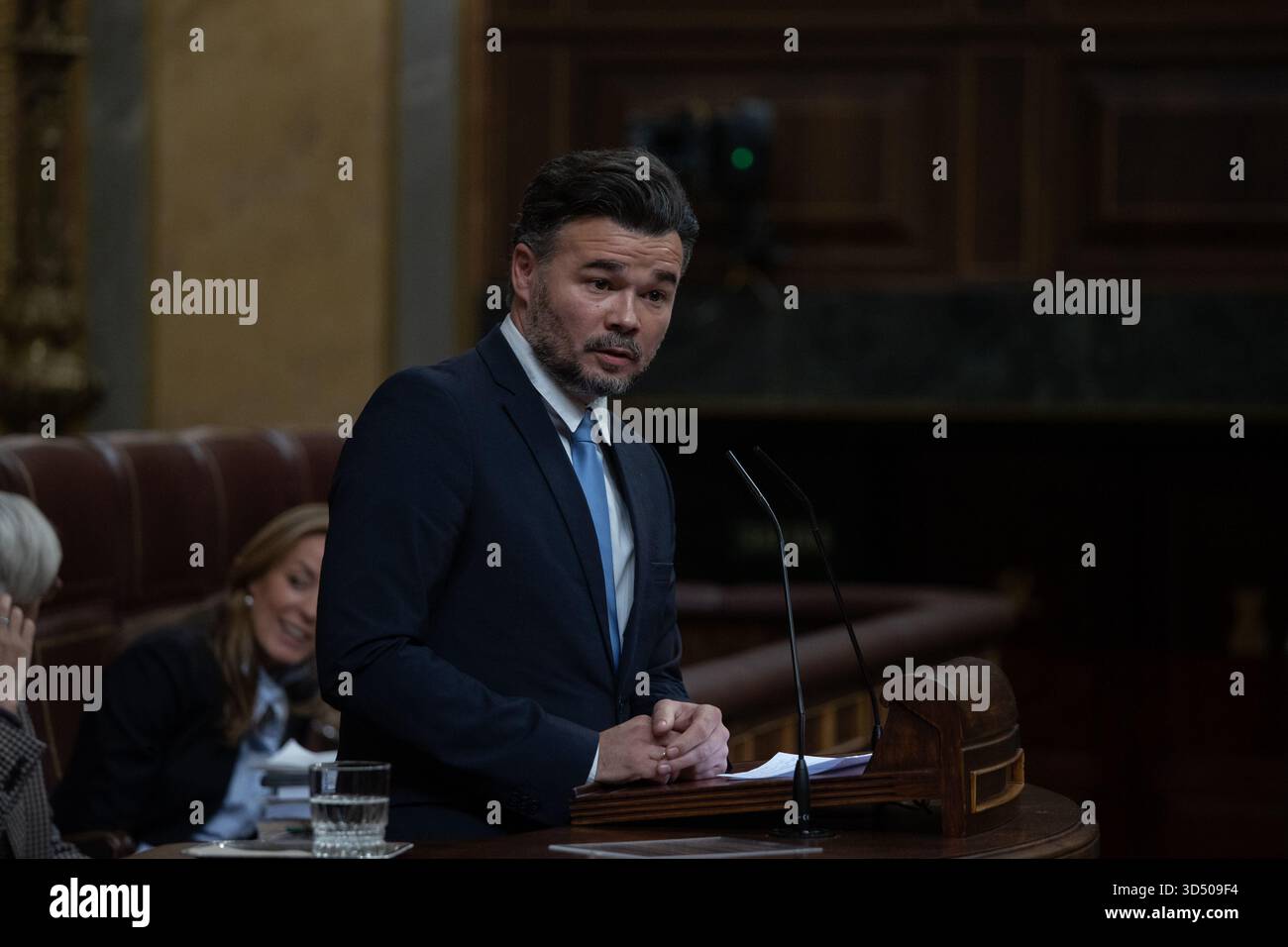
Rufián’s comments to the media at the Congress on Tuesday reflect a growing frustration among some of the government’s traditional partners. The ERC spokesperson questioned the executive’s objectives, asking whether the current administration’s primary goal is merely to remain in office by default—arguing that “the others are worse”—or if it intends to implement progressive policies, such as curbing real estate speculation or reforming the tax system to ensure greater fiscal equity.
“We already know that the others are worse; that is day-one material for anyone on the left,” Rufián stated during his briefing, rejecting the strategy of “hanging on and disgusting” the electorate. His position highlights a strategic divide: while the government emphasizes the necessity of preventing a right-wing alternative, regional partners are increasingly demanding tangible legislative outcomes in exchange for their continued support.
Strategic Alignment and Potential Parliamentary Shifts
Following his remarks to the press, Rufián took to social media to analyze the shifting alliances within the chamber. He suggested that the convergence of Junts and the PP on the motion to trigger early elections—a move expected to be supported by Vox—could signal a broader shift in parliamentary behavior. Specifically, Rufián posited that if these parties can coordinate on an amendment to force elections, they could theoretically coordinate on a motion of no confidence (moción de censura).

The political landscape in Spain remains highly volatile due to the Amnesty Law and the ongoing negotiations regarding regional financing and the status of Catalonia. The parliamentary dynamics are frequently tracked via the Government of Spain’s official portal, which records the legislative agenda and the outcomes of plenary sessions. The potential for a “triple alliance” between Feijóo (PP), Abascal (Vox), and Puigdemont (Junts) represents a significant, if currently speculative, threat to the longevity of the Sánchez administration.
The Context of Early Election Demands
The demand for early elections has become a recurring theme in the current term. The Popular Party, currently the largest group in the Congress, has consistently argued that the government has lost its legislative legitimacy due to its reliance on pro-independence parties. Conversely, the government maintains that it has a mandate to pursue social and economic reforms, pointing to its economic performance indicators and the passage of key budgetary measures as evidence of its operational capacity.
For the average voter, the current climate creates significant uncertainty regarding the continuity of public policies. The upcoming sessions of the Congress will be critical in determining whether the government can regain the initiative or if the pressure from both the right-wing opposition and its own regional allies will make early elections inevitable. The next official checkpoint for the government will be the upcoming plenary votes on pending legislative packages, which will serve as a barometer for the durability of its current coalition.
As the debate continues, the focus remains on whether the current executive can deliver on its promised progressive agenda or if it will be consumed by the demands of its parliamentary partners. Readers are encouraged to monitor official updates through the Congress of Deputies’ parliamentary agenda for the most accurate information on upcoming votes and floor debates. We invite our readers to share their views on these political developments in the comments section below.