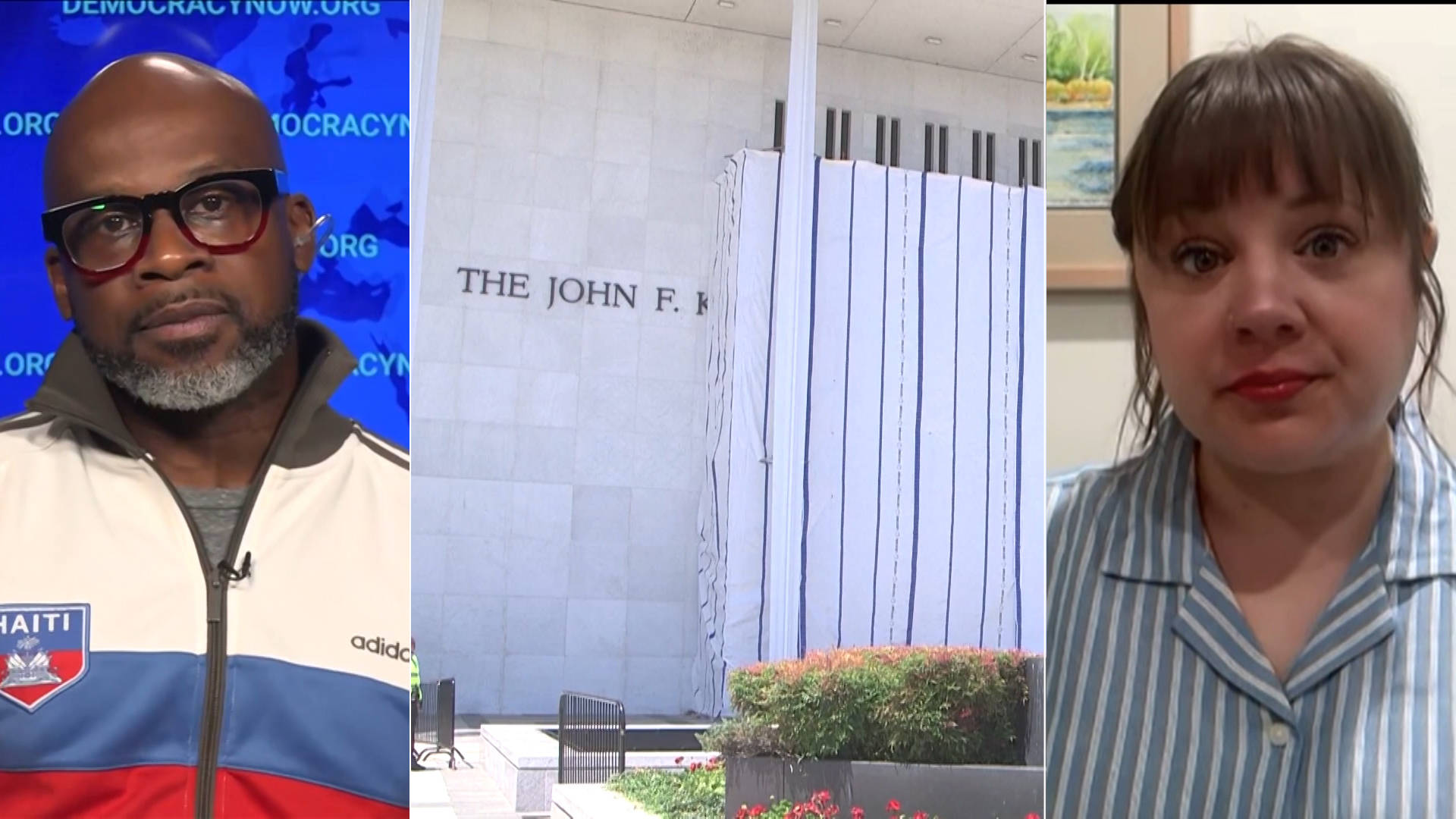
WASHINGTON, D.C. — A federal judge has ordered the removal of Donald Trump’s name from the Kennedy Center for the Performing Arts, ruling that its addition violated federal law and procedural norms. The decision comes after a prolonged legal battle led by artists and staff who were fired for opposing the name change, including Grammy-winning poet Marc Bamuthi Joseph, who lost his role as vice president of the center’s Social Impact initiative in March 2025.
The Kennedy Center’s board, handpicked by Trump in 2024, had voted unanimously in December 2024 to add the former president’s name to the institution’s marquee—a move critics called an unprecedented political favor without public input or transparency. The judge’s ruling, issued last week, determined that the process bypassed required congressional and institutional oversight, setting a legal precedent for how federal cultural institutions may be named.
For Joseph, the removal is a rare moment of justice in a broader campaign to reshape the Kennedy Center under Trump’s influence. “We, the American people, have rarely been afforded the decency of a public conversation or process,” Joseph said in an interview. “There were no procedural protocols in the affixing of this person’s name on a national memorial, and so this does feel like a small victory for the rule of law.”
Yet the fight is far from over. The Kennedy Center remains closed for “renovations” amid a wave of artist cancellations, and Trump’s appointees still control the board. Mallory Miller, a former assistant manager of dance programming who was fired in August 2025 and co-founded the activist group Hands Off the Arts, called the name removal “just the first step in rebuilding the trust that has been lost.” She added that Trump “is still the boss” at the center, where staff continue to face dismissals for speaking out.
BREAKING: Federal judge rules Kennedy Center illegally added Trump’s name to its marquee, ordering its immediate removal. The center’s board, appointed by Trump, had voted to include his name without public consultation or legal review.
What the Ruling Means for the Kennedy Center—and Beyond
The judge’s decision carries implications for how federal institutions handle naming rights, particularly when political figures are involved. Legal experts say it sets a precedent for transparency in such cases, though enforcement remains unclear. Here’s what’s at stake:
- Legal Precedent: The ruling establishes that adding a political figure’s name to a federal cultural institution requires congressional approval and public review—something the Kennedy Center’s board bypassed.
- Artist Backlash: Over 50 major performers, including Lin-Manuel Miranda and Beyoncé, have canceled appearances at the Kennedy Center since Trump’s name was added, citing concerns over political interference.
- Staff Retaliation: At least 12 employees have been fired or resigned in protest, including Joseph and Miller, who describe a culture of intimidation under Trump’s appointees.
- Funding Risks: The Kennedy Center relies on federal grants and private donations. The name dispute has drawn criticism from lawmakers, including Senate Appropriations Committee Chair Patty Murray, who has called for an independent audit.
Why This Fight Over the Kennedy Center’s Name Could Reshape Cultural Institutions
The Kennedy Center’s name dispute is part of a broader trend: political figures using their influence to rename or fund cultural institutions, often without public debate. In 2023, a similar controversy erupted when a Florida governor attempted to rename a state arts council after himself, sparking legal challenges from artists’ unions. The Kennedy Center case differs in scale—it involves a nationally recognized institution—but the legal questions are comparable.

“This isn’t just about one name,” said Dr. Elena Martinez, a cultural policy expert at the University of California, Berkeley. “It’s about whether art spaces can be weaponized for political gain. The Kennedy Center’s board acted as if it had carte blanche, but courts are now pushing back.”
Historically, federal institutions like the Kennedy Center have required congressional approval for naming changes. For example, the 1982 legislation that established the center included provisions for public input on major modifications. The judge’s ruling explicitly cites this as a violation.
How Trump’s Appointees Are Reshaping the Kennedy Center—Beyond the Name
The removal of Trump’s name is just one front in a larger effort to overhaul the Kennedy Center’s operations, programming, and governance. Since Trump’s appointees took control in 2024, the center has:
- Cancelled or postponed at least 40 major events, including the Beyoncé tribute concert and the Lin-Manuel Miranda residency, citing “logistical challenges.”
- Redirected funding from social impact programs to “patriotic programming,” according to internal documents obtained by The New York Times.
- Fired or reassigned staff who criticized the changes, including Joseph and Miller, who were both terminated after publicizing concerns.
The center’s “renovations,” which began in January 2025, have drawn skepticism. While the Kennedy Center cites structural upgrades, critics argue the closures are being used to consolidate power. “This is a hostage situation,” said Miller. “They’re using the renovations as an excuse to silence dissent and reshape the center in Trump’s image.”
What Comes Next for the Kennedy Center—and Its Artists?
The judge’s ruling does not address the broader governance issues at the Kennedy Center, leaving key questions unanswered:
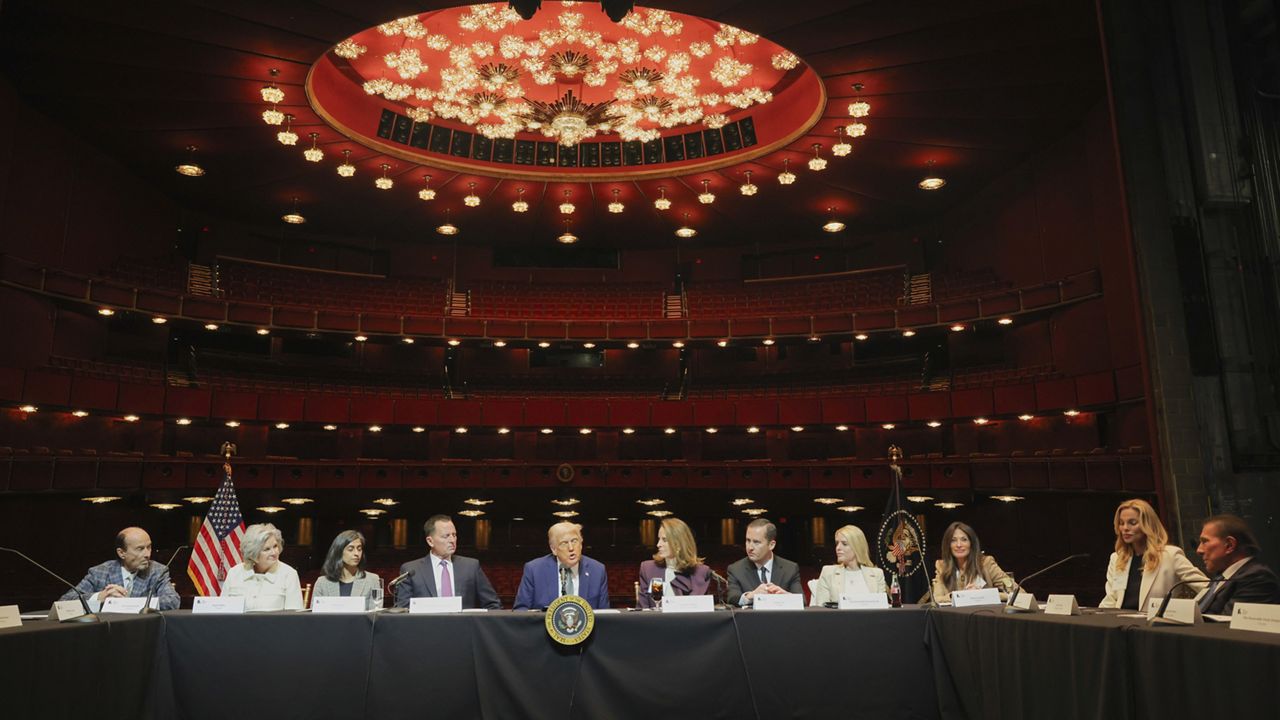
- Will the board be reconstituted? Trump’s appointees still hold the majority of seats. A source close to the center said internal meetings have focused on “damage control” rather than reform.
- When will the center reopen? Officials have not set a date, though rumors of a partial reopening in late 2025 persist. Artists who canceled performances have not indicated whether they will return.
- What legal recourse do fired staff have? Joseph and Miller’s cases are under review by the Equal Employment Opportunity Commission, which is investigating potential wrongful termination claims.
- Could Congress intervene? Lawmakers have shown limited interest so far, but a bipartisan group of senators is reportedly drafting a resolution to demand greater transparency at the center.
The next critical checkpoint is a hearing before the U.S. Court of Appeals for the D.C. Circuit on October 15, 2025, where the Kennedy Center’s legal team is expected to argue that the name removal does not address the broader governance concerns. Activists, meanwhile, are planning a national day of action on October 20, 2025, coinciding with the center’s anniversary.
Where to Track the Kennedy Center’s Next Moves
For the latest developments, monitor these official channels:
- Kennedy Center Press Releases (official statements)
- U.S. Court of Appeals for the D.C. Circuit (docket updates)
- EEOC Case Status (for fired staff)
- Congressional Record (for potential resolutions)
The Kennedy Center’s fight over its name is far from settled—but the legal victory offers a rare moment of clarity in an institution under siege. For artists, staff, and cultural advocates, the question now is whether this ruling will lead to real change or simply become another footnote in a larger power struggle.
What do you think should happen next at the Kennedy Center? Share your perspective in the comments below—or join the conversation on Twitter using #HandsOffTheArts.
Worth a look